
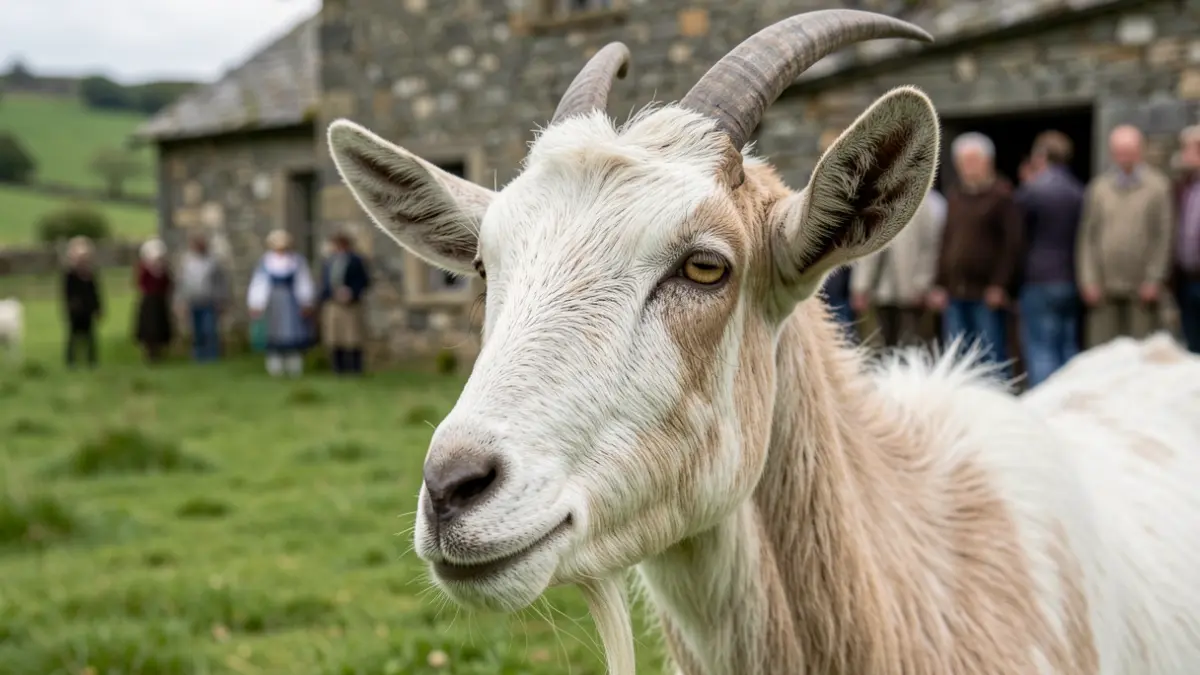
The Caprigo project, initiated in 2024 and developed by the University of Vigo, the Galician Agency for Food Quality (Agacal), the Galician Food Cluster (Clusaga), Queixos Feijoo, and farmer Maik Paladino, has concluded its work with a very positive assessment. The initiative focused on the model village of Xacebáns (Quintela de Leirado, Ourense), aiming to study and enhance local goat milk production, developing high-quality seasonal soft cheeses made exclusively from Galician goat milk, characterized by the animals' seasonal feeding.
During the three years of research, the team analyzed the vegetation consumed by goats in Xacebáns, the composition of their milk, and the evolution of the cheeses. It was highlighted that the milk from Xacebáns showed a higher proportion of alpha-linolenic acid (an omega-3) compared to milk from reference intensive farms. More pronounced changes were also detected between winter and summer in some components, particularly in fat and carbohydrates. Analyses of the goat brie-type cheeses revealed differences in their composition, texture, and maturation, with the summer cheeses from Xacebáns being richer in protein and calcium, having lower moisture, and greater firmness than those made with milk from León.
The results also demonstrated that the final texture of the cheese depends on several factors, including milk composition and changes during maturation. In the final year, the elaborated cheeses were characterized, and their nutritional composition tables were obtained. The project thus provides valuable information to better understand the raw material available in each season and to guide the production of seasonal cheeses with differentiated characteristics.
Caprigo, funded by the Consellería do Medio Rural through grants for operational group projects and co-financed by the European Agricultural Fund for Rural Development (Feader), aims to promote the circular economy and sustainability in Galician dairy production. The initiative also seeks to retain population in rural areas, prevent forest fires through grazing livestock management, and boost the local economy with differentiated, high-gastronomic-value dairy products.
At the closing event, held on the Ourense campus, the campus vice-rector, Montserrat Cruz, emphasized Caprigo's interest in addressing real territorial needs and using research for transformation. Iván Gil, representing the organization, highlighted how the project supports small Galician producers through innovation. Researcher Clara Fuciños (UVigo) presented the project's findings, while Xosé Ramón Vázquez (Clusaga) discussed innovation opportunities in rural areas. The event concluded with a round table on livestock, cheese production, and territory, featuring Marisol López (Esteo Innova), Julio José Alonso Feijoo (Quesos Feijoo), Luis Javier Rodríguez Barrón (University of the Basque Country), and David Domínguez (Comunidades de Montes Veciñais en Man Común de Lucenza).