
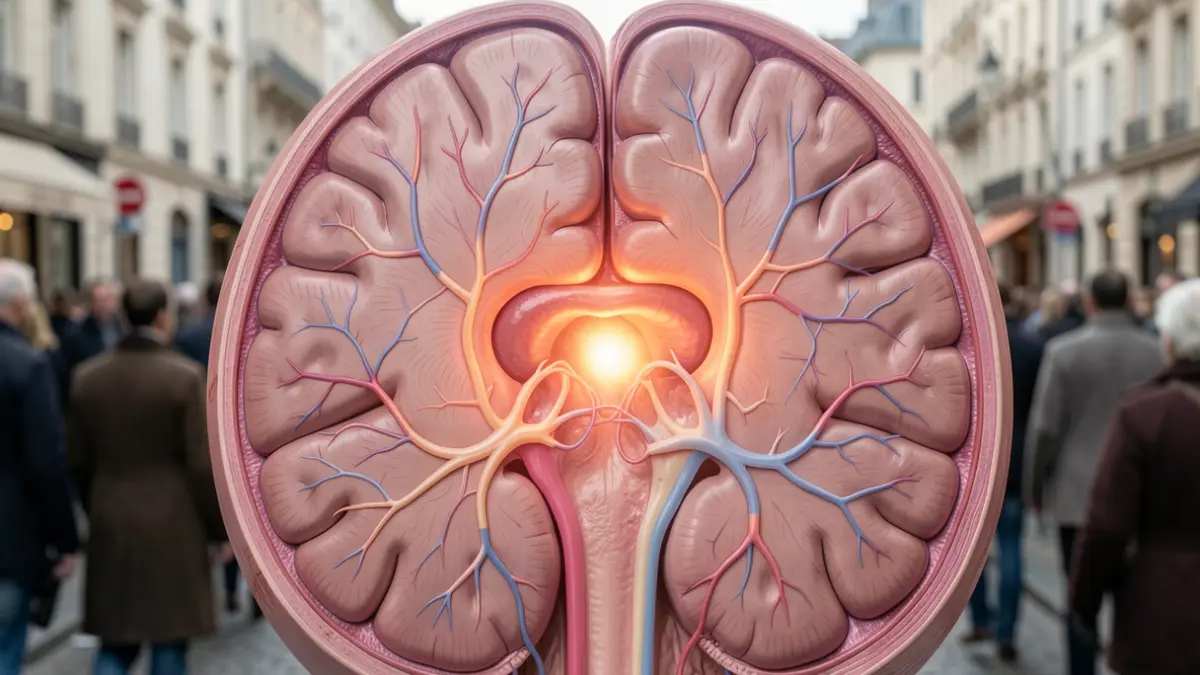
Researchers from the Department of Cellular Biology, Genetics, and Physiology at the University of Málaga (UMA) have led an international study demonstrating how traumatic brain injury, caused by a strong blow to the head, conditions the brain's long-term response to subsequent stressful situations.
In collaboration with the Wexner Medical Center at Ohio State University (Columbus, USA), the UMA team has shown that the hypothalamus, a brain region crucial for stress response, reacts differently after injury, triggering inflammation and being associated with anxiety and avoidance behaviors.
The research, so far conducted on animal models, analyzed the consequences of acute stress episodes in contexts of aggression and social defeat. The findings, published in the scientific journal Brain Behavior and Immunity, suggest that a prior trauma can induce subtle cellular and molecular changes that persist over time and alter future behavior in response to stress.
UMA scientist María Dolores López, a co-author of the study, explains that microglia cells, largely responsible for trauma-associated neuroinflammation, acquire immune memory and become sensitized, leading to intensified activation in response to future stressors. This is reflected in cellular morphological changes and increased production of inflammatory mediators.
Another significant finding is that these brain alterations do not necessarily translate into higher blood cortisol levels, indicating a different brain reaction to stress compared to the systemic hormonal response.
This study was part of the doctoral thesis of researcher Ana Léon, who undertook a research stay at the laboratory of Professor Jonathan P. Godbout, a co-author of the study and a leading expert in traumatic brain injuries. The results align with clinical data on endocrine alterations in patients with trauma, suggesting a relevant role for the hypothalamus and microglia in the underlying mechanism.