Lichens, which grow on trees in Mediterranean forests, can offer valuable information about the state of the environment. Traditionally used as indicators of atmospheric pollution due to their sensitivity to environmental changes, a study led by the Universitat de València, with participation from the Cavanilles Institute of Biodiversity and Evolutionary Biology (ICBiBE) and the Parc Científic de la UV (PCUV), reveals a greater complexity in the response of their internal microalgae community to deterioration.
The study, headed by Tamara Pazos, a researcher at the Department of Botany and Geology of the UV and the ICBiBE, compared apparently healthy specimens with others showing different degrees of visible damage. The results indicate that microalgae diversity does not decrease uniformly with damage; in fact, it slightly increases with moderate deterioration and only reduces when damage reaches very severe levels.
Lichens are symbiotic associations between a fungus and photosynthetic organisms like algae or cyanobacteria. While the photosynthetic component produces nutrients, the fungus provides structure and protection. This relationship and their environmental sensitivity make them useful for monitoring air quality. External alterations such as color changes or tissue loss can be symptoms of environmental stress, but the new study demonstrates they do not fully explain what happens internally.
«It has recently been discovered that the interior of the lichen hosts not only the symbiotic partners but also a whole community of microalgae and other organisms, which have received little attention until now», explains Tamara Pazos. The work expands the analysis to these associated microalgae, including minority species often overlooked by traditional methods. It is the first study to explore the relationship between visible morphological damage and the diversity of the entire microalgae community.
To investigate these changes, the team combined two DNA sequencing techniques. One of the most relevant findings is that the diversity of these communities does not follow a linear evolution. «In fact, it increases slightly with moderate deterioration and only drops when the damage is very severe. This finding suggests that a lichen's appearance does not always reflect what is happening inside», notes Pazos.
This behavior raises new questions about the responses of microbial communities to environmental stress and the role of different species in lichen stability. The research also highlights the importance of combining visual observations with molecular techniques. Furthermore, it reveals a high diversity of associated microalgae, including species not yet formally described.
The presence and condition of lichens have been used for decades to study environmental quality. The study expands this perspective, showing that analyzing their internal microalgae communities can provide complementary information to the assessment of visible damage. This opens a path to refine environmental bioindication tools, although the results focus on the relationship between deterioration and internal diversity, rather than directly measuring atmospheric pollution levels.
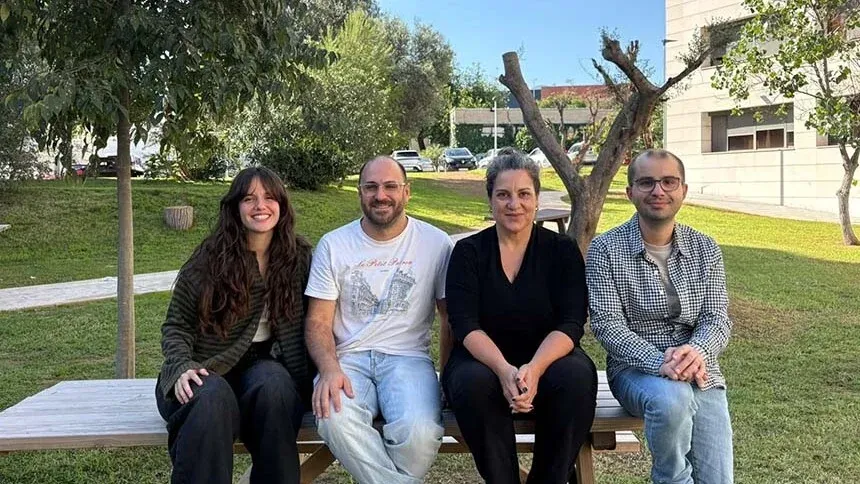
The research involved Eva Barreno, Isaac Garrido-Benavent, Patricia Moya, and Salvador Chiva from the Universitat de València, as well as Pavel Škaloud and Veronika Kantnerová from Charles University in Prague. It received funding from the Generalitat Valenciana (PROMETEO programs) and the Ministry of Science, Innovation and Universities.