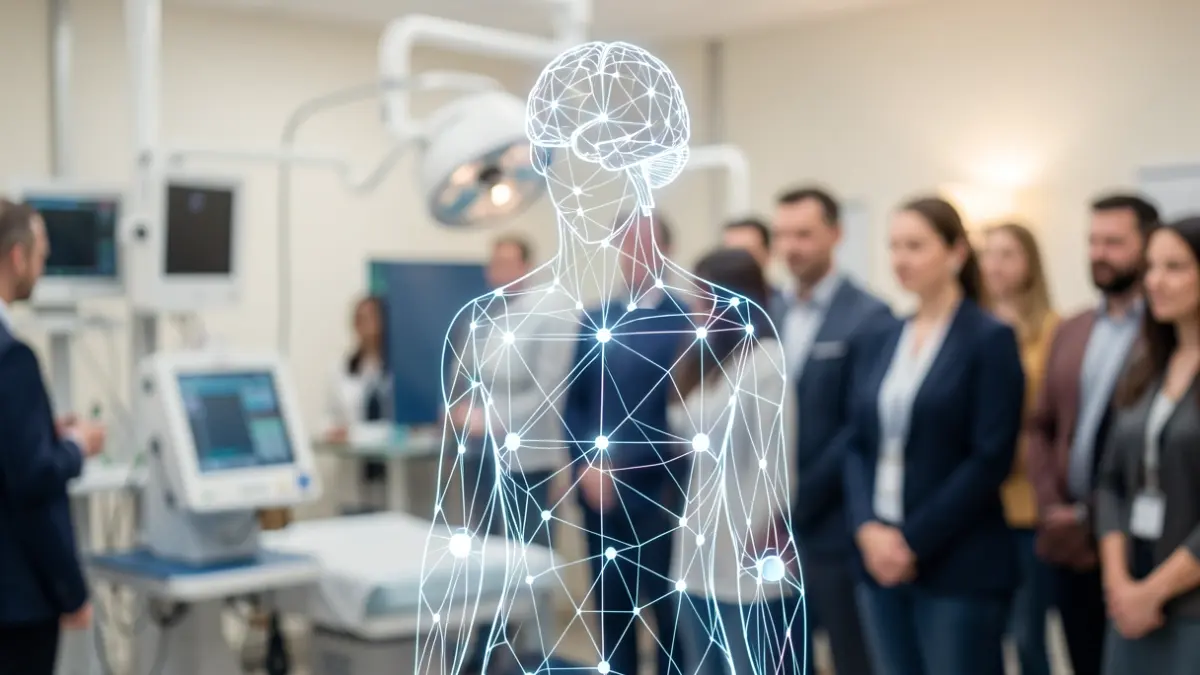
A study from the INGENIO center, part of the Spanish National Research Council (CSIC) and the Polytechnic University of Valencia (UPV), has proposed an ethical framework for the incorporation of artificial intelligence (AI) into clinical decision support systems. The research, published in the journal Science and Engineering Ethics, argues that these AI-based systems should be designed as tools to support human judgment, applying a framework based on discursive ethics to integrate ethical reflection into the decision-making process.
These computer tools, known as CDSS (Clinical Decision Support Systems), analyze clinical information and provide healthcare professionals with data, predictions, or recommendations. Their integration into medical practice raises significant ethical questions, such as the extent to which an automated recommendation should be followed, how to justify an algorithm's output, or who assumes final responsibility. Key challenges include respecting autonomy, avoiding dehumanization, and preventing the dilution of responsibility.
According to Félix Lozano, a researcher at INGENIO and author of the work, discursive ethics posits that norms affecting individuals should be rationally justifiable through dialogue and participation of those affected. Applied to the clinical setting, this approach would allow AI-generated recommendations to be understood, questioned, and valued within a process of human deliberation.
Ethical reflection must be present from the design and development of AI systems and maintained throughout their application. This process should involve not only software developers but also healthcare professionals, ethics experts, and patients. Lozano states that AI in clinical decisions should not be valued solely for its accuracy but also for its ability to preserve autonomy and enable the understanding and questioning of its recommendations.
For clinical decision support systems to be ethical, they should function as tools that facilitate deliberation and provide relevant information without replacing the judgment of those involved. Their recommendations must be understandable and traceable for evaluation by healthcare professionals. Consequently, the responsibility for decisions would remain with the healthcare professionals, while preserving patients' informed autonomy.
To move towards this model, the study highlights the need to incorporate ethical reflection throughout the development and application of these technologies. This requires an interdisciplinary effort connecting fields such as moral philosophy, data engineering, and public policy. The research was supported by the Conselleria de Cultura, Educació i Ciència de la Generalitat Valenciana.