Florentino Pérez's presidency at Real Madrid, which began on July 17, 2000, marked a new era for the club. His project, characterized by the acquisition of stars like Figo and the subsequent 'galácticos' era, allowed him to unseat his predecessor, Lorenzo Sanz, despite Sanz having recently won a Champions League. Less stringent requirements for candidacy and a longer preparation period facilitated his initial victory.
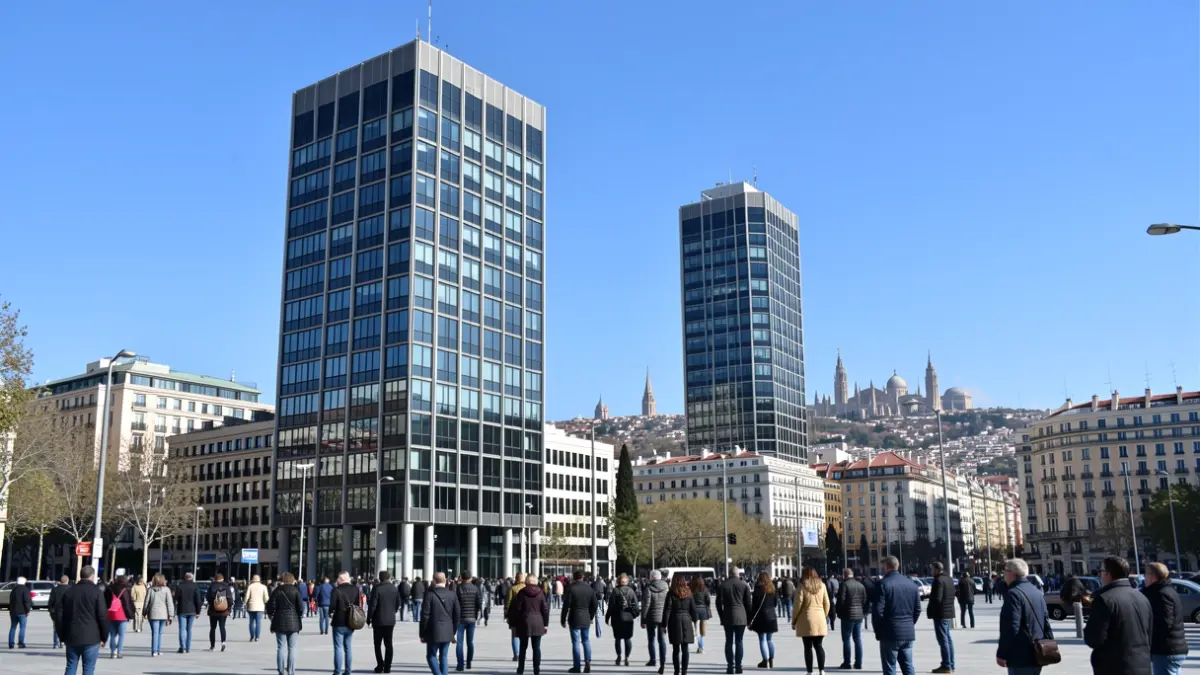
To realize his sporting ambitions, Pérez, also president of the construction company ACS, strengthened his institutional connections and unlocked major urban development operations. A key example was the rezoning of the former sports city's land in La Castellana. Under the mayorship of José María Álvarez del Manzano and the presidency of the Community of Madrid by Alberto Ruiz-Gallardón, these grounds transitioned from sports use to tertiary use, multiplying their buildable area and enabling the construction of four office towers that redefined the city's financial landscape.
This operation to enhance public land value, which originated from a sale during the Franco regime to Santiago Bernabéu in 1960, generated 501 million euros in revenue for Real Madrid. These funds fueled the era of stellar signings and several subsequent Champions League titles. Pérez concluded his first term in 2006, admitting to having 'spoiled the players,' a self-criticism he seemingly hasn't maintained in his second, prolonged presidency.
His first six-year term was crucial for operations such as the move to Valdebebas, a new urban development the club helped put on the map. This area, situated between the Barajas and Hortaleza districts, has seen significant expansion and boasts better amenities and services compared to other city areas.
During his second tenure, alongside managing a star-studded team and the projects for the renovated Santiago Bernabéu (concerts and parking), Pérez has agreed to a new urban development with Mayor José Luis Martínez-Almeida. Unveiled in May 2025, the Madrid Innovation District (MID) project envisions a large business campus for innovation and leisure on Valdebebas land. The initiative requires a new rezoning of the plot, currently designated for private sports use, and is being kept under significant wraps by the City Council and the club.
The future campus, spanning 85 hectares, plans for offices, universities, and leisure centers, requiring an estimated international investment of 8.5 billion euros. The area will benefit from substantial transport infrastructure, including proximity to Barajas airport, a new transport hub, and the expansion of metro line 11.
Pérez's confidence in the Madrid administration was evident after a judicial resolution cleared the club of criminal liability for concert noise at the Bernabéu. He stated that concerts would return soon, negotiating with the Community of Madrid and the City Council to adapt legislation. He noted that concerts account for only 1% of the club's total revenue and are more about reputation for the city.
Regarding the parking facilities, Pérez expressed disappointment with the ruling that prevented their operation, claiming they were for residents and requested by the City Council. However, published reports indicate that the club itself requested the two parking lots, and the one at Castellana, with 1,500 spaces, was intended for public rotation, not residents. The Neighborhood Association of Those Affected by the Bernabéu has played a key role in halting these projects due to 'significant procedural irregularities'.