Driven by the madri+d Foundation for Knowledge, under the Ministry of Education of the Community of Madrid, CITT Espacio stood out for its high-impact program. The fair, held at La Nave from March 19 to 21, has reaffirmed itself as an open laboratory where science and innovation are experienced firsthand, attracting both the educational community and the general public with over 700 interactive activities.
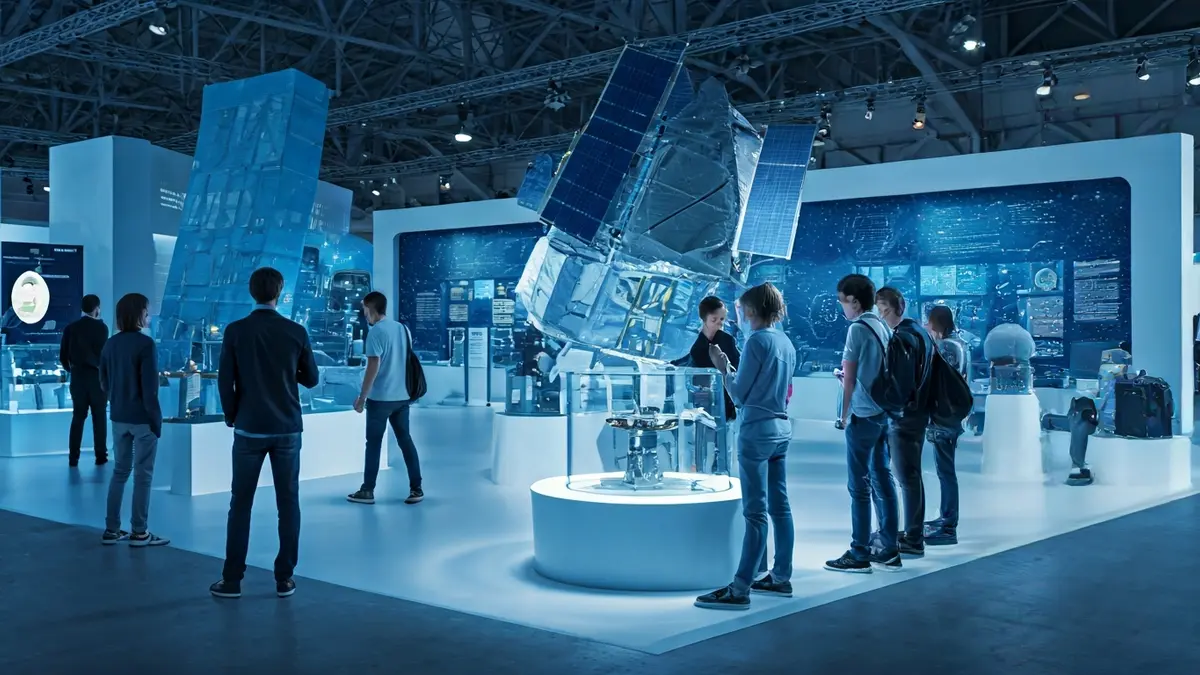
The CITT Espacio (C02) booth was one of the most popular attractions. During her institutional tour, the Minister of Education, Science and Universities of the Community of Madrid, Mercedes Zarzalejo, visited the stand, highlighting the cluster's strategic role in the regional innovation ecosystem. The booth also welcomed molecular biology researcher and astronaut candidate, Sara García Alonso, who expressed particular interest in the upcoming solar eclipses visible from the Iberian Peninsula.
CITT Espacio's proposal included a comprehensive program of activities focused on crucial areas such as Earth observation, satellite communications, cybersecurity, space biotechnology, and intelligent infrastructures. Special emphasis was placed on the trio of solar eclipses to be observed in the coming years. Through workshops, technical presentations, and outreach activities, the cluster connected with new generations, stimulating interest in scientific and technological careers.
“"CITT-Espacio's participation in Madrid es Ciencia 2026 has been a resounding success, demonstrating its commitment to training, attracting talent, and boosting the space sector in the region. We presented workshops in key areas such as Earth and Space observation and satellite communications, connecting directly with new generations."
The event at La Nave involved a wide range of entities, including GMV, the Complutense University of Madrid, the Carlos III University of Madrid, the Madrid Planetarium, AEDAE, the Astronomical Association of Madrid, and SPSIN. This synergy strengthens cooperation between academic, business, and institutional spheres, consolidating the region as a benchmark in innovation and a vital driver in promoting STEM vocations.