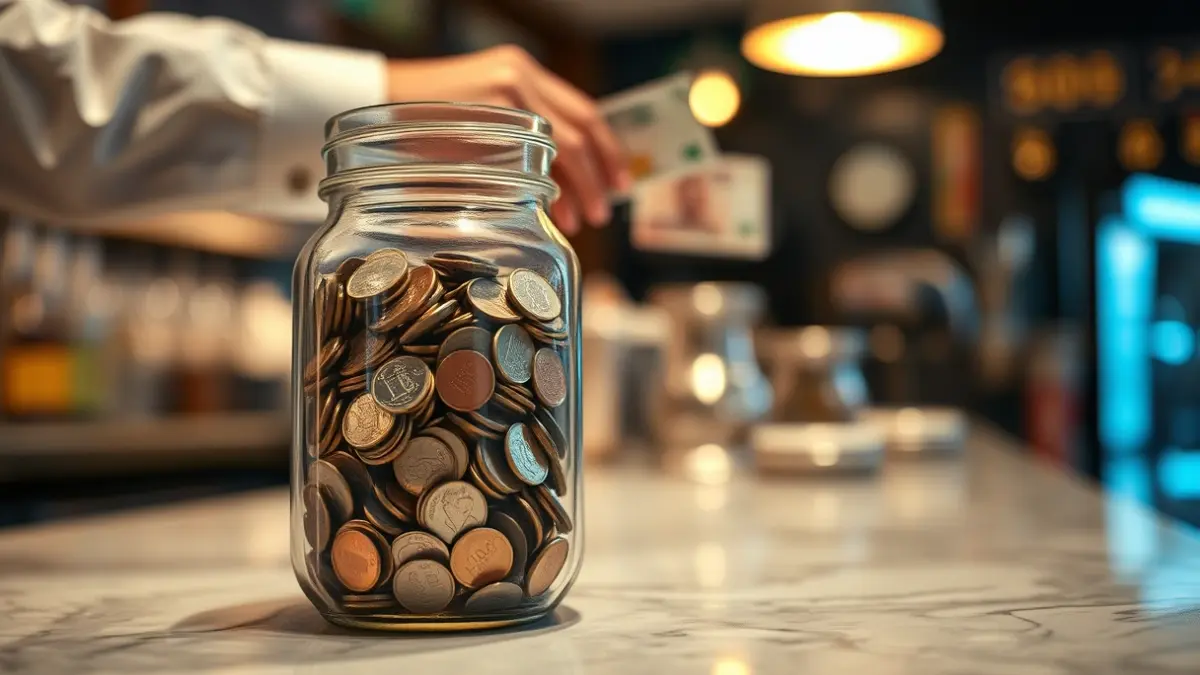
The jingle of coins in the glass jar, an inseparable soundtrack to the bars of Bizkaia, is losing volume. In this historical territory with such deeply rooted hospitality culture, the habit of rewarding good service with "the change" faces a perfect storm: the digitalization of payments and a cost of living that tightens pockets to the last cent.
What was once an almost automatic gesture after finishing a pintxo or a meal has now become an exception, jeopardizing a small supplementary income for workers in the sector. In the heart of Bilbao, the reality is evident for those behind the bar. Hoteliers observe how this habit vanishes day by day, with only a small percentage of customers maintaining the custom of leaving some change.
“"The card machine is to blame. When paying by card, the customer does not receive physical coins to deposit in the jar, and the lack of adapted systems for digital tips in most establishments ends up nullifying the gesture."
This digital disconnect is particularly noticeable among younger generations, who have grown up with mobile payment as the standard. For many young people, the immediacy of contactless payment removes tipping from the mental equation. The gesture of leaving change seems to have been relegated to family meals where cash still circulates and parents cover the bill. Outside these contexts, most pay and leave without considering that the service might have deserved an extra.
However, it's not all about technology; the real economy also dictates terms. The increase in prices in the hospitality sector has made customers "more reluctant" to dig into their pockets after seeing the total bill. The rising cost of raw materials has forced price increases on menus, and that margin of courtesy previously allocated to the waiter is now used to cover the cost of the menu itself or a round of drinks.
Added to this is a technical apprehension about how to manage that money in the modern era. Hoteliers fear that if card tipping is implemented, bank commissions or taxation will end up "biting" into a portion of that money. This could prevent the worker from receiving the full amount for their daily effort, distorting a gesture that has always been one of direct and personal gratitude between customer and employee.
Given this scenario, the debate arises about the possible "Americanization" of service in Bizkaia. Some consumers argue that good service should continue to be actively rewarded to incentivize quality, but suggest that the sector may need to evolve towards new formulas. While the future of the tip jar is decided, the bars of Bizkaia are seeking a new formula so that the value of human interaction is not lost in the void of invisible payments and empty coin purses.