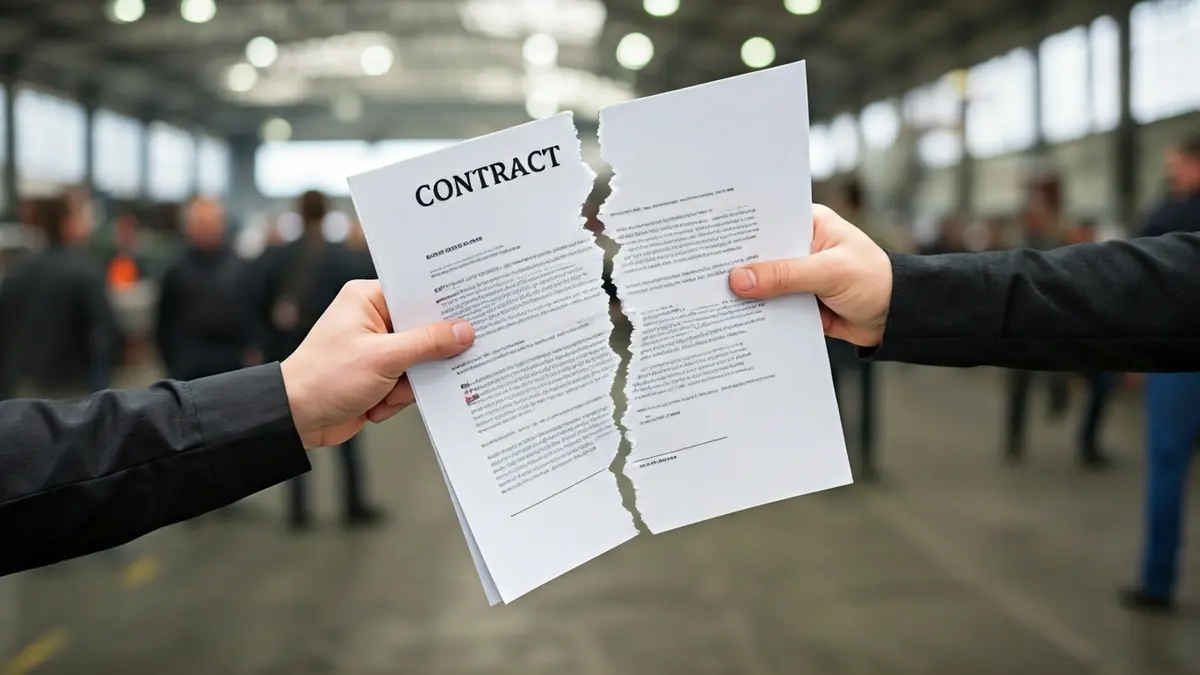
This decision results in a collective dismissal affecting the entire workforce that was on an indefinite strike. The announcement comes at a particularly sensitive moment in the conflict, as ELA reported that contacts between the parties had intensified in recent days and negotiations to finalize a pre-agreement were advanced.
The workforce, represented by a union delegate, had even agreed to significantly reduce their initial demands to facilitate an agreement. Despite this, the client company chose to break the contract with the subcontractor.
“"We are the lowest-paid contractor in the entire factory. We are in a precarious situation."
Mercedes cites alleged breaches in service provision. However, the social side argues that these events should be understood within the context of a legally called strike and reminds that the work stoppage is part of exercising a fundamental right. Over these months, the Labor Inspectorate has intervened in the conflict due to various situations reported by the workforce. According to ELA, some practices related to replacing striking personnel and limiting their functions have been deemed very serious infringements.
The union also states that workers had shown willingness to continue negotiating and had even requested a direct meeting with Mercedes-Benz to discuss the future of the service and employment. This dialogue, according to their version, never materialized.
GasteizBerri published on March 13 the situation of the Mercedes internal emergency service firefighters, who had been denouncing years of precarious employment linked to the subcontracting model. At that time, one of the workers, Iker Babio Basterretxea, explained that the origin of the conflict dated back about a decade, when a subcontractor significantly reduced the costs of the service. He stated that this had direct consequences on the salaries and working conditions of the staff.
Workers reported a sustained loss of purchasing power, an agreement not updated to the CPI, and growing organizational problems. They also warned of a lack of material, insufficient staff, and an increasing reliance on overtime to cover shifts. The workforce consisted of 23 permanent employees, with rotations bringing the total to 27 firefighters. During the strike, workers had also warned that the factory was being left without internal emergency services and without its own personnel to intervene in incidents or drive the medicalized ambulance on site.