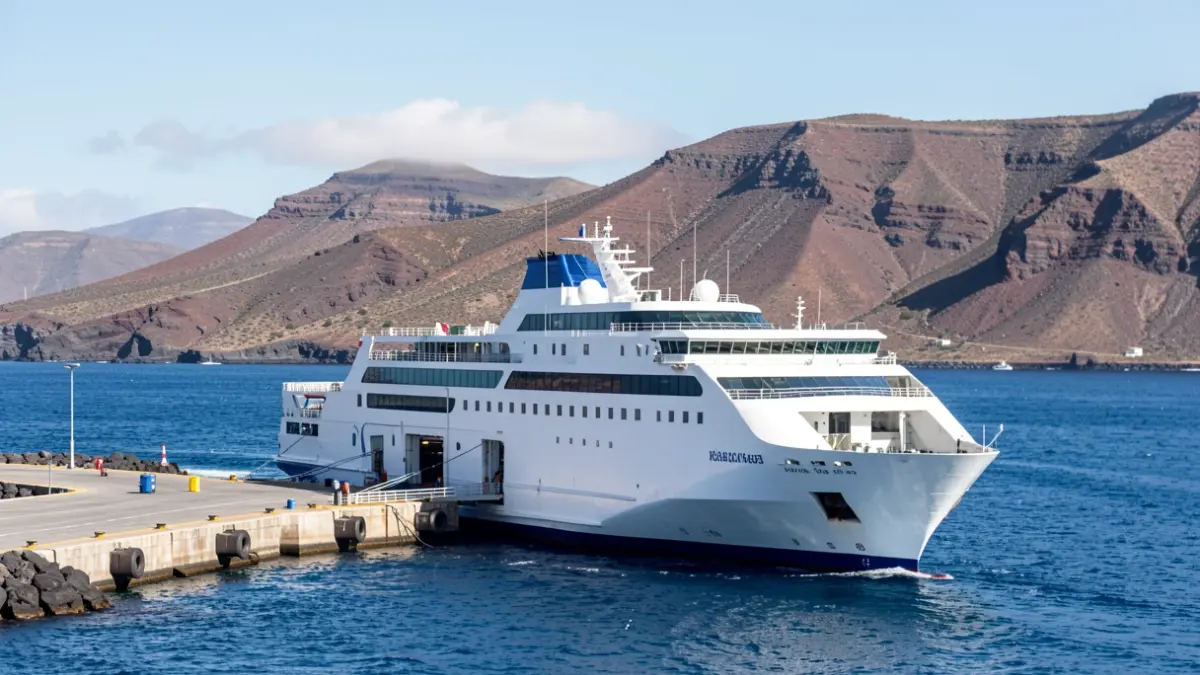
Andrés Marín, general director of Fred. Olsen S.A., has stated that Baleària's arrival in the inter-island maritime transport sector of the Canary Islands marks the beginning of a "new era". Despite Baleària's consolidation after acquiring Armas Trasmediterránea, Marín assures that Fred. Olsen, with over 50 years of experience in the islands, will maintain its strategy of service, reliability, and customer experience.
The Canary shipping company, which will triple its fleet to 15 vessels by 2026, has heavily invested in high-speed ferries and, recently, in ro-ro ships exclusively for cargo transport. Marín welcomes Baleària, highlighting that the presence of two "strong shipping companies" is beneficial for an "isolated and fragmented" archipelago like the Canary Islands, while reaffirming the commitment to compete on equal terms.
The dissolution of the alliance between Fred. Olsen and Baleària on the Huelva route is one of the most significant changes. Fred. Olsen Express will operate solo from Huelva with the renovated vessel 'Buenavista Express', temporarily reinforced by the 'Marie Curi' chartered from Baleària. The company plans for three to four weekly round trips on this route, with medium-term plans to acquire a second ro-pax vessel.
Marín emphasizes that Fred. Olsen, despite its Norwegian capital, is considered a Canary Islands company due to its workforce (90% local) and its deep-rooted history in the islands since 1904. He underscores the shipping company's commitment to public service, maintaining routes and frequencies even on less profitable ones, and recalls its crucial role during the pandemic for supplying the islands.
Regarding the potential exemption from CO2 emission trading rights, Marín warns that its removal would be a "mortal blow" to transport in the Canary Islands, given the reliance on ships and planes and the lack of viable clean fuel alternatives for the required distances and frequencies. The company also operates in the hotel sector in La Gomera, diversifying its activities in sectors vital to the island economy.
In 2025, Fred. Olsen Express had a turnover of between 280 and 300 million euros, surpassing pre-pandemic figures thanks to market growth, the addition of cargo transport, and new routes. Inter-island transport in the Canary Islands, combining air and sea, is considered among the best globally, with maritime transport dominating cargo and complementing air transport for passengers.