A long-standing enigma in physics, the link between information and energy, has been addressed by a research team. Building on James Clerk Maxwell's 1867 thought experiment involving a hypothetical being observing molecules, the possibility of violating the second law of thermodynamics was explored. Leo Szilard simplified this in 1929 with a single-molecule machine, suggesting that knowing a molecule's position acted as fuel. Rolf Landauer later established in 1961 that erasing information has an unavoidable energy cost, and Charles Bennett demonstrated in 1982 that measurement itself can be cost-free, with memory erasure being the key to preserving the second law.
Today, the field of information thermodynamics confirms the conversion of information into work. However, most experiments use 'Markovian' environments, which lack memory, like water. Many real materials, such as polymers, gels, or biological fluids, are non-Markovian and retain traces of past events, known as 'hidden degrees of freedom', invisible to the observer. The crucial question was whether this hidden memory could be exploited.
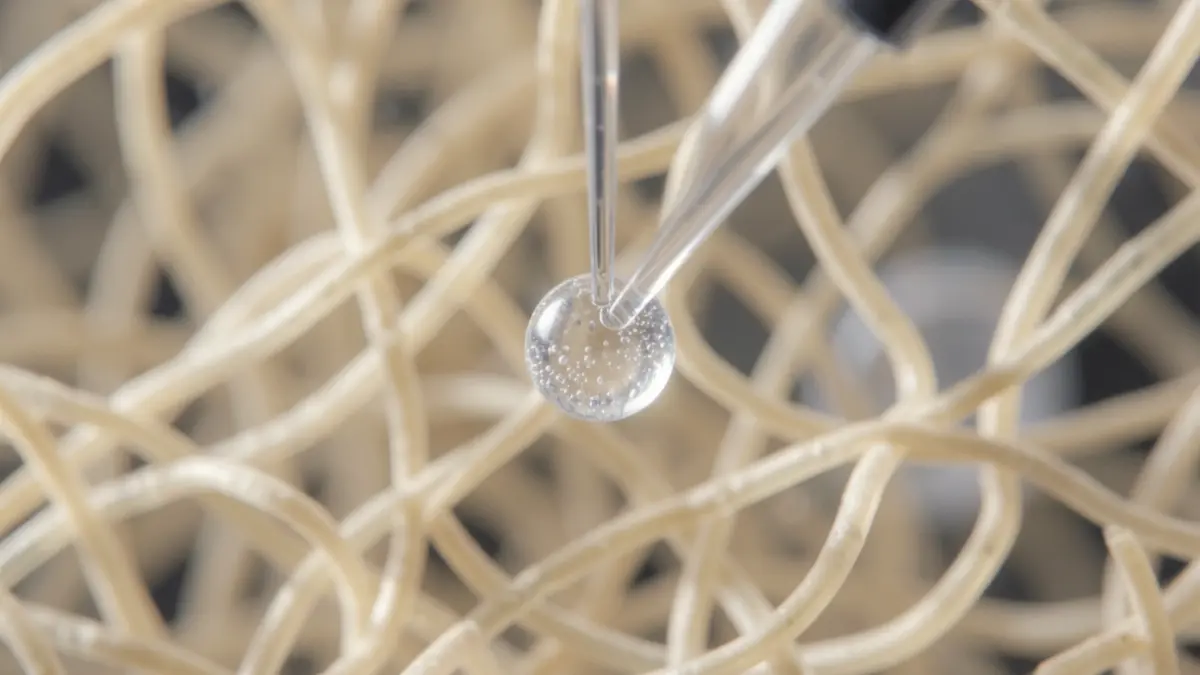
The researchers trapped a 2.7-micron diameter silica bead using a laser within a solution of surfactants, which form entangled, spaghetti-like micellar structures. In this viscoelastic fluid, the bead's movement deforms the network, which takes about six seconds to reform. The bead's position is recorded with high precision, but the micellar network remains unseen.
The core experiment involved two measurements separated by a controlled interval. A single observation yields no useful information about the network's hidden state. However, a second measurement, particularly if the particle is observed returning towards the center, reveals the network's influence. The data suggest that energy is being supplied by the environment, modeled as a spring pulling the particle.
To confirm the effect was due to memory, control trajectories using single measurements were employed. Differences between the groups could only be attributed to 'information feedback' from the environment. The maximum effect is observed at intervals of about one second, disappearing at times significantly longer than the network's six-second relaxation time.
After the second measurement, the light trap was moved at a constant speed for three seconds, converting the particle's accumulated potential energy into usable work. In a key trajectory, the extracted work was up to three times the maximum achievable if the liquid had no memory. Most of the energy originated from the invisible network, demonstrating that memory is a resource that must be located and used at the right time.
This finding does not violate the second law of thermodynamics, as the total free energy of the system (particle plus network) is greater than initially apparent from observing only the particle. The authors emphasize this is a highly controlled setup, suggesting that more complex protocols could extract even more work. They foresee potential applications in microscopic information engines that operate without temperature differences, valuable at small scales where maintaining such differences is challenging.
The experiment illustrates that in systems with memory, the past continues to contribute to the present's energetic advantage. Learning to read this memory, even without direct observation, allows for greater work extraction without breaking natural laws.