Vertical farming, a production model still little known to the general public, has seen significant growth over the past decade. In this context, the Catalan startup Groots has emerged as a leader, transforming food production through innovative technologies.
What began as a small company in Ripollet, focused on supplying local restaurants, has now achieved a presence in major retail chains such as Carrefour, Alcampo, and El Corte Inglés. Groots, currently based in Martorell, has established itself as a company capable of generating between 4 and 5 million euros in self-funded investment, aimed at improving its technology and infrastructure.
The company was founded by three childhood friends: Joaquim Bas (chemical engineer), Carlos Gómez (civil engineer), and Alessandro Calcagno (Business Administration graduate). In December 2018, they decided to embark on a venture to find new ways of producing food in the face of climate change challenges to traditional agriculture.
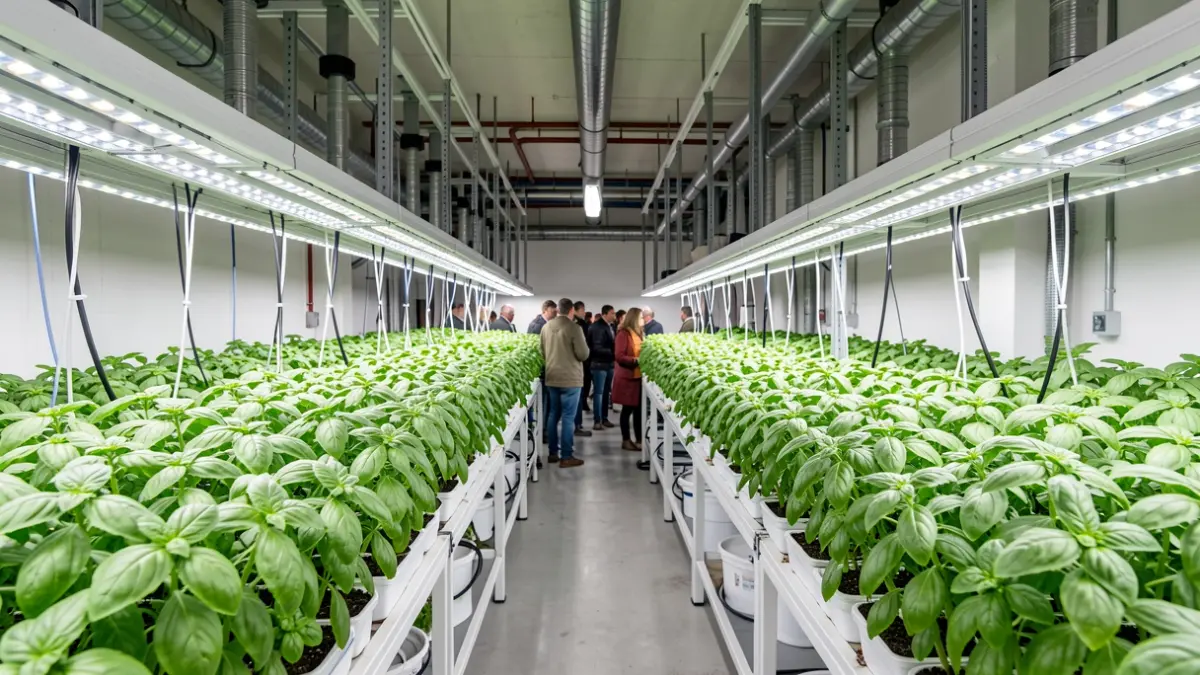
Groots primarily focuses on cultivating aromatic herbs such as basil, chives, mint, and cilantro, species with growing demand that traditional farming cannot stably guarantee year-round due to climatic conditions.
Sustainability is a fundamental pillar of their model. The cultivation technique used, hydroponics with double water recirculation, allows for 95% water savings and avoids the use of pesticides and chemical fertilizers. Furthermore, space optimization with four-meter cultivation towers enables production closer to urban centers, reducing transportation footprint.
The automated system monitors key variables such as light, temperature, CO2 levels, and humidity to ensure optimal growth conditions. After years of in-house development, including prototypes made with 3D printers, Groots has perfected its production method.
Initially self-funded, the company opened up to external capital in 2019, which spurred its growth. They moved to a 3,000 m2 facility in Martorell, significantly increasing their production and packaging capacity.
Groots currently produces over 100,000 basil plants monthly, ensuring a consistent year-round supply. The company has also addressed the challenge of energy consumption by installing solar panels, which have reduced the electricity bill by more than 50%.
According to data from June 2026, energy accounts for 16% of their costs, technology 11%, and personnel 38%. The remainder covers raw materials, packaging, and facilities.
The company also stands out for its employment integration program in collaboration with the Fundació Prat Comú, having incorporated over 50 individuals at risk of social exclusion, who currently constitute more than 60% of its workforce.
Artificial intelligence plays a crucial role in Groots' operations, optimizing production, managing orders, and improving internal efficiency. The company plans to expand its facilities and reach the entire peninsula, with the ambition of producing fruit on a large scale through vertical farming.