
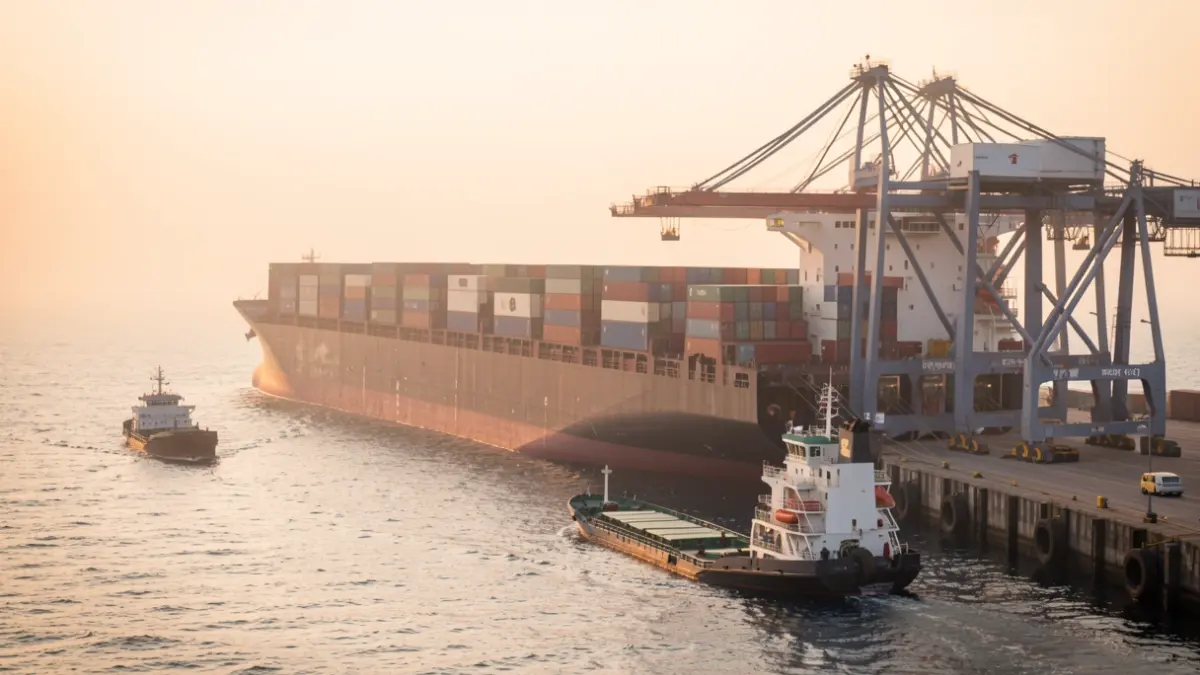
The Port of Santa Cruz de Tenerife is beginning to surpass the Port of Las Palmas in the 'bunkering' fuel supply market. For the year-to-date period, liquid bunkering has fallen in the Port of Las Palmas by over 5%, from 1,595,721 tons to 1,512,988. Meanwhile, the Port of Santa Cruz de Tenerife has seen its figures increase by 21.1%, reaching 459,577 tons from 379,555.
The president of the Port Authority of Las Palmas, Beatriz Calzada, attributed this situation at the end of June to the lack of a single-axle barge approved by the Maritime Captaincy, which complicates supply operations. Calzada explained that this barge, which loads fuel in the Port of La Luz, supplies it in Santa Cruz de Tenerife, meaning the tons are counted in the latter's statistics.
However, the maritime captain of Las Palmas, Ignacio Gallego, contradicted this version, recalling that the barge cannot operate in Las Palmas because it fails to meet the safety requirements of an instruction published by the Maritime Captaincy of Las Palmas in April 2019. Gallego finds it illogical to link the 'bunkering' decline to this episode, given the development of the Port of La Luz during this period.
Despite the decrease in fuel supply, the Port Authority of Las Palmas has improved its figures in container traffic. In July, 149,716 TEUs were registered, approximately 11,000 more than in the same month last year. For the annual total, figures improved by 4%, rising from 877,901 TEUs to 913,368. In contrast, the Port Authority of Santa Cruz de Tenerife has recorded a decrease of almost 9% so far this year (296,718 TEUs), although July saw an improvement of over 2,000 TEUs.
Regarding passenger traffic, both port authorities registered declines. Santa Cruz de Tenerife saw a 2.6% drop, and Las Palmas a 1.3% drop. Nevertheless, the western province has transported over three million passengers year-to-date (3,244,845), while Las Palmas remains below one million with 860,805 passengers transported.
In terms of general cargo transported, the Port Authority of Las Palmas consolidates its position with 12,785,036 tons, a 0.2% increase. Santa Cruz de Tenerife, on the other hand, recorded another significant decrease with a 4.1% drop, placing it close to falling below the 5.154 billion ton mark.
Although there are no major drops in either port authority, both are noting a certain slowdown in the growth experienced in recent years, due to crises in the Middle East.