
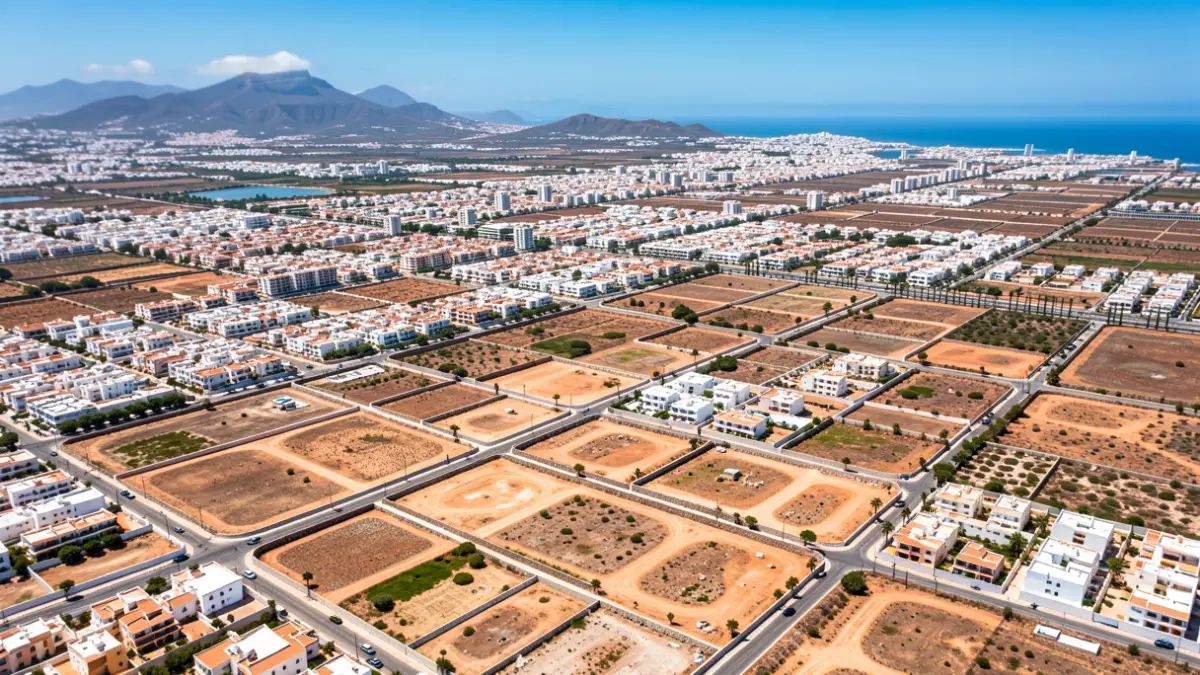
A new analysis on the availability of consolidated urban land in the Archipelago, prepared by the Canary Housing Observatory (Obvia) and promoted by the public company Viviendas Sociales e Infraestructuras de Canarias (Visocan), concludes that the islands have sufficient capacity for the construction of approximately 125,000 homes. This figure, encompassing both private and protected housing, exceeds the accumulated demand in recent years.
The study, which utilized Geographic Information System tools to analyze urban and cadastral data, has identified over 41,800 plots classified as consolidated urban land with residential potential. This confirms that the current urban planning offers sufficient scope to increase housing supply without needing to reclassify land.
However, the report highlights that the primary barrier in the Canary residential market is not land scarcity, but the difficulties in transforming it into effective housing. Despite an acceleration in the construction pace since 2023, it remains structurally low compared to the years preceding the financial crisis, while demand continues to rise.
Among the factors explaining this situation, the report points to the complexity of urban planning regulations, limitations in administrative management capacity, and the sustained increase in construction costs, all of which hinder the viability and execution of new residential developments.
In this context, recent regulatory tools such as Decree-Law 3/2025 are mentioned, focused on streamlining urban planning licenses and boosting housing construction.
The building capacity is mainly concentrated in Tenerife and Gran Canaria, although the analysis provides detailed data for the entire Archipelago, allowing for knowledge of each territory's residential potential and offering valuable information for decision-making. The study estimates the construction of over 114,000 multi-family homes and nearly 11,000 single-family homes, distinguishing typologies based on plot size.