The yellow vein chlorosis virus has been detected in young lemon trees in Alicante and Murcia, following a historic campaign marked by record prices and high-quality fruit. The sector now anticipates the uprooting of thousands of trees to try and curb its spread.
Over the past fifteen years, the lemon tree has become one of the most popular crops in Spain, leading to a significant increase in planted area. According to data from the Ministry of Agriculture, Fisheries and Food (MAPA), the planted area has grown from 39,750 hectares in 2010 to the current 54,055 hectares. The Region of Murcia accounts for 28,442 hectares, the Valencian Community adds 15,884 hectares, and Andalusia, 8,821. Spain has consolidated its position as the world's second-largest producer of lemons, behind Argentina, and the leading global exporter of fresh lemons.
The recently concluded campaign has been described as magnificent by the sector, with unprecedented prices for both the Fino and Verna varieties. The director of the interprofessional organization Ailimpo, José Antonio García, has indicated that production will range between 1.08 and 1.10 million tons, exceeding initial forecasts. Reference prices for farmers have averaged between 50 and 55 cents per kilo for Fino and around 90 cents per kilo for Verna.
García attributed the campaign's success to four factors: Turkey's reduced sales to the EU due to frost, exceptional fruit quality, increased lemon consumption in Europe, and the sector's ability to pass on rising costs to consumers. The president of Asaja Alicante, José Vicente Andreu, called the campaign 'historic,' noting a 30% increase in the price of Fino lemons and up to 1.20 euros per kilo for Verna, a record price. The price of lemons destined for industrial processing has also seen a rebound.
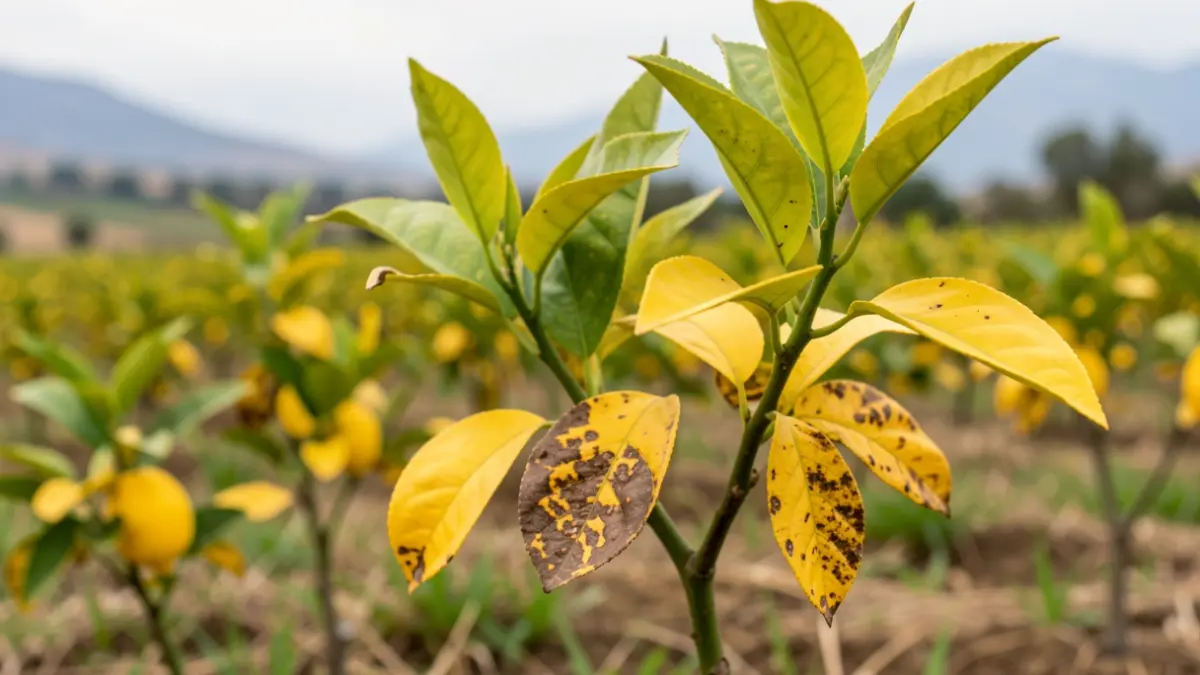
Amidst this prosperity, an unexpected phytosanitary problem has emerged. An engineer from the Plant Health Service of the Valencian Community showed slides of plots with yellow vein chlorosis in Turkey during a talk in Elche. A farmer recognized the symptoms in his own orchard, causing panic among attendees. Subsequent analyses have confirmed the presence of the virus, which is incurable and already present in China, Italy, and California.
The virus has been detected in one- or two-year-old lemon trees in at least 12 farms in Alicante and five in Murcia. Although young plantations facilitate their uprooting, the sector fears contagion to adult trees. José Antonio García has expressed the sector's concern, as the virus was not previously present in Spain and is believed to have entered through infected material from nurseries.
José Vicente Andreu has pointed to nurseries in Castellón and southern Tarragona as the possible origin of the outbreak, despite the plantlets coming with guarantees. It is estimated that between 2024 and 2025, approximately 9 million trees have been planted, many of which may be infected. The Association of Nurseries of Tarragona assures that all citrus reproductive material undergoes the required virological analyses before dispatch.
Agricultural organizations agree on the high economic cost if more positive cases are confirmed. Uprooting young plantations means losing recent investments and waiting years for new trees to reach full production, jeopardizing the continuity of many family farms, especially in the lemon-growing regions of Alicante and Murcia.
García, Andreu, and the head of agriculture for UPA Murcia, Antonio Moreno, advocate for locating, uprooting, and disinfecting infected plots. They are calling for financial support from regional administrations to compensate affected farmers. The Conselleria de Agricultura of the Valencian Community has already published an order for mandatory uprooting and is preparing another to regulate compensation.
The sector criticizes the response from the Region of Murcia, which has only approved a resolution declaring the virus's presence, without mandatory measures or specific aid. Andreu has been emphatic: 'We must uproot and burn.' García fears the virus will jump from young to adult plantations, while Moreno warns that a lack of swift and decisive action could lead to 'exponential' spread.