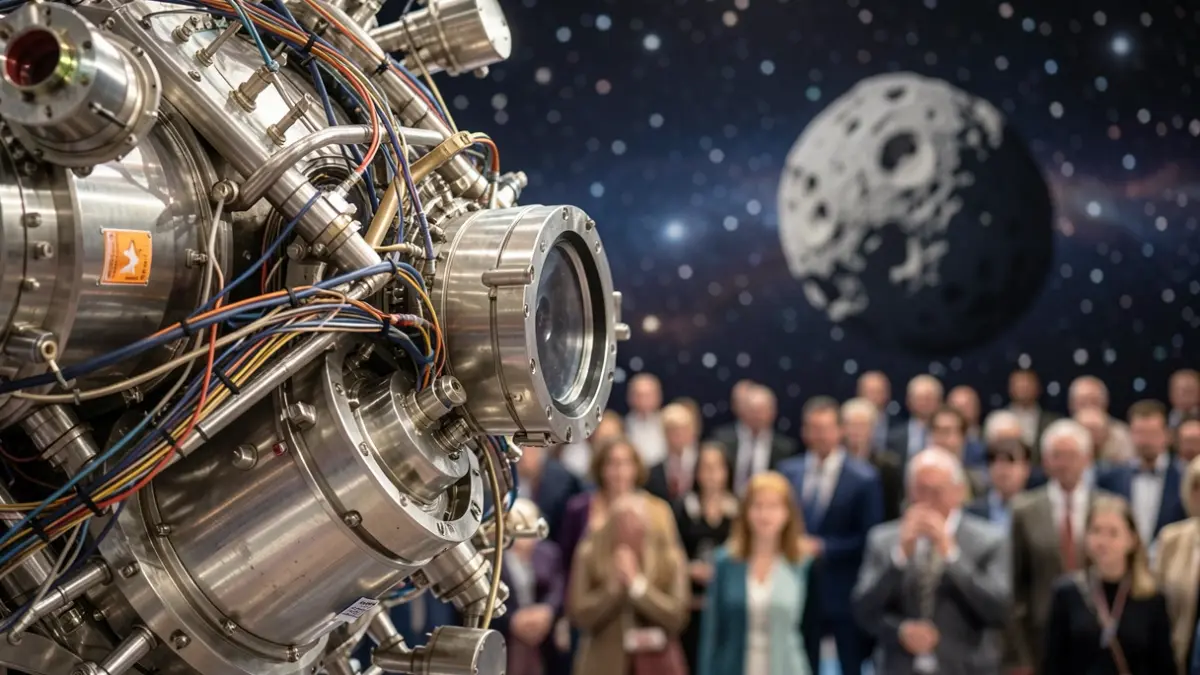
The European Space Agency (ESA) spacecraft Hera has reached the vicinity of the Didymos and Dimorphos asteroid system, located approximately 197 million kilometers from Earth. This achievement marks a new milestone for the Spanish space industry and, particularly, for EMXYS, a spin-off from the UMH Science Park (PCUMH), which has developed one of the mission's scientific instruments.
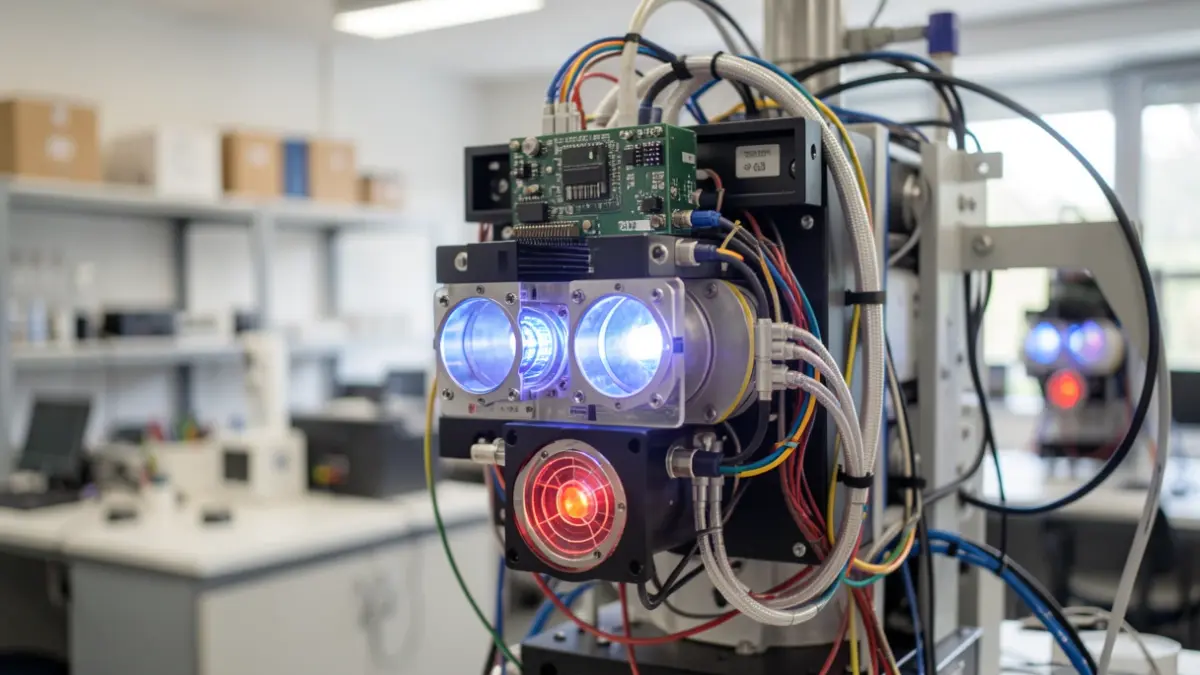
The GRASS (Gravimeter for Small Solar System Objects) gravimeter, developed by EMXYS in collaboration with the Royal Observatory of Belgium (ROB), is a high-sensitivity instrument traveling aboard the small satellite Juventas, carried by Hera. Its purpose is to study the extremely weak gravitational field of the asteroid Dimorphos.
Following its launch on October 7, 2024, from Cape Canaveral, the mission has completed a journey of over two years. The ESA has confirmed the first-ever visual distinction of the two asteroids from a distance of 1,280 kilometers. October's braking maneuvers have reduced the spacecraft's speed to approximately 20 meters per second, preparing for its approach and subsequent scientific operations.
The Hera mission is part of an international planetary defense effort. In 2022, NASA's DART mission impacted Dimorphos, altering its orbital period and demonstrating humanity's ability to measurably change a celestial body's trajectory. Now, Hera will investigate the consequences of that collision to enhance understanding of asteroid structure and composition.
EMXYS, from its facilities in Elche, has seen its technology reach nearly 200 million kilometers. CEO José Antonio Carrasco expressed the team's excitement: “our technology has reached the destination for which it was conceived, culminating years of effort.” Meanwhile, Director of Technology Francisco García de Quirós highlighted the pride in contributing to such an ambitious European mission.
In the coming weeks, Hera will continue its approach to the asteroids for detailed scientific characterization. The ESA anticipates obtaining high-resolution images on November 25. Subsequently, the satellites Juventas and Milani will be deployed for complementary investigations, at which point GRASS will commence its scientific operations.