The recognition for Halzen, announced on October 6 by the Royal Swedish Academy of Sciences, highlights his contribution to the development of the IceCube Neutrino Observatory, installed under the Antarctic ice, and the discovery of high-energy neutrinos from astrophysical sources.
The connection with IFIC, integrated into the Science Park of the University of Valencia (PCUV), is special. Halzen has collaborated with researchers from the institute and is part of its Scientific Advisory Committee. In 2024, he visited IFIC to give a lecture on IceCube's advancements.
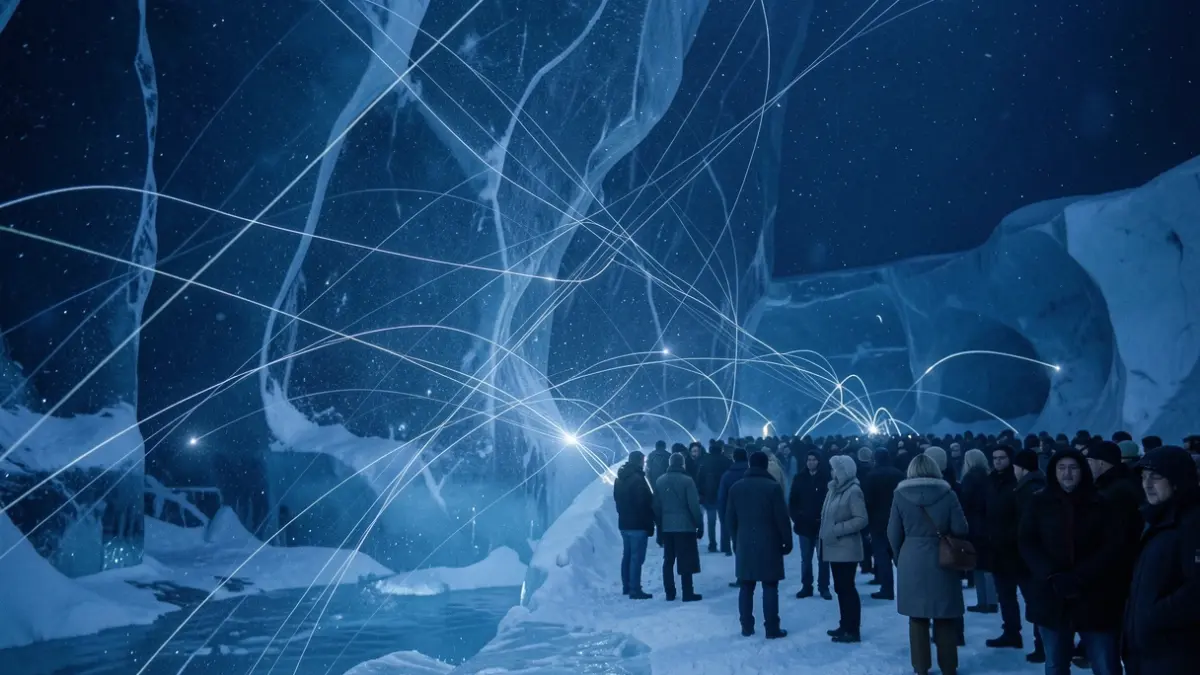
Neutrinos are subatomic particles with extremely small mass and no electric charge, capable of passing through large amounts of matter. Their detection, driven by Halzen using Antarctic ice as a medium, led to IceCube, an observatory with thousands of sensors that records the light signals from the interaction of these particles.
IFIC participates in KM3NeT, the European neutrino observatory in the Mediterranean, which complements IceCube's research. In 2013, IceCube announced the detection of high-energy neutrinos of cosmic origin, a discovery that marked a turning point for neutrino astrophysics.
Juan José Hernández Rey, CSIC Research Professor at IFIC, highlights Halzen's perseverance in making the international scientific infrastructure a reality. Juan de Dios Zornoza, titular professor at UV and IFIC researcher, emphasizes Halzen's influence in driving major European neutrino observatories, such as ANTARES and its successor, KM3NeT.
Sergio Pastor, director of IFIC, believes the award recognizes Halzen's career and a discipline in which the Valencian institute is highly active. Nuria Rius, professor at UV and former director of IFIC, underscores that Halzen has opened a new window to the universe with neutrino astrophysics.