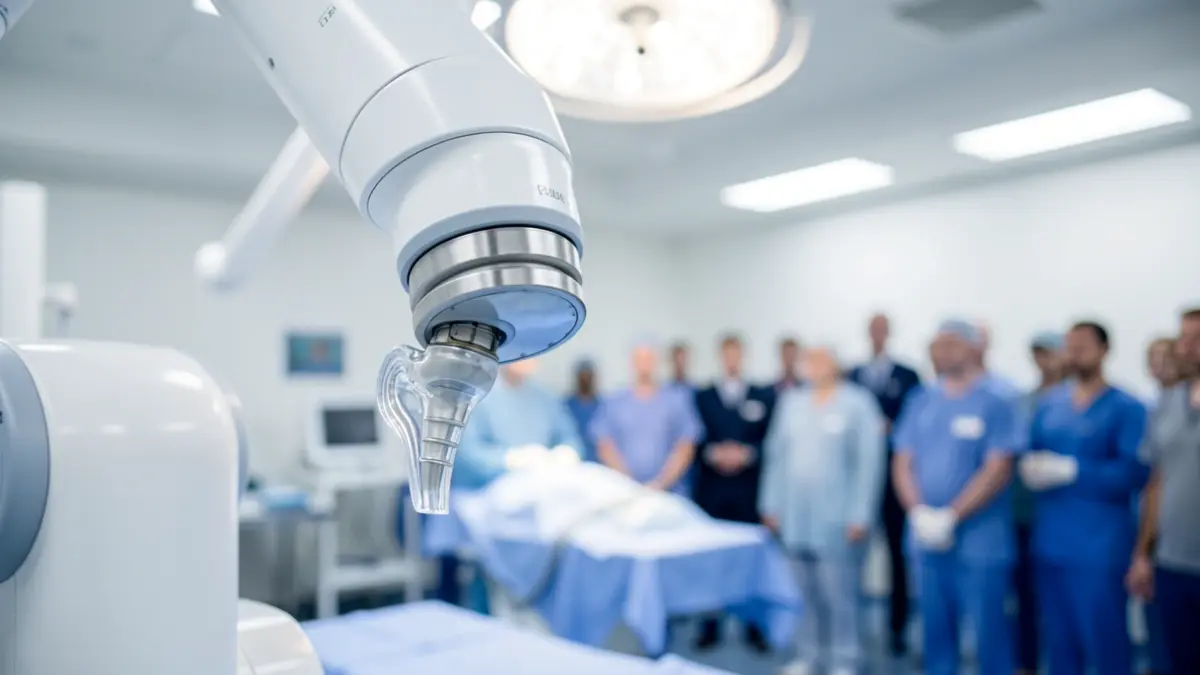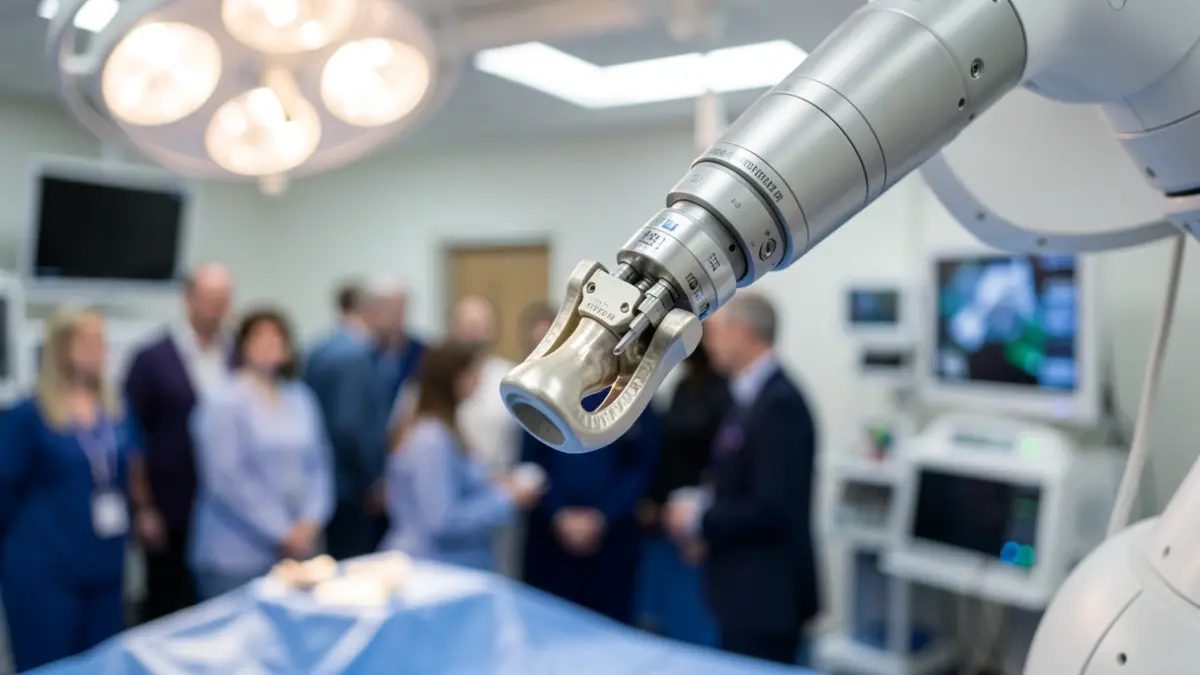
The integration of new technologies is transforming the approach to common joint pathologies. In this context, robotic surgery applied to knee prostheses has become a major innovation in orthopedic surgery, allowing for the customization of each intervention based on the patient's anatomical characteristics.
The Knee Unit at Hospital Quirónsalud Valencia, comprising doctors César Calero, José Poveda, Elena Sáez, and Alexis Rodríguez, has recently adopted the CORI Surgical System. This robotic assistance technology is designed to optimize the planning and placement of each knee implant. This advancement represents a significant evolution in treating patients with advanced knee arthrosis, one of the most frequent conditions in knee traumatology consultations.
Knee arthrosis is a degenerative disease causing progressive wear of the articular cartilage. Factors such as population aging and obesity have increased the number of affected individuals. When conservative measures become ineffective, knee prosthesis surgery becomes a highly effective therapeutic alternative.
Total knee replacement, or arthroplasty, is indicated for advanced joint deterioration that significantly limits daily activities. According to Quirónsalud Valencia specialists, the primary goals are pain relief, restoring mobility, and improving quality of life. Currently, over 90% of patients undergoing total arthroplasty experience significant symptom and functional capacity improvement.
The CORI platform is a robot-assisted surgery system that aids the surgeon during knee prosthesis implantation. It does not operate autonomously but provides precise anatomical information and navigation tools. During surgery, trackers record bone positions, generating a 3D model of the joint to analyze the patient's real-time biomechanics.
This digital model allows for the study of joint mobility, assessment of limb alignment, and prediction of the future prosthesis's behavior. Digital planning enhances surgical precision, enabling the specialist to virtually rehearse the intervention before making definitive bone cuts, tailoring the plan to each patient's specific needs.
Unlike conventional surgery, guided by X-rays and anatomical references, robotic surgery incorporates real-time dynamic information on bone and soft tissue positions. This allows for greater planning capacity, better assessment of ligamentous balance, and improved result reproducibility.
Specialists believe that virtually any candidate for knee prosthesis surgery can benefit from robotic assistance, particularly those with significant deformities, alignment issues, or complex anatomies. It is also valuable for active patients seeking to regain high functional levels post-intervention.
The integration of systems like CORI reflects the evolution of knee surgery towards more personalized, data-driven procedures. The combination of surgical expertise and advanced technology allows for tailoring each knee prosthesis to the patient's actual anatomy, optimizing implant placement and contributing to improved functional recovery.