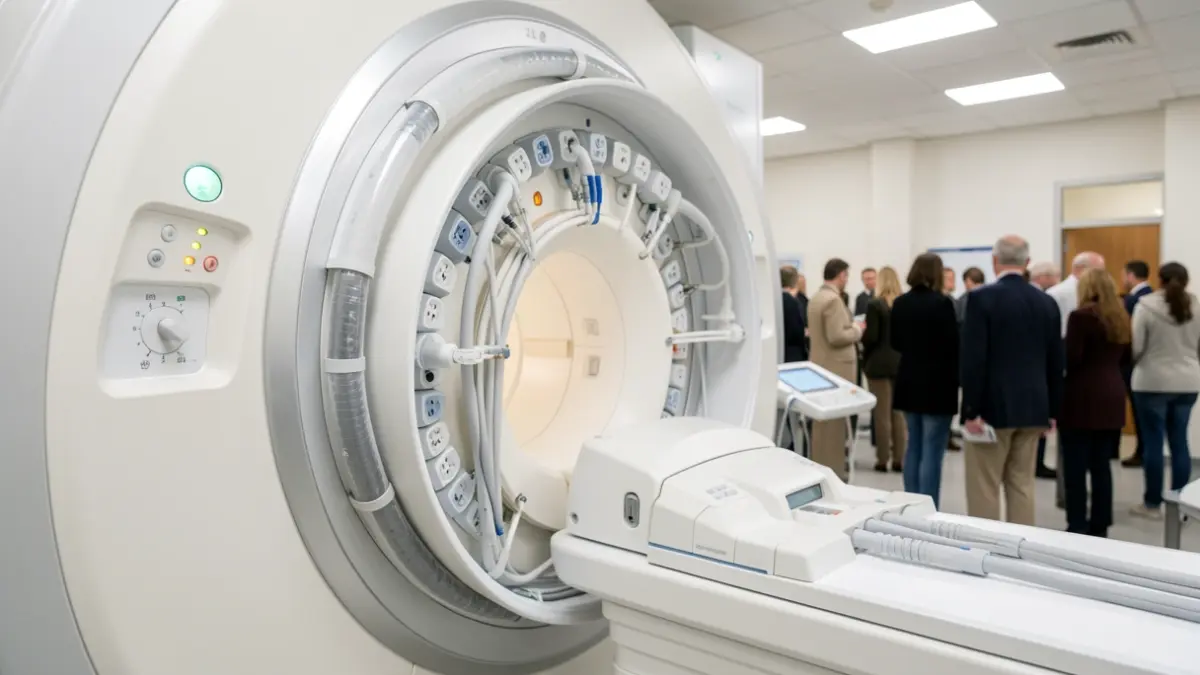
The new MyoStrain technology, now operational at Vithas Alicante Hospital, represents a significant advancement in preventive cardiology. This system enables rapid and effective quantification of myocardial function, reducing the examination time from 45-60 minutes to just 10 minutes, equivalent to 12 heartbeats.
One of the key advantages of this technology is the ability to perform the study without the need for contrast (gadolinium) administration in certain patients and without requiring prolonged apnea maneuvers. This facilitates the test for individuals with functional limitations, anxiety, respiratory difficulties, or lower tolerance for lengthy studies.
Alejandro Cañamaque, general manager of Vithas Alicante and Vithas Medimar, highlighted that the incorporation of MyoStrain reaffirms the hospital's commitment to precision medicine. "We are not only reducing waiting and diagnostic times but also offering a tool that can save lives by detecting cardiac problems much earlier," he stated. He also emphasized that the technology makes the patient experience "much more agile and comfortable" by eliminating injections and apneas.
The technology is particularly useful for cancer patients (to monitor chemotherapy cardiotoxicity), athletes (to assess the heart under high-intensity effort), individuals with risk factors (hypertension, diabetes, obesity), and for detecting potential post-COVID sequelae.
Dr. María Jesús Cano, medical director of Vithas Alicante and Vithas Medimar, underscored the clinical value of early detection: "This technology allows us to visualize myocardial damage in initial stages, analyzing the heart segment by segment".