
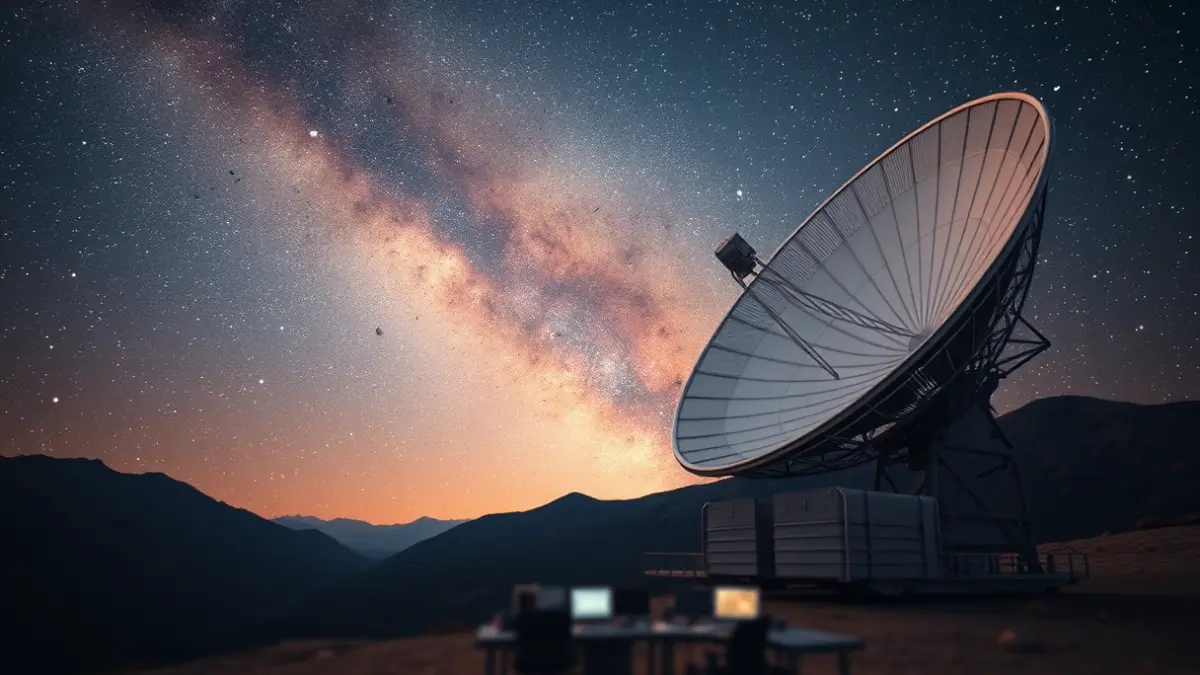
The United States Ambassador to Spain has congratulated the team at the Madrid Deep Space Communications Complex, located in Robledo de Chavela, for their essential contribution to the success of NASA's Artemis II mission. This recognition underscores the technological capability and global impact of the Madrid facilities in space exploration.
The U.S. Embassy reported that the Ambassador learned firsthand about the communication capabilities of these facilities, which operate in collaboration with the National Institute for Aerospace Technology. During his visit, the scientific advancements achieved through the mission were also highlighted.
The Madrid enclave is one of three centers that make up NASA's Deep Space Network. During Artemis II, it served as the primary station for adjustments made during the Orion spacecraft's journey to the Moon and coordinated trajectory correction on its return to Earth.
Furthermore, the Ambassador expressed gratitude for the complex's contribution to the successful optical laser communication test. This technology enabled the transfer of 500 gigabytes of data, including photographs of the far side of the Moon, marking a milestone in space information transmission.
The Embassy emphasized that this breakthrough represents a qualitative leap compared to traditional radiofrequency communications, and will be highly useful for future missions, such as NASA's planned lunar base. Preparations for Artemis III are already underway, with an estimated completion date before the end of 2027, and the Robledo de Chavela complex will continue to be a fundamental piece in deep space exploration and scientific progress.