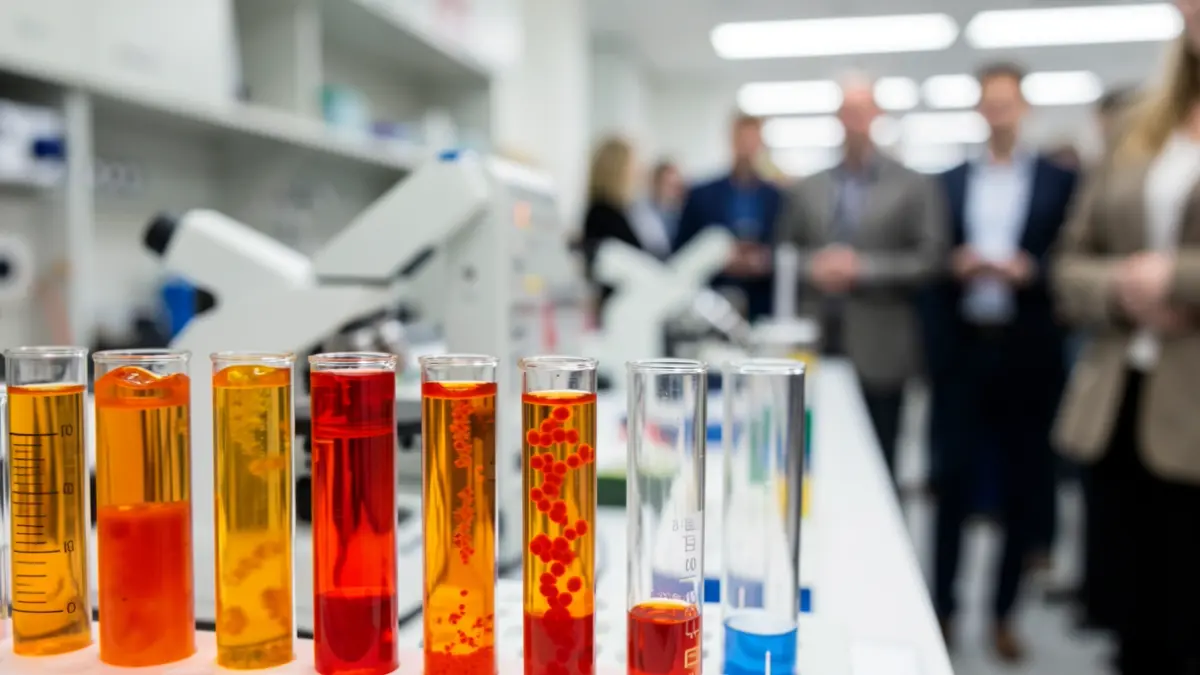
The work, published in the journal MethodsX, proposes an analytical strategy designed to facilitate the study of these microbial pigments, which have garnered interest for their antioxidant properties and potential applications in food, biotechnology, and sustainable production.
A key challenge is the difficulty in obtaining reference analytical standards, as some compounds have very limited commercial availability and high costs. "One of our goals is to generate analytical tools that bring microbial biotechnology closer to real-world applications, from food to health, sustainably and efficiently," explains Juan Antonio Melero, a researcher on both projects.
The developed methodology combines various separation and characterization techniques to identify three of the main carotenoids produced by the bacterium: neurosporene, spheroidenone, and spheroidenone. The primary innovation lies in the ability to identify and quantify these pigments more easily and accessibly.
Beyond its analytical application, this methodology can be a useful tool for optimizing microbial cultures, studying how carotenoid profiles change under different conditions, and accelerating the development of processes for obtaining biomass and high-value products from microorganisms.
The research was conducted within the framework of the PURPLE4LIFE project, funded by the Circular Bio-based Europe Joint Undertaking under the Horizon Europe program, and the BIVALIA-CM project, funded by the Community of Madrid.