The MAKING PEDs project, coordinated by the Catalan Institute for Energy Research (IREC), has concluded its work by developing innovative digital tools and methodologies to help cities plan Positive Energy Districts (PEDs) and accelerate the transition towards climate neutrality. Positive Energy Districts are urban neighbourhoods designed to generate more renewable energy than they consume, contributing to emission reductions and the creation of greener, more sustainable urban environments.
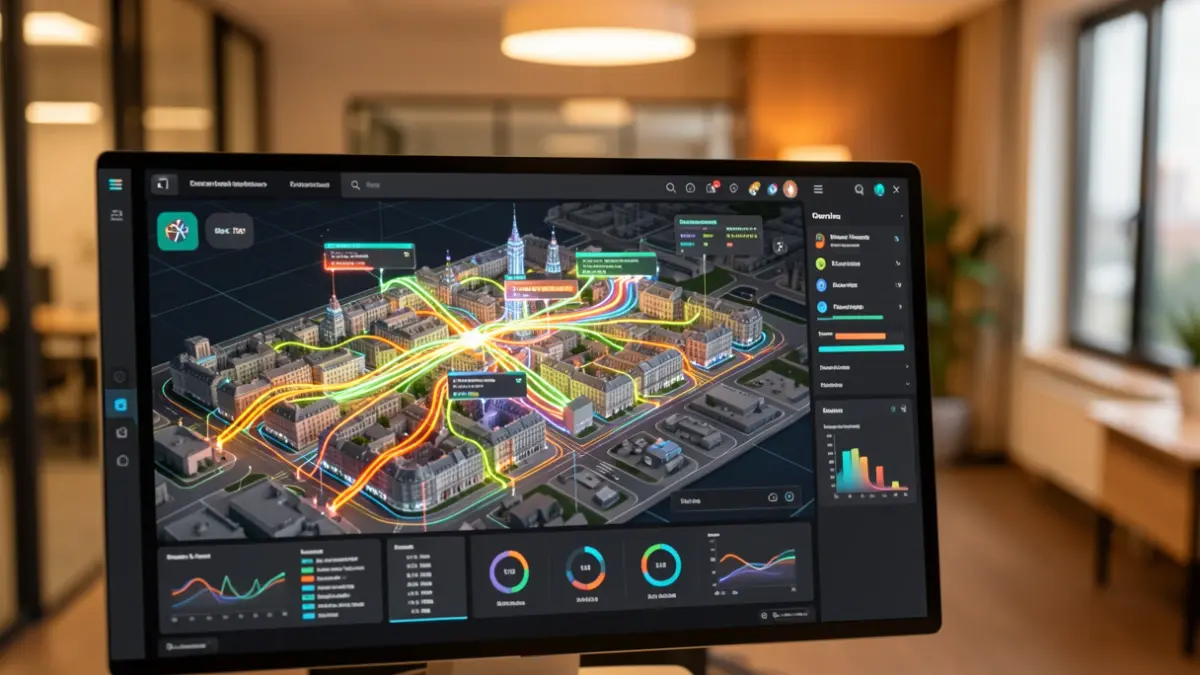
At the heart of the project is the MAKING PEDs Digital Twin Platform, a decision-support tool that integrates urban data and assessment modules. These modules cover operational energy, building embodied emissions, water, waste, mobility emissions, renewable energy, and nature-based solutions. The platform connects digital representations of urban districts, enabling simulations, scenario testing, and cross-domain analysis of different intervention scenarios. It integrates 3D city models into a dynamic, interactive environment.
This platform has received significant recognition at the European level. It was selected as the best innovation in the PED Transition Pathway from the 2022 call and has been included in the Driving Urban Transitions (DUT) innovation portfolio, highlighting its contribution to urban climate neutrality, resilience, and its potential for replication and scaling.
On October 22nd, Jaume Salom, head of IREC’s REACT Department and MAKING PEDs project coordinator, presented the innovation at the DUT Call 2022 Online Final Event. The platform has also been a finalist in other awards, including the eAward 2026 in the Sustainability category and the EmErgEnt Awards 2026 (Llavor category), organized by the Catalan Energy Efficiency Cluster (CEEC).
Beyond the Digital Twin Platform, MAKING PEDs has delivered several key innovations to support PED development, including workflows for creating 3D city models (led by the Norwegian University of Science and Technology - NTNU) and a methodology for stakeholder engagement in PED planning (developed by the Austrian Institute of Technology - AIT).
The project brought together 10 European partners. The work now continues through the Scale-UP MAKING PEDs project, which builds on the results to support the implementation of PEDs, focusing on the platform's interoperability, replicability, and scalability.