The statement that land was the cause of our wealth and our current situation, uttered during the 2008-2013 real estate crisis, encapsulates the complex relationship of Spain, and Madrid in particular, with the construction sector. This love-hate dynamic has shaped the economic and urban trajectory of the capital in recent decades.
Between 1997 and 2007, Madrid experienced the most pronounced real estate boom in its history, followed by an unprecedented collapse. Barely a decade later, the market is once again overheated, with the price per square meter reaching 5,820 euros in December 2025, a historic record. The main current challenge is the shortage of housing supply.
The 1997-2007 boom was driven by factors such as the introduction of the euro, low interest rates, the expansion of mortgage credit, demographic growth in the Community of Madrid, and urban planning policies that prioritized land as a speculative asset. This resulted in massive construction that left thousands of vacant homes in the metropolitan area after the crisis.
The 2008-2013 crisis demonstrated that an urban policy based on land as a speculative asset is unsustainable. The lesson for new developments (Valdecarros, Los Berrocales, Madrid Nuevo Norte) is that protected housing must be a structural part of the model, not an addition.
From 2015 onwards, the Madrid real estate market began a gradual recovery, which accelerated with the arrival of international investment. By 2018, prices had already recovered pre-crisis levels, and in 2025 they significantly surpassed them. The current paradox is that the crisis left a drastic reduction in new construction, leading to high demand and limited supply, contributing to record prices.
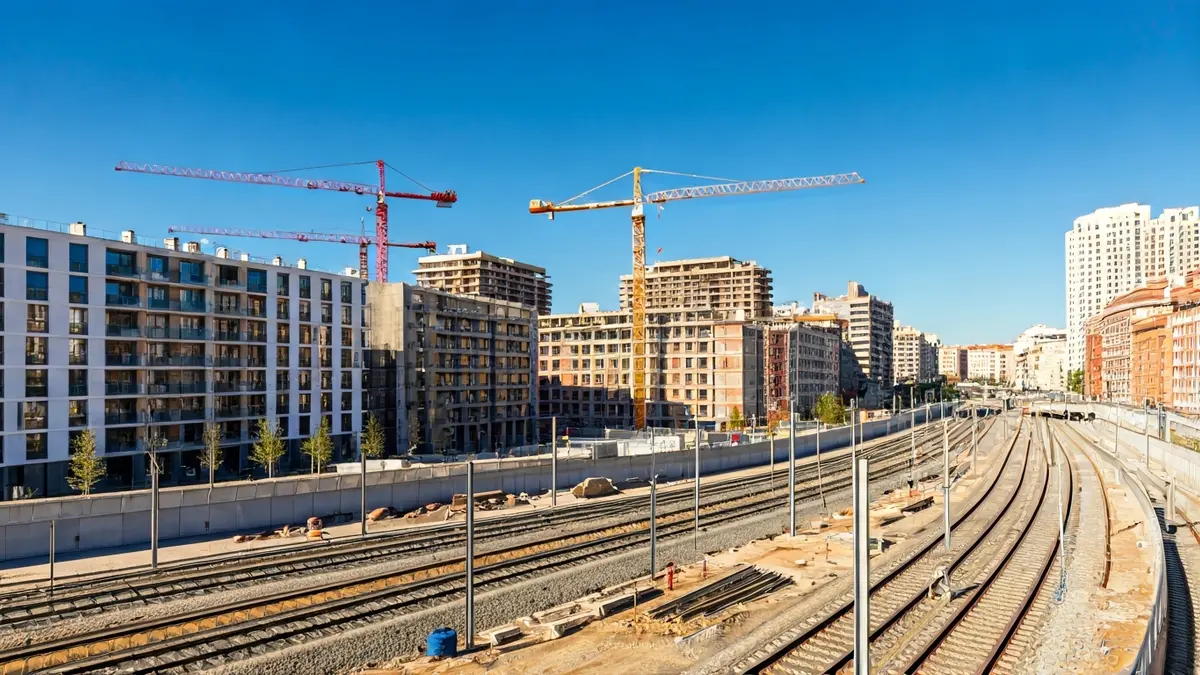
The response to this supply shortage comes in the form of large urban projects in the southeast and north of the city, which are underway in 2026. Developments such as Valdecarros (51,656 homes), Los Berrocales (22,285), Los Ahijones (18,724), El Cañaveral (14,000), Los Cerros (14,276), and Madrid Nuevo Norte (10,500) will add over 130,000 new homes. A key aspect of these projects is the inclusion of protected housing, with percentages ranging between 37% and 56%, an unprecedented proportion that reflects lessons learned from past mistakes.
Experts are divided on the sustainability of the current market. While some argue that demand is structural, others warn that prices are unsustainable for a large part of the local population. It is estimated that the moderating effect of these large developments will not be significantly felt until 2028-2029, and their full impact will take more than a decade to materialize.