
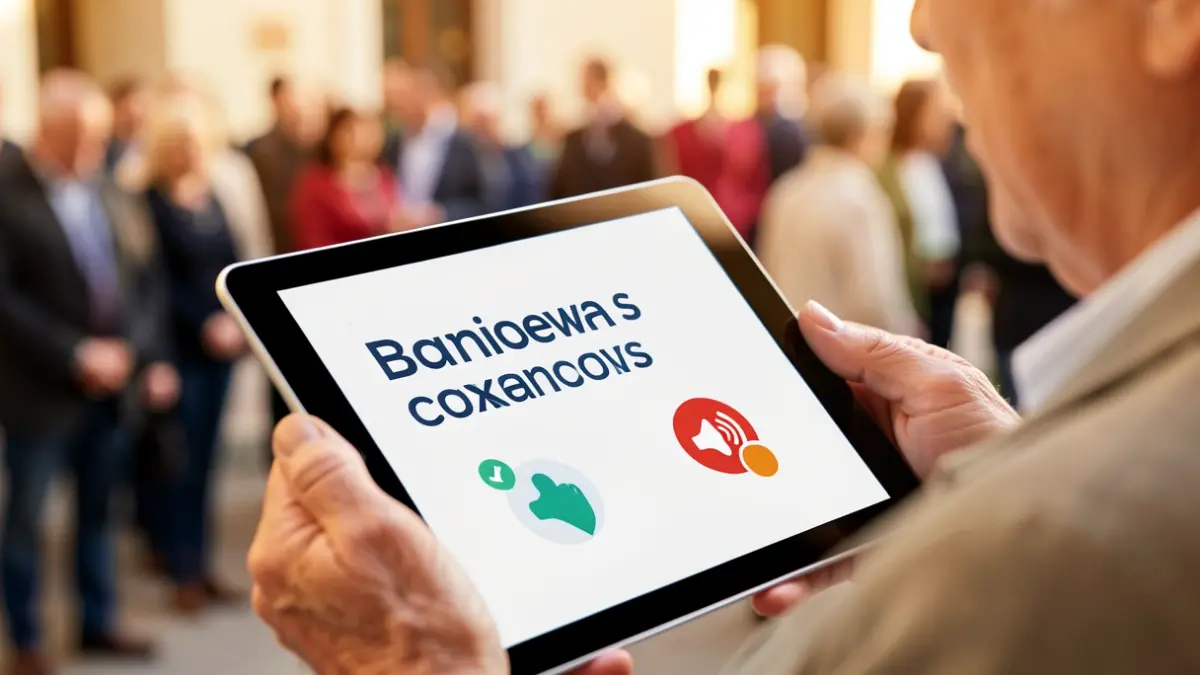
Population aging and unwanted loneliness pose challenges to the well-being and autonomy of older adults. The digital divide can hinder their access to technology, but conversational tools offer new avenues for simple and accessible interaction.
The new system, developed by UPM and UJA, integrates text and voice interaction with functions for emotional support and assistance in managing reminders and appointments. Its design prioritizes ease of use with simplified navigation, larger text, and guided conversations.
This chatbot goes beyond task resolution, incorporating responses designed to listen and accompany the user with a friendly tone and follow-up questions. It also facilitates creating reminders, managing appointments, and offers assistance mechanisms for emergencies.
A pilot study with ten older adults, averaging 70 years old and with varying levels of digital experience, evaluated the technology. Participants used the main functions and positively rated the ease of use, accessibility, and interaction experience.
Preliminary results were encouraging: nine out of ten participants found the interface easy and intuitive and valued voice interaction. They reported feeling heard or accompanied. Key areas for improvement included achieving more natural responses and expanding conversation topics.
"These results are preliminary and do not demonstrate a clinical improvement in emotional well-being or a reduction in loneliness," explains Gema Parra, a researcher at UPM and lead author. "However, they show the potential of designing accessible conversational technologies that can complement other forms of support and facilitate certain daily activities," she concludes.
The authors emphasize that these tools are not intended to replace human contact but to complement companionship and assistance. The next step will be to evaluate these systems with larger, more diverse groups over extended periods.