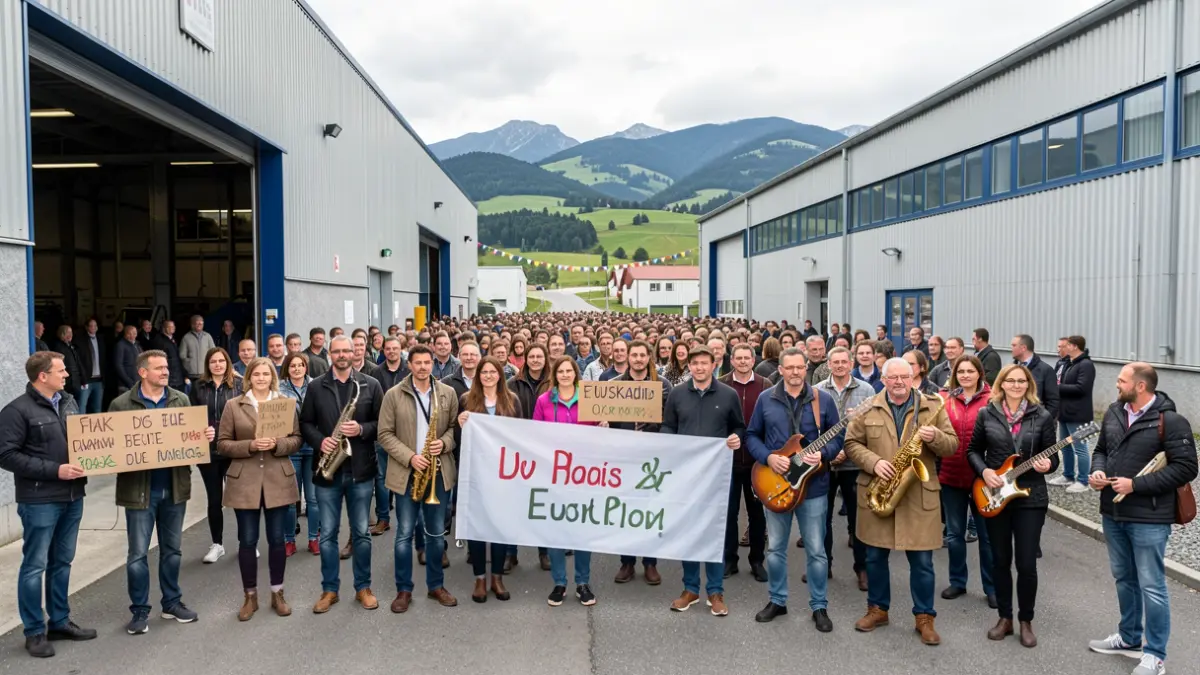
The indefinite strike at Maderas de Llodio has reached 250 days, with workers at the Laudio wood factory continuing their protests against the 35 layoffs imposed by the multinational Garnica. A solidarity picket has been organized at the factory entrance, with dozens of citizens showing their support for the strikers, accompanied by music and food.
According to research by Aiaraldea Komunikabidea, this is the longest strike on record in the region's history. While the fight against the closure of Aceros de Llodio lasted longer, the strike days were not continuous. In the case of Novaltia, the struggle lasted three years and eight months, but the company's headquarters were not located in the region. The previous record was held by Tubacex workers, with 236 days in 2021.
Garnica announced the collective dismissals in September last year, and the workers began their indefinite strike a week later. In the initial days, when management representatives visited the factory, workers greeted them with whistles, firecrackers, and flares. The conflict extended beyond the factory, with the occupation of the Álava Provincial Council's offices in Laudio and a sit-in at the Laudio Town Hall to demand institutional involvement.
The workers conducted two marches to Garnica's offices and factories in La Rioja, and also brought the anti-layoff protests inside the Laudio factory. The Álava Provincial Council agreed to mediate, but workers complain that public institutions have merely attended meetings without engaging in genuine mediation.
In February, the High Court of Justice of the Basque Country ruled the dismissals were unfair, but both parties, the company and the unions, have appealed the ruling to the Supreme Court of Spain, prolonging the process. In the last two months, Maderas de Llodio workers have joined forces with those from Tubos Reunidos, and tomorrow they will protest again before the meeting of the Table for the Industrial Development of Aiaraldea in Laudio's Lamuza square.
On Monday, management called a meeting with worker representatives but presented a proposal almost identical to the previous one, with minor "anecdotal" improvements. The company has presented the proposal as an ultimatum, giving workers until June 5th to decide whether to accept it. The unions will meet with their affiliates to determine the next steps.