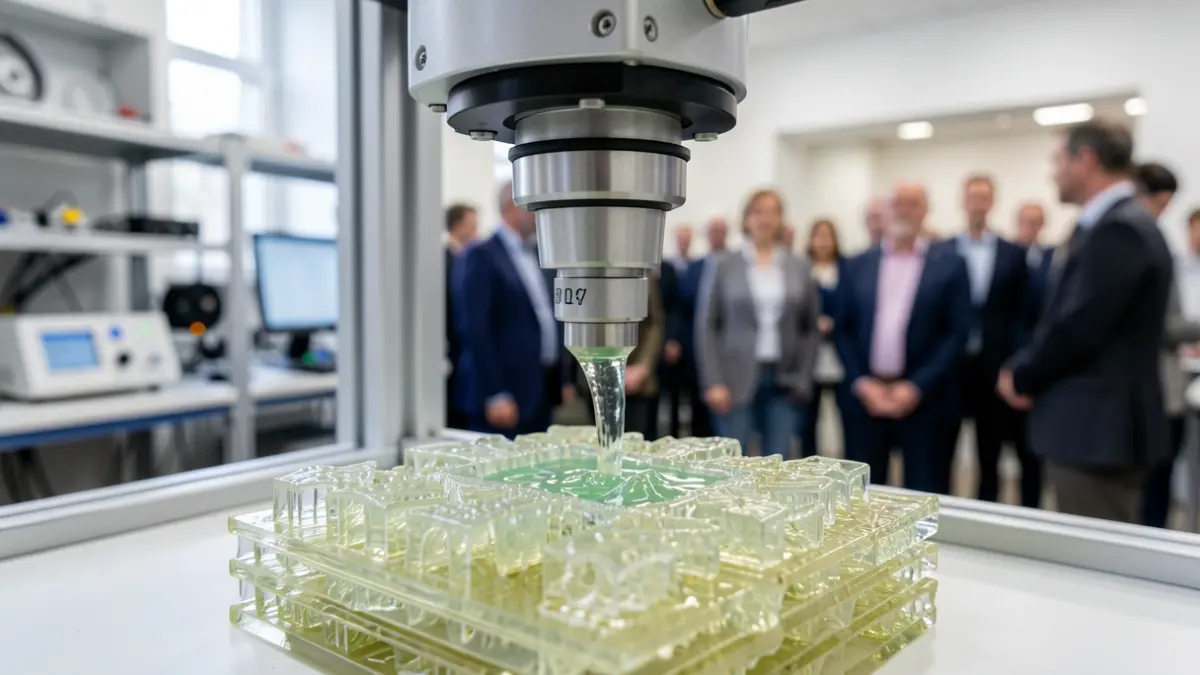
In regenerative medicine, 3D bioprinting is emerging as a key technology for generating cells, tissues, and organs, driving disease research and the development of new therapies. In Euskadi, the Joint Research Laboratory (JRL) Applied Pharma Devices (APD), a joint initiative between the UPV/EHU and Tecnalia, aims to establish a bioprinting service for creating three-dimensional tissue and organ structures, as well as pharmaceutical forms using additive manufacturing technologies.
This collaborative model, promoted by the Euskampus Fundazioa, operates as a "laboratory without walls," pooling capabilities, infrastructure, and knowledge to tackle scientific challenges. This framework is open to participation from other entities within the Basque Science, Technology, and Innovation System.
The NanoBioCel research group, led by investigator José Luis Pedraz, exemplifies the potential of bioprinting in diabetes research. They are working on encapsulating pancreatic spheroids—small three-dimensional models of pancreatic cells—using induced pluripotent stem cells. These models aim to replicate pancreatic characteristics and assess cellular responses to glucose.
The goal is to develop reproducible models for studying diabetes and evaluating new drugs, while also exploring their future potential for creating grafts to replace pancreatic beta cells. The use of induced pluripotent stem cells also opens possibilities for generating patient-specific models to study the link between genetic alterations and diabetes, and to assess personalized therapeutic strategies.
The 3D bioprinting unit at the Álava Campus of the UPV/EHU, part of the JRL in advanced therapies and funded by the Provincial Council of Álava, along with Tecnalia, supports this collaborative model, bridging university research with the needs of industry and society.