The award recognizes AZTI's experience in developing solutions to reduce waste generated by fishing gear at the end of its useful life. Leading the European project SEARCULAR, the center brought together fishing fleets, manufacturers, ports, recycling companies, and administrations to give new utility to disused fishing nets and gear, thereby reducing waste from fishing activities.
Bilbao, November 13, 2026. AZTI received the award in the Knowledge Management Entities category at the first edition of the Waste Lab Bizkaia Sariak. Oihane C. Basurko, an expert in marine litter at AZTI and coordinator of SEARCULAR, accepted the recognition last Thursday, November 12, at the Bilbao Arena in Miribilla.
The awards were established to give visibility to those who drive the circular economy in Bizkaia through waste prevention, material reuse, and recycling. The Provincial Council of Bizkaia promotes the initiative through Garbiker, with the participation of Aclima (the Basque environmental cluster) and EIDE (the Basque Design Association).
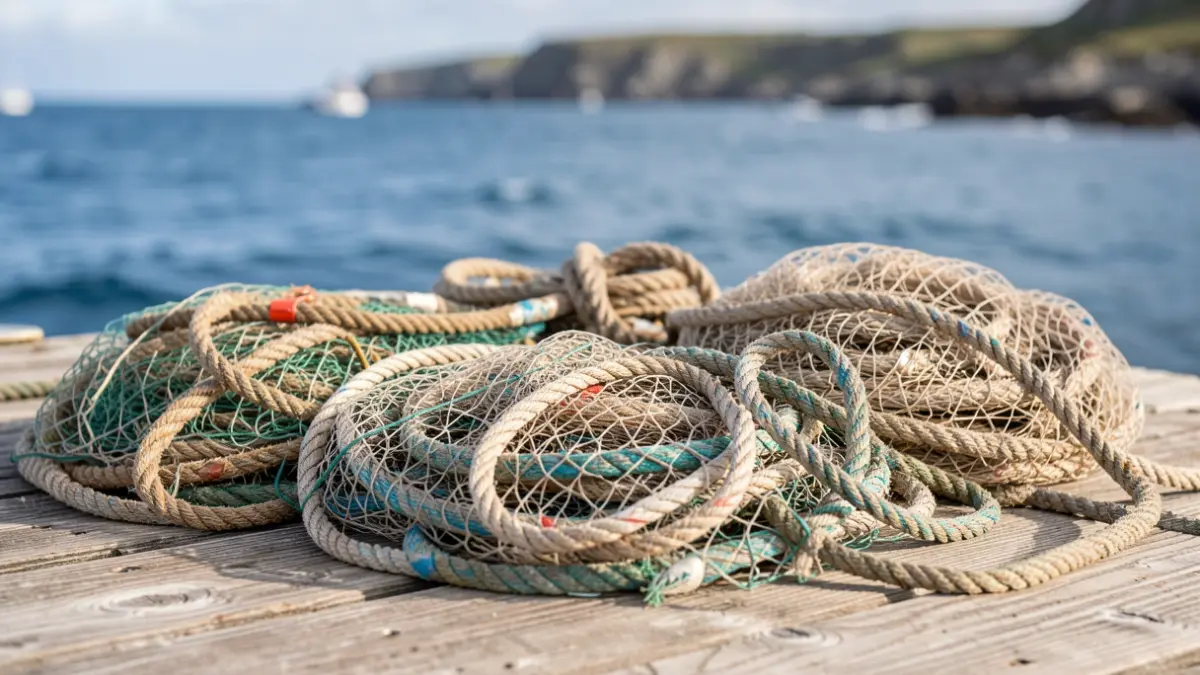
A purse seine net removed by a tuna seiner in port can be returned to the sea as a rope that protects the net of a trawler from wear. To make this possible, it is necessary to know which materials can be recovered, how to transform them, and what performance the crew that will use them needs. In SEARCULAR, AZTI coordinated the work of all stakeholders, from the delivery of the net in port to the testing of the new rope at sea.
AZTI and the Bermeo-based company Saretu Recycling coordinated the development of these ropes from disused tuna nets. Four trawlers tested them in 429 hauls. During the tests, the recycled ropes lost 1.2% of their filaments, compared to 8.3% for conventional ones. The trials also identified a necessary improvement for the fleet: increasing the rope's flexibility to facilitate handling on deck.
For a port considering collecting disused nets and gear, specific decisions must be made: how much space to reserve, how to separate materials, and how to organize transport. In SEARCULAR, GAIKER led the development of Smart Blue Point, a collection and classification model that the team validated with 13.7 tons of fishing gear from four Basque ports. This experience provides ports, management companies, and administrations with data to size the collection and decide the most suitable destination for each material.
The consortium, comprising 11 entities and coordinated by AZTI for three years, translated the test results into recommendations for the fishing sector and administrations. These include incorporating collection points at port facilities and identifying the materials that make up each gear to facilitate its recovery. As Cabezas Basurko pointed out when presenting the results of SEARCULAR, "the challenge now is for industry and regulation to advance in a coordinated manner to extend their application." The project received funding from the European Union's Horizon Europe program, UK Research and Innovation, and the Basque Government.
In this first edition of the awards, Biscay Eco Aggregates also received recognition in the Business and Professionals category, and the Bilbao City Council, in the Public Entities category, for its Bilborganik initiative for organic waste collection. José Ignacio Zudaire Arana received the Special Career Award.