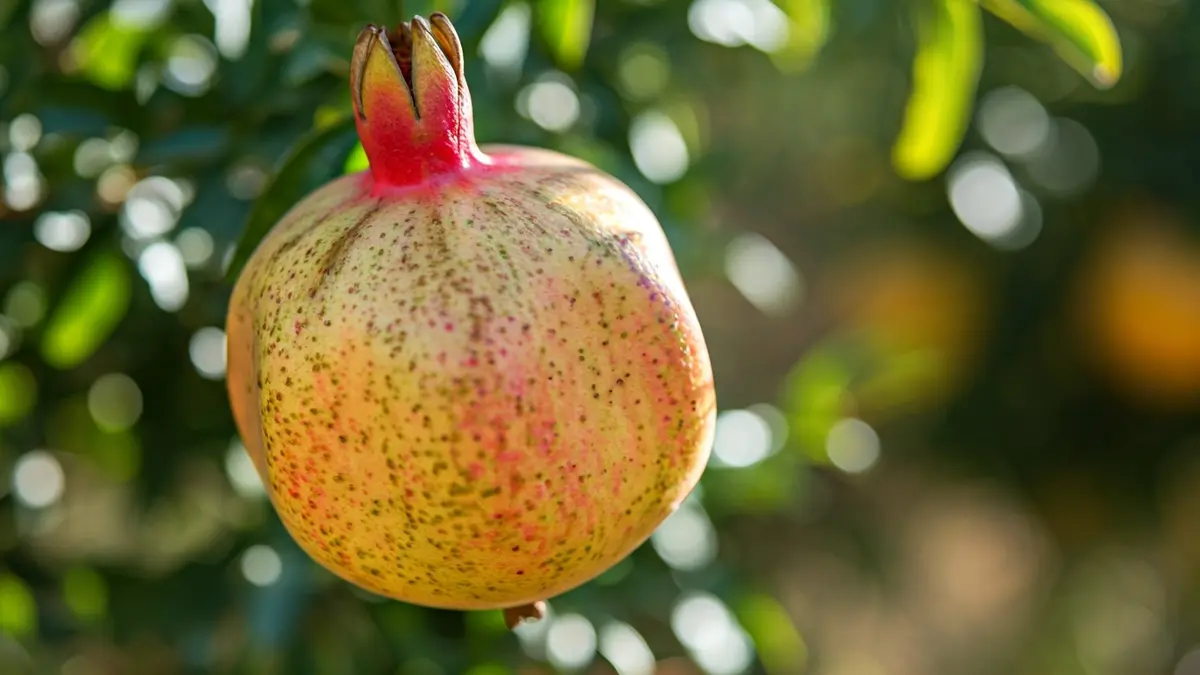
The initiative, set to run for two years, will focus on studying the browning of the aril, the small edible seeds of the pomegranate. This alteration affects the fruit's appearance and commercial value and has been detected with greater frequency in recent years due to climate change.
“"Advance in the knowledge of these alterations, identify their origin, and apply effective measures to reduce their impact on the fruit."
The Gramola project is a collaboration between the Valencian Institute of Agrarian Research (IVIA), the Protected Designation of Origin Granada Mollar de Elche, and the company Hermanos Fuentes. The team will combine scientific studies with field trials, including the use of shade nets to protect the fruit from excessive sun and the application of kaolin, a natural clay that helps reduce thermal stress.
Researchers will conduct a comprehensive monitoring of the crop, from flowering to harvest, analyzing factors such as plant nutrition and environmental conditions. Sensors will be installed to measure temperature and humidity, providing precise data on the pomegranate's microclimate. The study will also include advanced fruit analyses and evaluate its post-harvest behavior to improve its preservation and commercialization.
“"Allow us to better understand the product, solve problems, and continue guaranteeing the quality of a unique fruit in the world."
The project is funded by the European Union, the Ministry of Agriculture, and the Generalitat Valenciana, through Feader funds, and has the collaboration of the Elche Agrarian Experimental Station. With this initiative, the sector seeks to strengthen the competitiveness of the Elche Mollar pomegranate, a key crop for the region's economy and identity, ensuring its quality against future challenges.