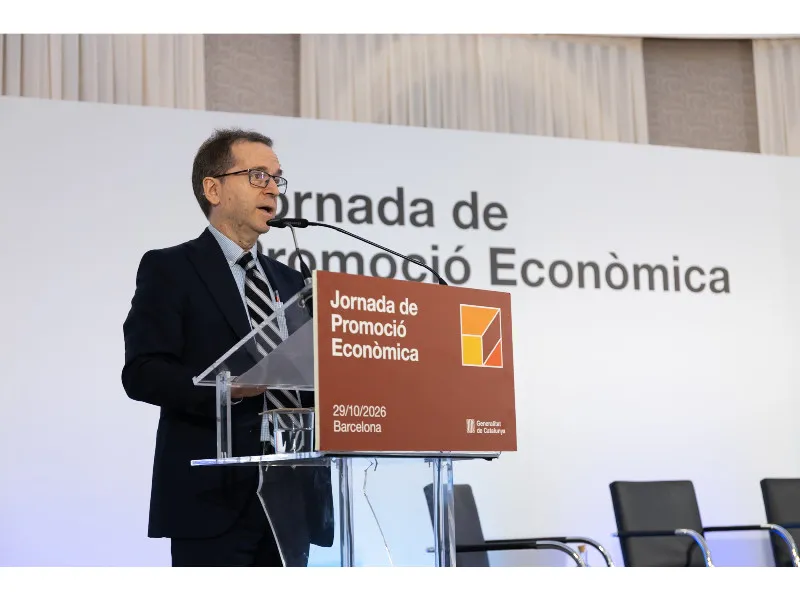
The Government of Catalonia, through the Department of Economy and Finance, held an Economic Promotion Conference at the Palau de Pedralbes, gathering nearly a hundred representatives from academia and local sectors. The meeting aimed to share experiences, foster debate, and reflect on the challenges and opportunities related to Catalonia's territorial competitiveness and well-being.
During the event, the Economic Promotion Community was unveiled. This initiative aims to be a space for work, learning, and collaboration with territorial agents, identifying the strengths of each region and launching projects to generate new opportunities and reinforce the local economy. It primarily targets municipalities with over 20,000 inhabitants, regional capitals, and supramunicipal entities.
This initiative aligns with recommendations from international bodies such as the OECD and the European Union, which advocate for policies tailored to the specific characteristics and resources of each territory. The ultimate goal is to foster a sustainable development model—environmentally, economically, and socially—across all of Catalonia.
The conference is part of the Territorial Competitiveness Program, a support instrument for local areas in economic promotion, linked to the Territorial Competitiveness Framework for Catalonia's Well-being. This program provides methodology, technical support, and specialized guidance for exchanging best practices and fostering collaboration among territorial actors. It also offers tools for diagnosing local needs, defining priorities, and implementing projects adapted to local realities. For instance, representatives from Baix Penedès shared their approaches to territorial competitiveness.
The Territorial Competitiveness Framework for Catalonia's Well-being is an analytical tool that assesses territorial competitiveness and facilitates collaboration between the Generalitat and local agents to identify and prioritize strategic projects. The Framework comprises four blocks: structural context, local leverage factors, sustainable competitiveness, and people's well-being, which is the ultimate objective.