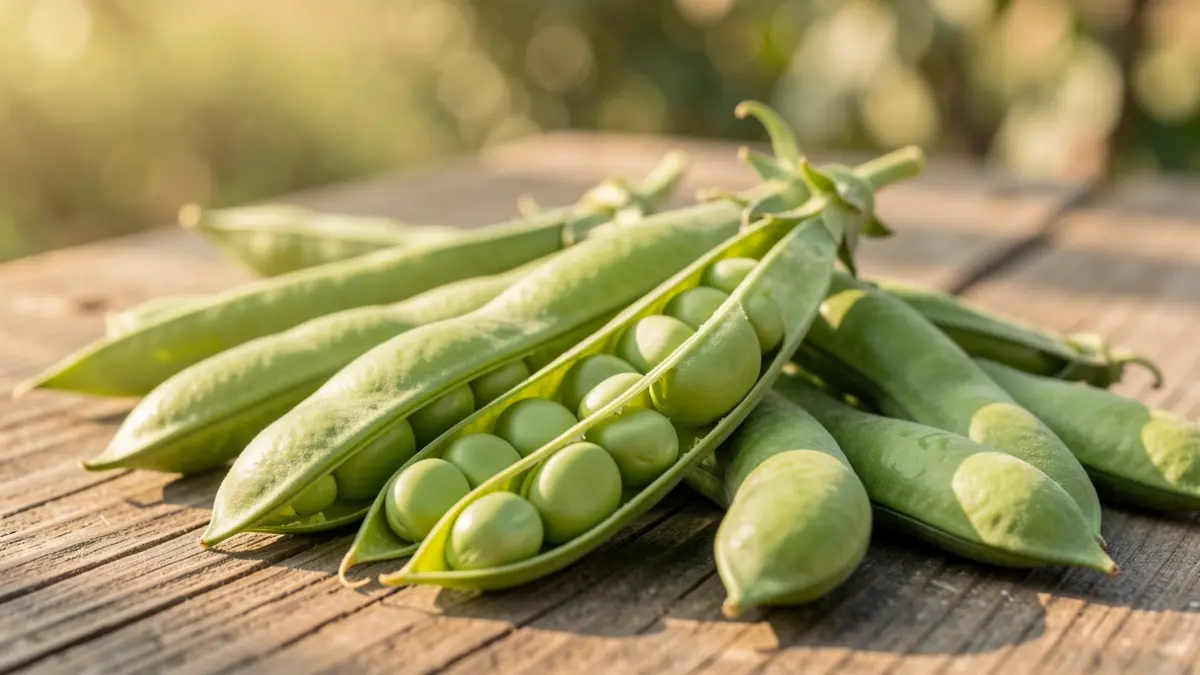
The fava bean is establishing itself as a promising crop for plant protein production, despite its agronomic complexity and the diversity of varieties and cultivation techniques. This trend is reflected in the preliminary results of the "FAVAPROT" pilot project, initiated by the Institute of Agrifood Research and Technology (IRTA) within its Sustainable Broadacre Crops Program.
The project, spanning the 2024-2025 and 2025-2026 seasons, involves ACTEL SCCL and SEMILLAS FITÓ SA as beneficiaries, with coordination by NACTIVA and technological support from IRTA. The primary objective is to determine the viability of the fava bean as a source of plant protein for human consumption.
Trials have been conducted with commercial varieties of horse and broad beans in different experimental zones, including La Tallada d’Empordà, Fornells de la Selva, and Sucs. Key parameters monitored at these sites include germination, flowering, disease incidence, plant height, yield, grain weight, and protein content.
Results from the 2024-2025 season show significant differences based on variety and location. In La Tallada d’Empordà, the FABIOLA variety recorded the highest yield, while PATAGONIA stands out for its high protein content. Variations in resistance to diseases such as rust or botrytis were also observed.
In Fornells de la Selva, where disease pressure was lower, the PROTHABON 101 variety leads production, and PATAGONIA again excels in its protein profile.
In Sucs, under irrigated conditions, yields reached averages of 6,992 kg/ha, the highest in the study. In this setting, VITABON was the most productive variety, and PROTHABON 101 offered the highest protein content.
Demonstration plots in Girona and Lleida confirm that the province of Girona shows higher yields, while Lleida stands out for its protein content. Furthermore, the presence of impurities in the harvested grain was minimal, below 1%.
Regarding agronomic practices, sowing in November and a high plant density have provided the best results. Compared to other winter crops, wheat maintains its lead in productivity, but the fava bean surpasses it in protein contribution, followed by the pea.
In conclusion, the project indicates that, despite having lower yields than other cereals, the fava bean excels in its protein value. Careful variety selection and appropriate agronomic management are decisive factors for enhancing its future viability as a crop.