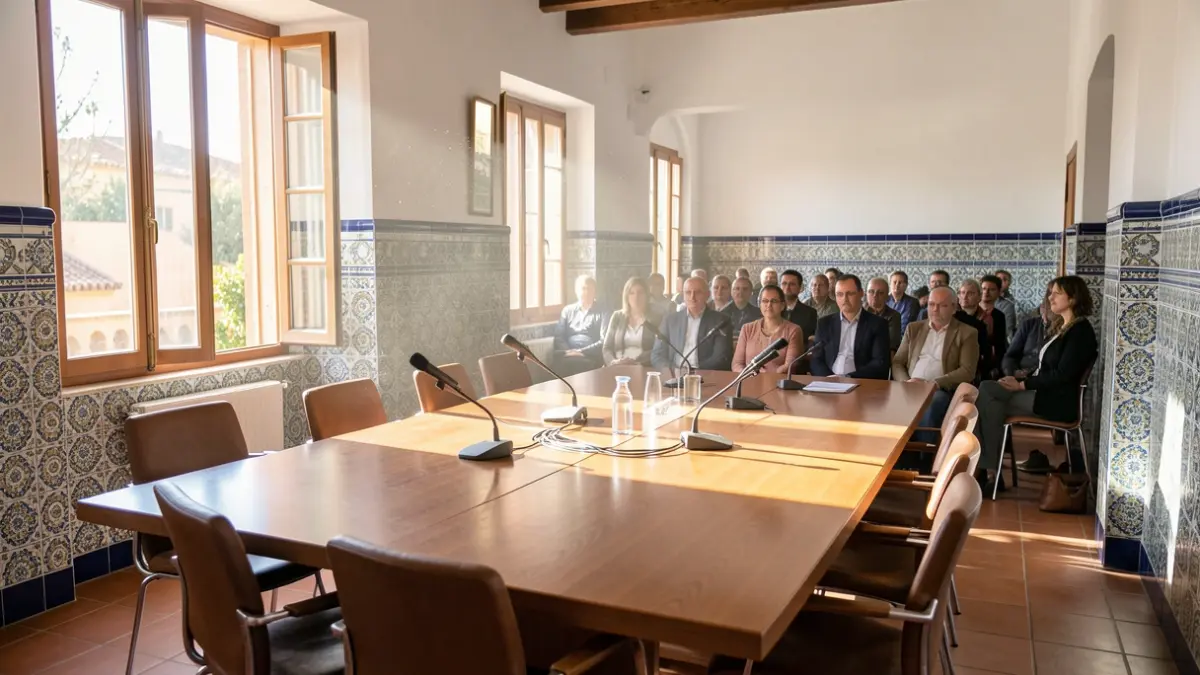
In a press conference held this Tuesday in Sort, sector representatives denounced the growing impact of wild and game fauna, especially due to the detection of tuberculosis in wild boars and other ungulates. This situation has serious consequences for livestock farms in the area.
One of the points of concern is the current sanitary protocol, which can imply the culling of all animals on a farm if a single positive case of tuberculosis is detected. Farmers consider this measure "unsustainable" in territories like the Pyrenees, where the presence of infected wild fauna is increasingly high.
“"For more than forty years, farms in Pallars Sobirà have undergone sanitary controls for tuberculosis, but while livestock farmers comply with all requirements, not enough measures are being applied to curb contagions from wild fauna."
A representative of extensive livestock farmers in Pallars Sobirà warned that, if protocols are not adapted to the reality of the territory, the situation could lead to the disappearance of the sector in the Pyrenees. For this reason, the sector calls for the definition of specific zones with differentiated criteria, taking into account the accredited presence of disease-carrying fauna.
During the appearance, the impact of wolf and bear attacks on mountain livestock farms was also addressed, a problem that has worsened recently. The president of ASAJA Catalunya criticized that "wild fauna is protected more than the people who keep the territory alive" and demanded a specific protection plan for Catalan extensive livestock farming.
Farmers also expressed concern about potential public health risks. An extensive livestock farmer explained the existing concern in mountain villages about the possible contamination of water intakes by infected fauna, as many municipalities are supplied directly from ravines and mountain water points.
ASAJA Catalunya urges administrations to collaborate with the sector to find effective measures that ensure the viability of extensive livestock farming, protect animal health, and preserve the mountain territory.