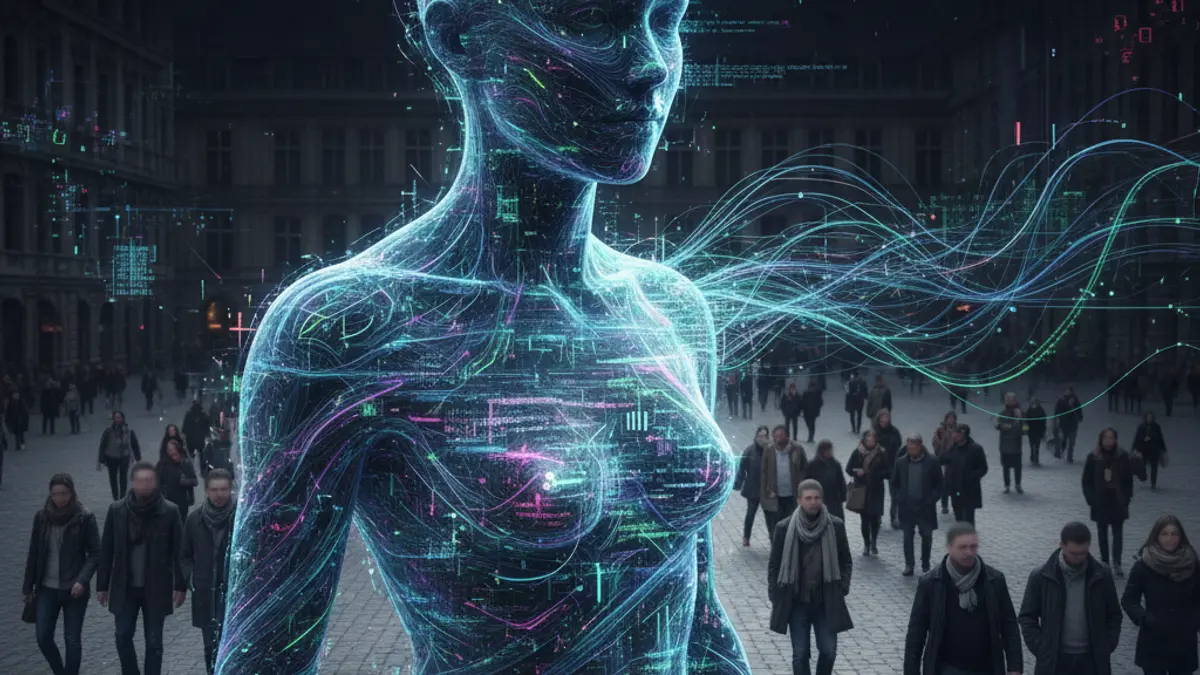
The proliferation of fake videos generated by artificial intelligence (AI) and the use of chatbots to spread ideological messages on social media are increasingly common phenomena. These tools, among others, have been employed to manipulate voters and alter electoral outcomes, according to the report commissioned by the Department of Justice and Democratic Quality of the Generalitat.
The study, titled Study on AI Risks in Electoral Processes, analyzed incidents that occurred between 2023 and 2026. One notable case is that of a deepfake that went viral in Buenos Aires (Argentina) in 2025, where a candidate falsely announced his withdrawal and endorsed his rival.
The document identifies five types of tools with high potential for electoral manipulation:
- Deepfakes, hyperrealistic but false videos.
- Large language models, such as ChatGPT, capable of generating disinformation on an industrial scale.
- Automated amplification bots on social media.
- Automated identity impersonation.
- Psychographic micro-targeting, which uses psychological data to send hyper-personalized messages.
The year 2024 was particularly significant due to the large number of electoral calls. According to the director of the OEIAC, almost half of the world's countries experienced malicious uses of AI during this period. An example was the chatbot Grok, from the social network X, which spread false information about the Democratic candidate in the United States.
“"The study is not about whether they changed the electoral outcome, but they did alter it in some way."
The OEIAC director warns that it is
“"plausible that AI will be used with the intention of manipulating in the upcoming municipal elections, scheduled for next spring."
Furthermore, he emphasizes that the rapid and widespread adoption of new technologies can contribute to the virality of malicious content without users being aware of the consequences. These messages aim to erode public trust in the system.
“"We ourselves, unintentionally, participate in this virality of disinformation and manipulation content."
To address this issue, an update to the Organic Law on the General Electoral Regime (LOREG) is proposed, as the current regulation is
“"analogical"
. A transparency law is also considered essential, obliging political parties to declare their use of artificial intelligence in their campaigns.