
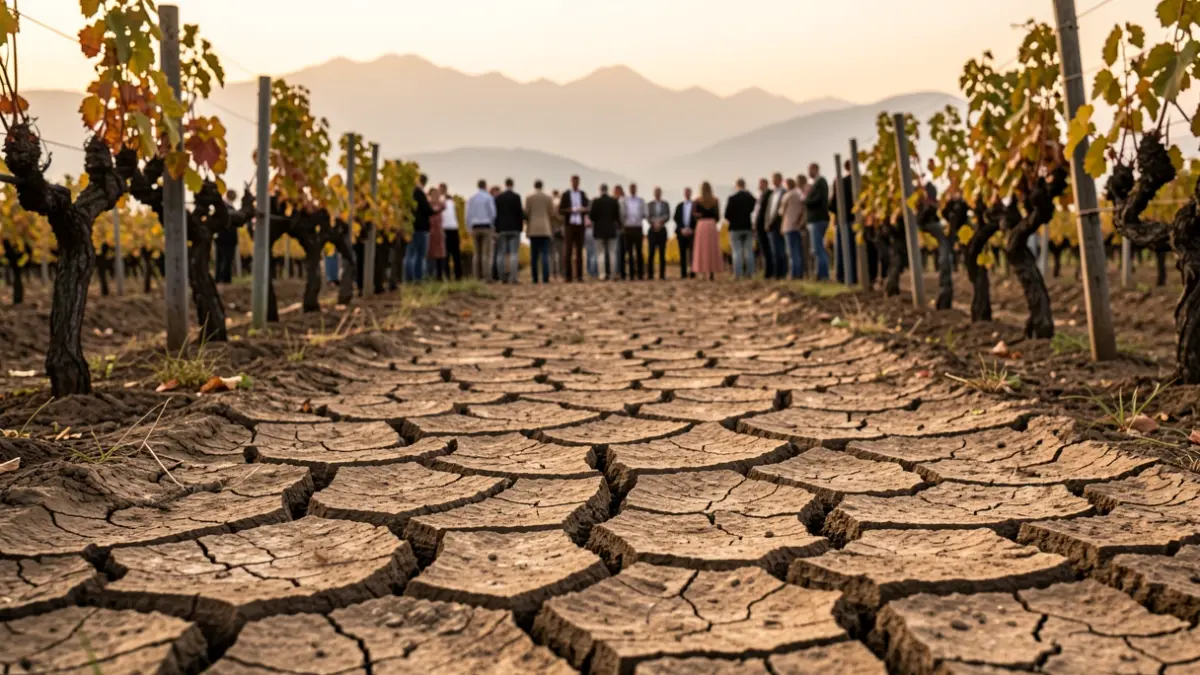
High-altitude vineyards, which moved to mountainous areas at the beginning of the century to escape the heat of the plains and coast, are now under pressure from global warming. Studies indicate a 'mediterraneanization' of the climate, increasing reliance on irrigation, a key factor for ensuring both grape quantity and quality.
In Pallars Jussà, the average temperature has risen by more than one and a half degrees over the past two decades, with maximums exceeding 40 degrees Celsius and milder minimums. This climatic evolution leads to greater water demand for plants and fewer rest periods.
The Castell d’Encús winery, in Talarn, has been the first in Pallars to obtain a water concession from the Ebro Hydrographic Confederation (CHE), authorized to draw 27,738 m3 annually from the Sant Antoni reservoir to irrigate 25.82 hectares of vineyards, as well as green areas and other industrial uses.
Despite the benefits of irrigation, access to water remains an obstacle. Industry sources point to its infeasibility for some wineries, such as El Terrer in Figuerola d’Orcau, and the search for technical solutions for others like El Vinyer in Fígols de Tremp, who consider implementing an irrigation system one of their main challenges.
The primary hurdles for implementing irrigation systems are the water source, whether through drilling wells or connecting to canals, and the associated costs. Furthermore, doubt persists regarding the guaranteed availability of water during prolonged drought periods.
However, there are cases like Cota 730 in Rialp, which has been irrigating for a decade thanks to its own wells located above the Aigua del Pallars spring. The necessity of irrigation is evident with the advancement of flowering and the earlier start of the irrigation season, as observed this year.