The event gathered prominent professionals from the space industry, including those responsible for missions that have taken humans beyond Earth's orbit and engineers dedicated to developing rockets and modules for living in other worlds. The recent Artemis II mission, which sent four astronauts to orbit the Moon, was a central topic, marking a milestone as the first time in 50 years that humanity has ventured beyond low Earth orbit.
“"This would not have been possible without the European Space Agency."
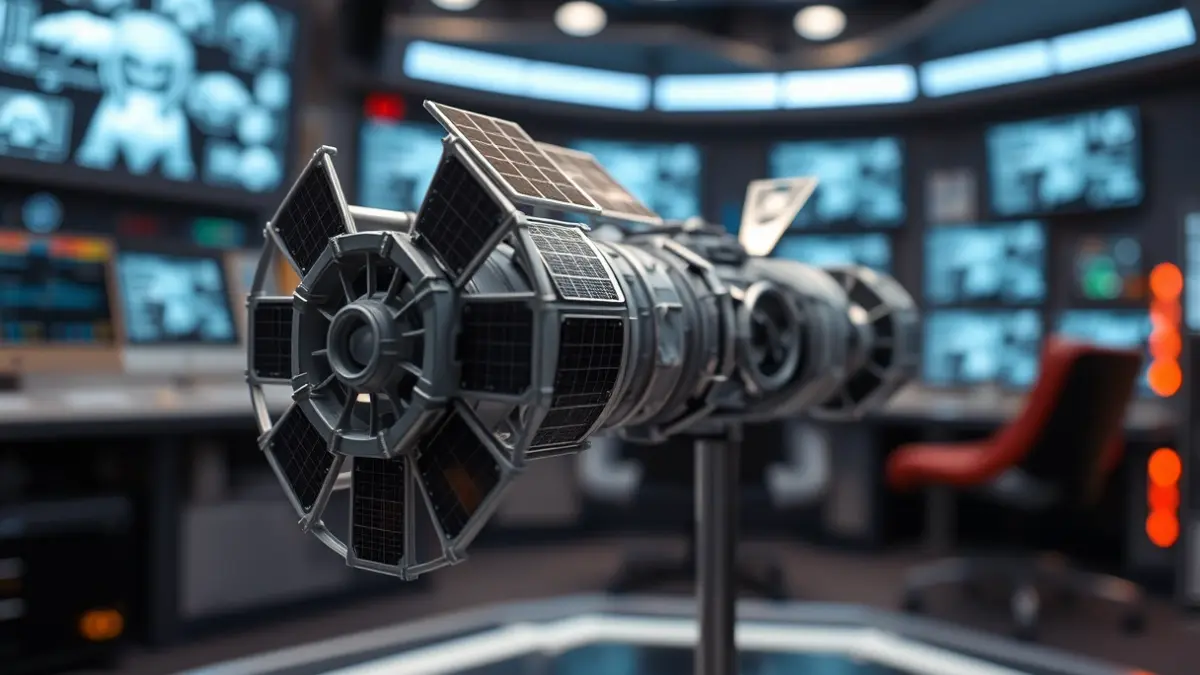
International collaboration is a fundamental pillar of current space exploration. The Orion spacecraft, a key component of the Artemis mission, features significant contributions from Europe, as the European Space Agency (ESA) is responsible for the European Service Module (ESM). This component is vital for propulsion, electricity, thermal control, and the supply of oxygen and water for the crew.
A production manager for the ESM of Artemis II at ESA, present in Seville, detailed that the module weighs almost 13,500 kilograms at launch and incorporates four solar panels, a main engine, secondary engines, and small orientation thrusters, in addition to a thermal control system in which a Spanish company participates. The relationship between ESA and NASA for this project dates back to 2011, with the signing of a memorandum of understanding in 2012 and the contract award to Airbus Defence and Space in Bremen in 2013.
“"We are not going to the Moon like in Apollo. We are going there to stay."
The vision of the Artemis mission differs from the Apollo missions, aiming to establish a permanent human presence on the Moon. The target is the lunar South Pole, specifically the Shackleton crater, where water in the form of ice has been detected. This resource is crucial not only for consumption but also for in-situ fuel production, which would allow for the creation of a local economy on the satellite. Three phases are planned: learning, infrastructure implementation, and continuous human presence, with the ultimate goal of preparing for a trip to Mars in the coming decades.
Meanwhile, the International Space Station (ISS) continues its uninterrupted operation, coordinated by control centers worldwide, including Munich. An operations director for the Columbus module at the German Aerospace Center (DLR) explained in Seville the complexity of keeping the ISS running 24/7, with precise planning and a common language based on GMT to avoid errors.
Spanish participation in the space race was also highlighted. A president of Hispasat, and astronaut, emphasized the need for Europe to define its own ambitious strategy. The director of the Spanish Space Agency noted that Spain is the fourth largest European economy in space matters and announced the inaugural flight of Miura 5, the first Spanish rocket capable of autonomously placing payloads into orbit. The congress in Seville included a live connection with the ISS, where astronauts answered questions from microgravity, bringing the space future closer to the present.