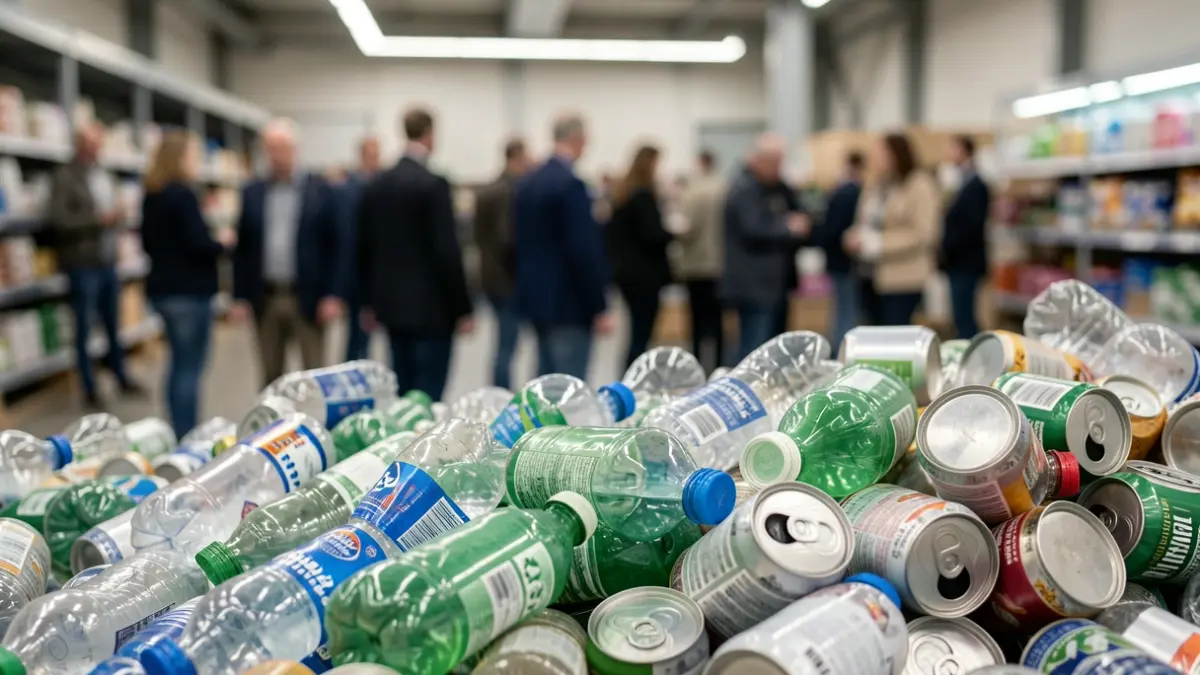
The implementation of the deposit, return, and collection system for containers (SDDR) for plastic bottles, cans, and cartons, initially planned for this year, faces a significant postponement. Food and packaging manufacturers, along with distribution companies, consider its launch before January 2029, the deadline set by the European Union, to be unfeasible.
The Ministry for Ecological Transition has recalled that, pending the drafting of the specific regulation in Spain, European legislation will apply, which the sector interprets as an openness to their requests for a delay. A director from a major food group indicated the impossibility of having the system ready this year or next.
The estimated annual management of approximately 17 billion units of containers will require a considerable investment, calculated between 400 and 600 million euros, for the acquisition of machinery and the preparation of storage spaces in over half a million retail establishments. The sector also highlights the logistical complexity arising from municipal fragmentation and the Spanish consumption model, with a high prevalence of bars and restaurants.
The SDDR system, similar to the one previously used for glass bottles, aims to improve the recycling and reuse of containers. Although it is already applied in about twenty European countries, the Spanish model presents particularities, such as managing tourist influx and the diversity of municipalities. The SDDR association, created by the sector, proposes the grouping of small municipalities for the management of collection points and the adaptation of automatic and manual systems to ensure accessibility.
The mechanism involves charging an additional deposit when purchasing a beverage, the amount of which is yet to be determined (between seven and 40 cents), which is refunded upon returning the empty container. Environmentalists and the Ministry for Ecological Transition urge a resolution, recalling that Spain has already been warned by Brussels for the low success of the current collection system, which in 2023 only achieved 41.3% of plastic beverage bottles, far from the 70% target and the new European requirement of 90% by 2029.