
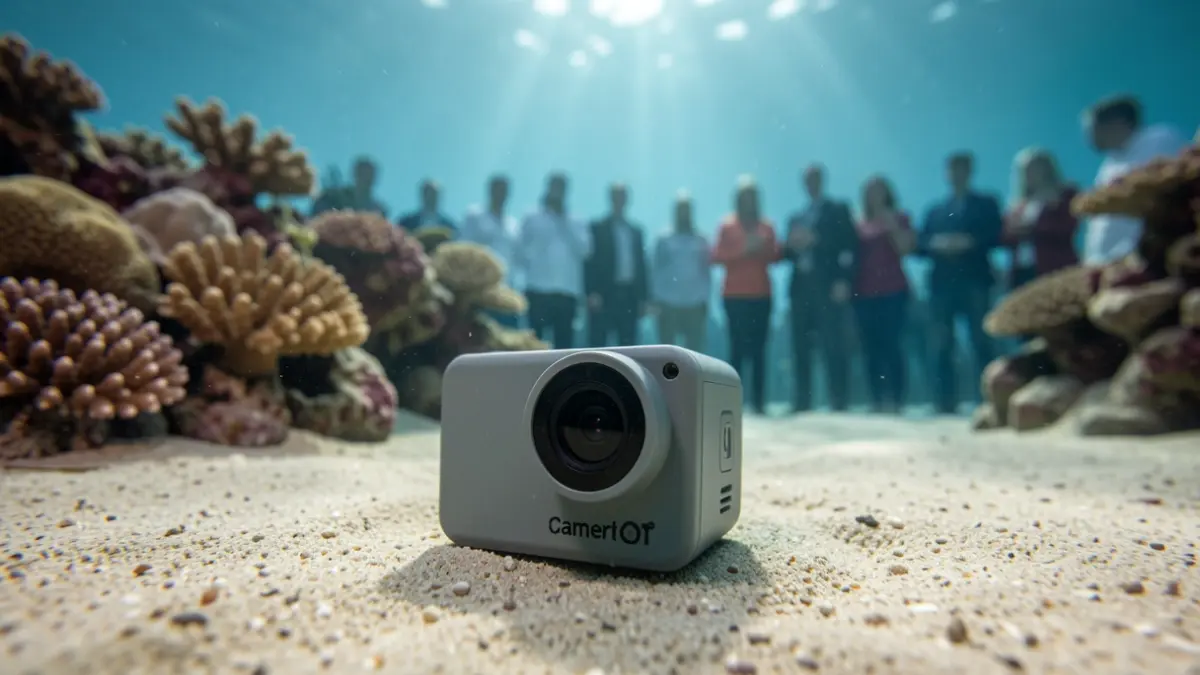
The Zoological Society of London (ZSL), the International Seakeepers Society, and the Pelagics Association have validated a camera prototype designed to democratize deep-sea observation. This advancement seeks to facilitate global scientific community access to a virtually unexplored area of the planet.
The project, led by Dr. Stephen Long of ZSL, aims to shift the current scientific paradigm, which relies on expensive tools like ROVs or manned submersibles. "We want to design something that is initially basic but adequate, using affordable materials and open-source computing," explains Long. The goal is to produce and distribute many cameras worldwide, enabling research teams to explore their own deep waters.
Initial tests were conducted at Almerimar beach, where the camera proved its resistance to saltwater. Subsequently, from the sailboat R/V Lokate of the Pelagics Association, it was deployed at Seco de los Olivos, an underwater mountain about 12 nautical miles south of Almerimar, known for its biodiversity.
Two dives were performed: one at 70 meters and another at 335 meters deep, surpassing the height of the Eiffel Tower and The Shard. Both successfully captured images of the seabed, demonstrating the system's viability from a small vessel at a cost of less than 2,300 euros.
Alexander Sánchez, coordinator of the Pelagics Association, described the test as "very positive" and highlighted the importance of collaboration for ocean conservation. "The fact that we recorded images of the deep sea from our small sailboat is incredible," he stated.
The scientific team plans to improve the camera design to reach depths of up to 1,000 meters, which would allow organizations worldwide to study the deep sea, considered the planet's last great frontier.