The Blackant team, from IES Antonio de Mendoza in Alcalá la Real, and AC&TSAT, from IES Sierra de Segura in Beas de Segura, are the two representatives from Jaén who have passed the qualification phase. This competition saw the participation of 116 Andalusian teams from 67 educational centers, totaling 649 students from across Andalusia.
The launch day, attended by the Minister of Educational Development and Vocational Training, María del Carmen Castillo, brought together 31 teams, 180 students, and 45 teachers at the Seville aerodrome. Twelve mini-satellites were launched from rockets, and the rest from paramotors, reaching approximately one kilometer in height. Afterwards, the teams defended their projects before a jury of experts, who will choose the winner to represent Andalusia in the national final in May in Extremadura.
“"The program brings the space and technological environment closer to the Andalusian educational system, providing significant added value to the academic training of our Secondary and Baccalaureate students."
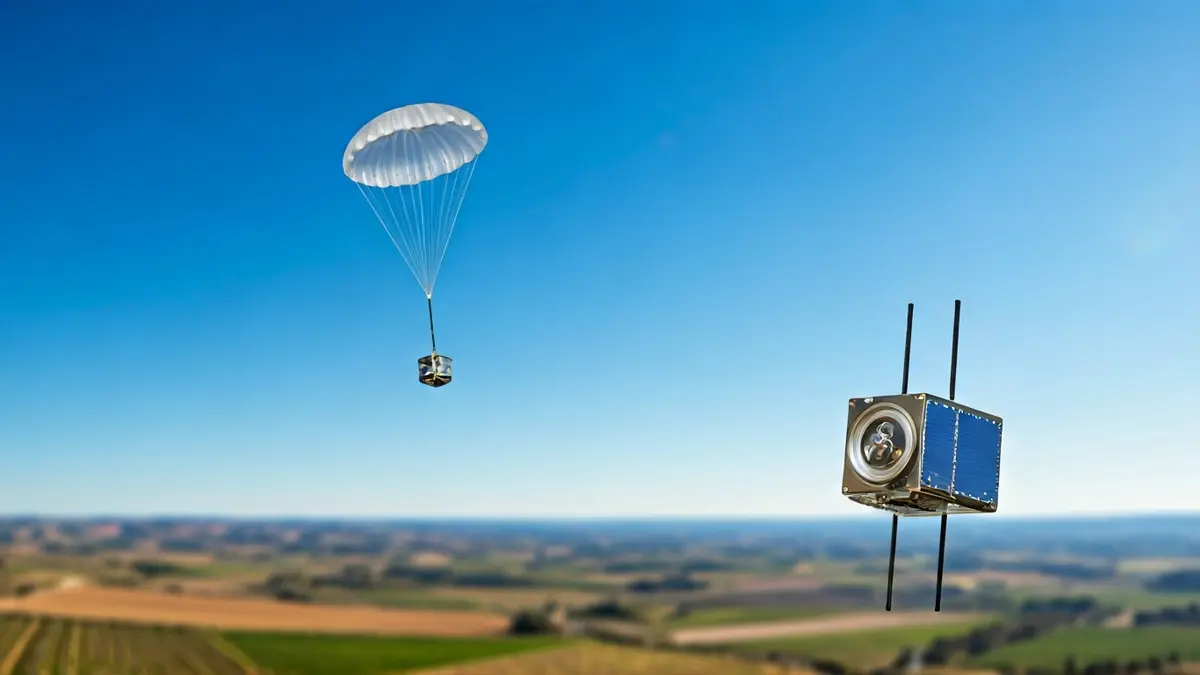
The CanSat program challenges participants to design, build, and operate a miniature satellite, approximately the size of a soda can. Each team must program, assemble, and launch their device, which during its descent must fulfill a mandatory primary scientific mission and a secondary mission chosen freely, transmitting real-time data to a ground station. This experience integrates skills in programming, hardware and software design, communications, data analysis, and scientific presentation.
The province of Jaén has demonstrated remarkable scientific and technological potential, with 12 of its 48 students participating in the provincial phase managing to qualify among the best projects in Andalusia. Minister Castillo also highlighted the gender equality component of the initiative, noting that more than half of the 649 participating students in Andalusia are women, which promotes female vocations in STEM disciplines.
Coordinated in Spain by Esero, an educational project of the European Space Agency, in collaboration with the Parque de las Ciencias de Granada, the CanSat program is supported by 80 teachers. Its objective is to foster STEM vocations among young people, developing skills such as teamwork, creativity, and problem-solving. The winning team from Andalusia will represent the community in the national phase, following the precedent that last year's Andalusian representative was crowned national champion.