The team from IES Pedro Soto de Rojas in Granada, comprising José, Daniel, Íker, Nacho, Álvaro, and Ariadna, mentored by professor Francisco Abarca, has been crowned winner of the Andalusian phase of the CanSat program. The competition, organized by the European Space Agency, took place at the airfield in Mairena del Alcor, Seville, where the young participants presented their project, named 'La NTC no funciona'.
This achievement secures their spot in the national phase, scheduled for next May in Extremadura. The team, made up of students from the third year of ESO and first year of Bachillerato, will represent Andalusia at this event. The national winner will have the opportunity to participate in the European meeting organized by the European Space Agency (ESA).
“"We are very happy, especially for the journey made in preparing the project."
Pedro Ruiz, the school's Technology teacher, emphasized the importance of the learning process. The initiative aims to foster students' interest in developing technological products, covering all stages from design to overcoming challenges. The project involved a collaborative effort between students and teachers, extending beyond school hours.
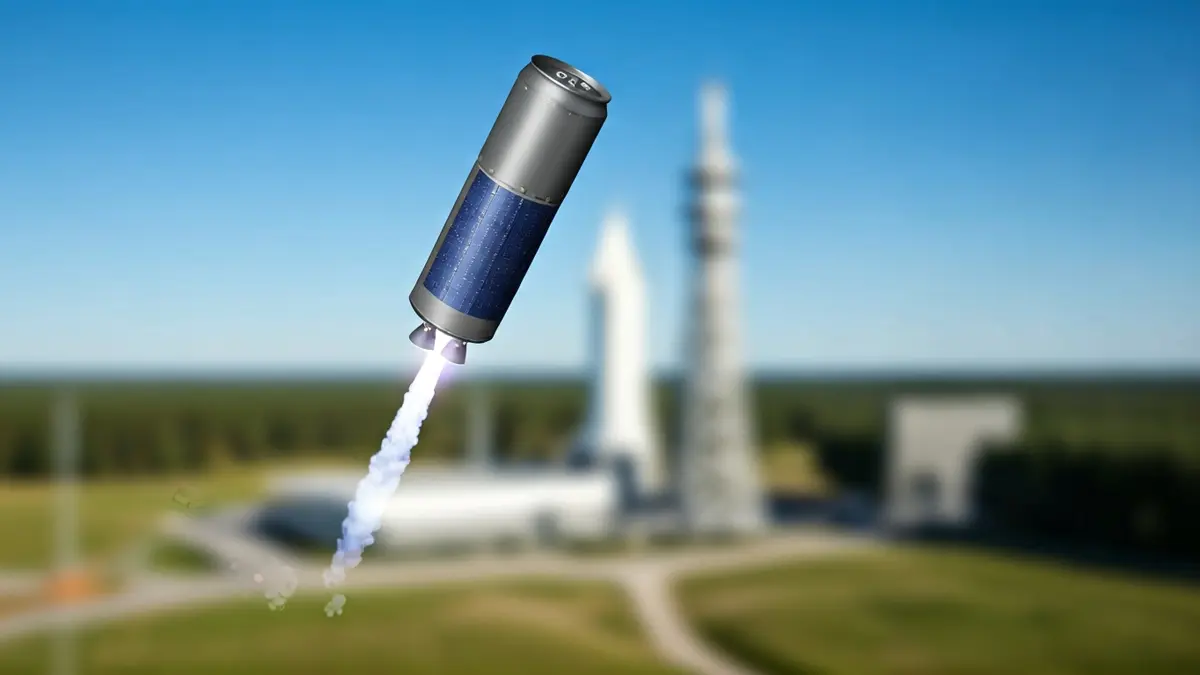
The Granadian satellite's mission was ambitious: to transmit real-time images, measure ground distance, and create a water stress map. Professor Abarca confirmed the success of the proposal, achieving real-time image transmission from the sky and obtaining a multispectral image interpreted by the ground team. Previously, students spent weeks calculating, designing the satellite (the size of a soda can), selecting materials, planning the launch to over 700 meters high, managing permits, and establishing data collection for study, replicating the steps of a real satellite launch.
The CanSat program, combining 'can' and 'sat' (satellite), is an initiative by the European Space Agency to promote scientific vocations. The Andalusian phase, organized by the Ministry of Educational Development and Vocational Training and the Science Park through the European Space Education Resource Office in Spain (Esero Spain), saw 22 teams from Granada participate, totaling 137 students. Other teams recognized in the Mairena final included IES Guadalpin from Marbella (Best Technical Achievement), IES Antonio de Mendoza from Alcalá la Real (Best Scientific Mission), Escuelas Francesas de Sevilla (Most Professional Team), and IES Vega de Mijas (Best Dissemination and Sponsorship).