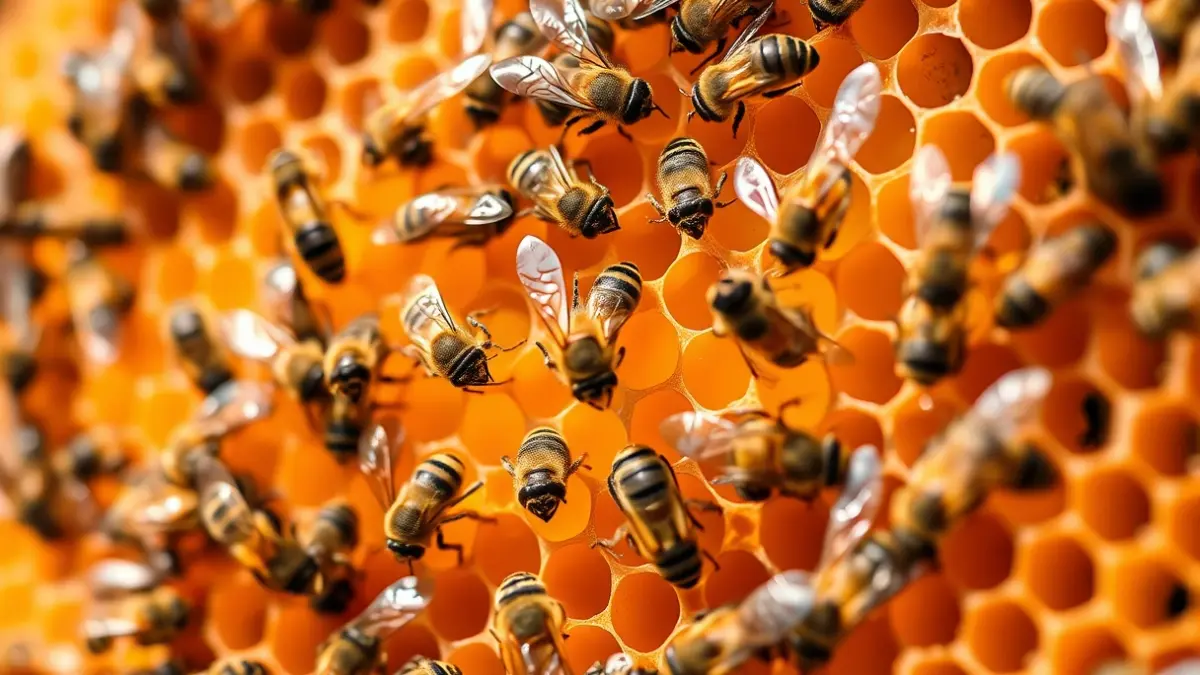
The production and commercialization of honey in the province of Córdoba are facing significant challenges. Various mites and insects are decimating bee populations, while competition from foreign markets, particularly China, exacerbates the situation, hindering the viability of local producers.
According to data from the Ministry of Agriculture, Fisheries, Water and Rural Development for 2024, Córdoba has 61,463 beehives, making it the third Andalusian province with the most installations, only behind Seville and Almería. The 549 registered beekeeping operations, 87% of which are professional, are concentrated in the Hornachuelos Natural Park, including municipalities such as Hornachuelos, Villaviciosa de Córdoba, and Posadas, as well as in the Cardeña-Montoro Natural Park and the regions of Valle del Guadalquivir and Subbética.
Among the main threats is varroa, a mite known since the 1980s that parasitizes beehives until it starves the bees. Although sanitary treatments exist to combat it, the arrival of the oriental hornet, originally from Asia and present in the province since the beginning of this decade, poses a new challenge. The lack of tools to fight this insect has led the sector's management to request a technical cabinet from the administrations to investigate solutions to prevent its spread.
These factors have led to an estimated reduction in the beekeeping harvest of between 30% and 40% in Córdoba in recent years. Furthermore, honey prices remain outdated, severely impacting the profitability of operations. A sector executive noted that while 20 years ago a family could subsist with about 300 beehives, today it is difficult to do so even with 600 or 700.
Unfair competition from Chinese honey, which is sometimes marketed as syrups, also negatively affects the industry. However, a new regulation set to come into force later this year, which will require labeling the origin of honey, is expected to improve the situation. The sector encourages Cordoban consumers to support local products, many of which are forced to export to markets such as Japan, the United Arab Emirates, Canada, and the United States.