
The research, published in the journal Chemical Engineering Journal, combines in a single stage the filtration of plastic microfibers with their complete elimination through photocatalysis using ultraviolet light. This method could also be applied in industrial laundries or wastewater treatment plants.
The system is based on a new material composed of commercial sand and silica microspheres coated with titanium dioxide. The sand acts as a filter, while the UV light activates the titanium dioxide to generate substances that degrade the microplastics.
According to Francisco Boscá, a CSIC researcher at ITQ, “the sand acts as a filter that retains microplastics, while the applied ultraviolet light activates the titanium dioxide to generate substances capable of degrading microplastics”.
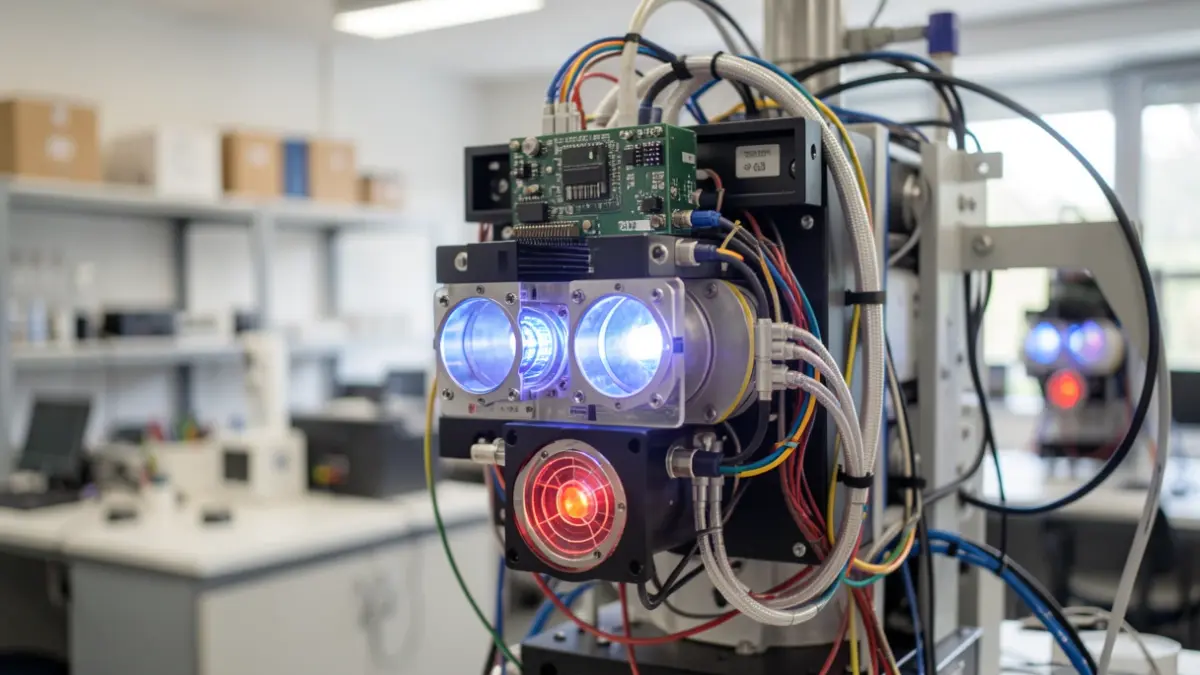
María Luisa Marín, an ITQ researcher and UPV professor, adds that “when the material is incorporated into a continuous flow tubular reactor illuminated with LEDs, the simultaneous effect of retention and degradation of microplastics occurs”. Without illumination, the sand bed retains only about 70% of the microplastics and would eventually become clogged.
Carlos Company-Doménech, a predoctoral researcher at ITQ and lead author of the study, explains that “with the system we have developed, in addition to separating microplastics, we achieve their total degradation”, thus avoiding the generation of nanoplastics.
The system has been tested continuously with water from domestic washing of polyester garments, without altering its pH or adding chemicals. Results confirmed a complete elimination of PET microplastics.
Another advantage is the reusability of the material, which was used after treating over 50 liters of water and undergoing a regeneration process between cycles.
Alberto Blázquez-Moraleja, a postdoctoral researcher at ITQ, notes that “these results represent an advance in the development of technologies that integrate filtration and photocatalysis, opening new possibilities for treating water contaminated by microplastics and inviting us to consider scaling up the technology”.
Currently, the system has been evaluated at a laboratory scale, but researchers believe it could be explored in the medium term as a complementary module in industrial laundries, the textile industry, or wastewater treatment plants. Its use for eliminating other types of microplastics in waters, such as those from the Albufera of València, is also being studied.