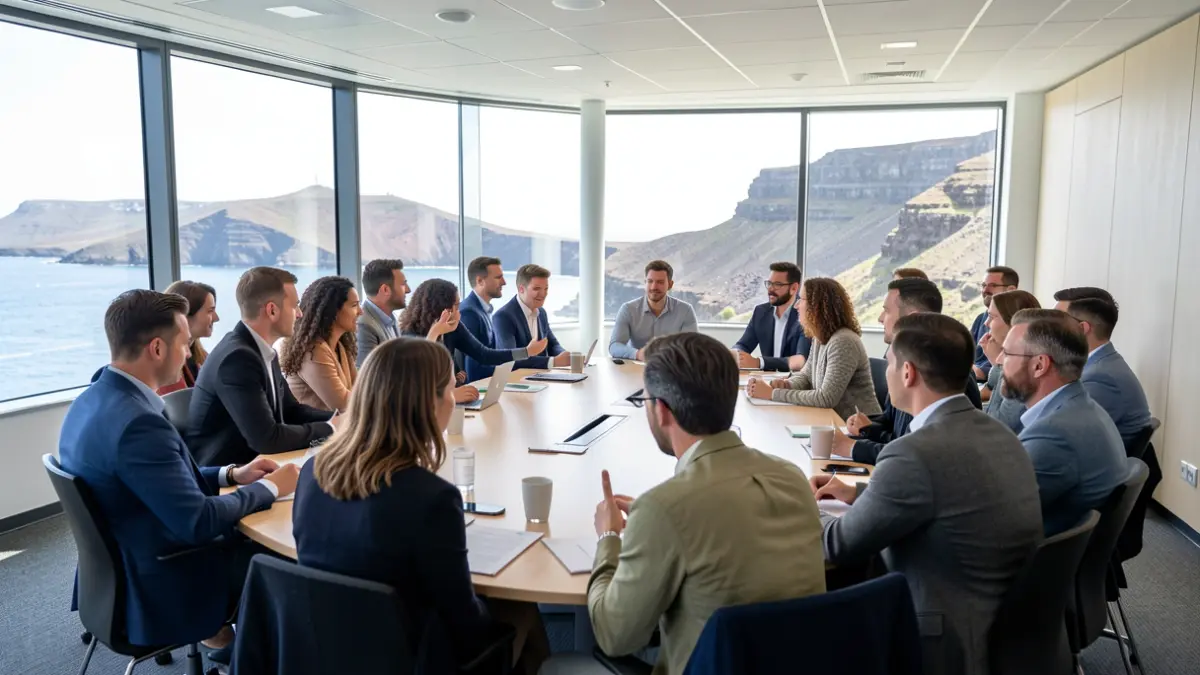

The delegated councilor for Economy, Business, and Employment, Elena Moncho, explained that the main objective is «to listen directly to companies to understand their needs and provide solutions in both training and employment matters». To this end, during April, sectoral working tables are being held with companies, conceived as dialogue spaces that allow identifying demanded professional profiles and designing training itineraries better adjusted to reality.
These tables are being conducted in a working breakfast format and address strategic areas such as technology, plumbing, textile manufacturing, and fishing, the latter in coordination with the Fishermen's Guild. According to Moncho, this approach allows progress towards «a more practical training model, connected to the reality of the productive fabric and oriented towards labor insertion».
“"To offer real solutions to the lack of qualified personnel currently present in numerous productive sectors."
Based on this joint work, the design of trade bootcamps is planned, intensive programs aimed at improving the qualification of participants and covering hard-to-fill positions. The councilor noted that this methodology contributes to «offering real solutions to the lack of qualified personnel currently present in numerous productive sectors».
For her part, department technician Karina Agud highlighted that the project also responds to the detected increase in municipal employment guidance services for people in vulnerable situations with difficulties accessing both training and employment. In this sense, NeXos articulates a dual model that works simultaneously with companies and unemployed individuals to facilitate adapted itineraries and their subsequent labor insertion.
Agud detailed that in the plumbing sector, nearly twenty companies have been contacted, of which about 70% have shown interest in participating and hosting student interns. She also emphasized the positive reception of the sectoral tables in areas such as textile manufacturing, where there is a high demand for personnel.
The session calendar includes a table with technology companies held on April 8, another scheduled for April 15 with plumbing companies, and a third on April 16 focused on the textile manufacturing sector. The project, which will run until October 2026, is proposed as a pilot experience aimed at complementing regulated Vocational Training, providing greater agility in responding to immediate labor market needs without replacing official itineraries.