
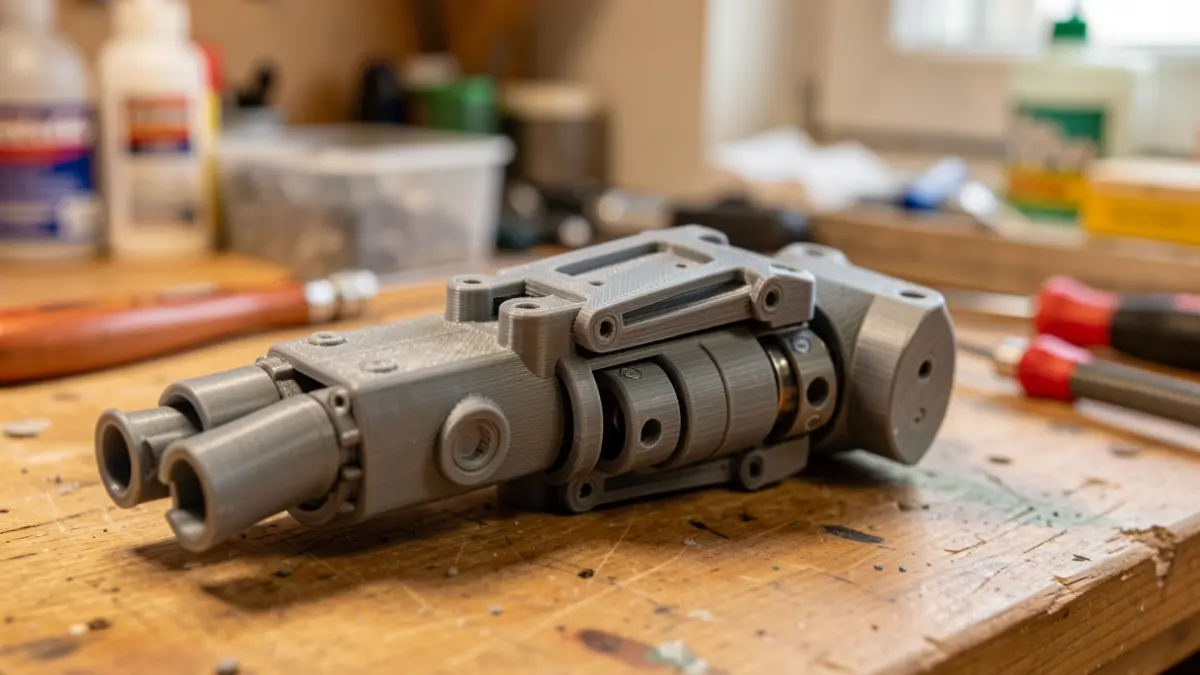
The Mixed Research Unit in Biomedical Design and Manufacturing (BioFab), a collaboration between the University of Alicante (UA) and the Alicante Institute for Health and Biomedical Research (ISABIAL), has unveiled an innovative upper limb prosthesis. This device, designed for individuals with total absence of an arm or elbow joint, has already been validated by users and stands out for its multifunctionality and customization.
The modular design, manufactured using 3D printing, allows for the exchange of different accessories depending on the activity, facilitating tasks such as eating, dressing, or writing. The prosthesis features an adjustable telescopic structure and a custom socket for each patient, aiming to improve autonomy and comfort at a reduced cost, unlike current advanced prostheses which are often complex and expensive.
The scientific director of BioFab and UA engineer, Javier Esclapés, explains that the goal is to offer a solution that is "more versatile, adaptable, and affordable, truly facilitating daily autonomy and prioritizing users' real needs."
The socket, made from a flexible and biocompatible material, ensures an ergonomic fit. The device's body is printed with specific materials according to the desired functionality, such as a rigid, heat-resistant material for the cooking module. The use of 3D printing speeds up customization and reduces manufacturing costs.
The new prosthesis is protected by a patent application. The OTRI of the University of Alicante is seeking companies in the support and rehabilitation products sector for its industrial validation and commercial exploitation.
As part of the design process, a collaborative workshop was held at the UA's Higher Polytechnic School, where users, families, and therapists evaluated the prototypes. This initiative, promoted by the Artefactos association in collaboration with BioFab, ISABIAL, and COCEMFE Alicante, aims to create optimal solutions to expand the possibilities of prostheses.