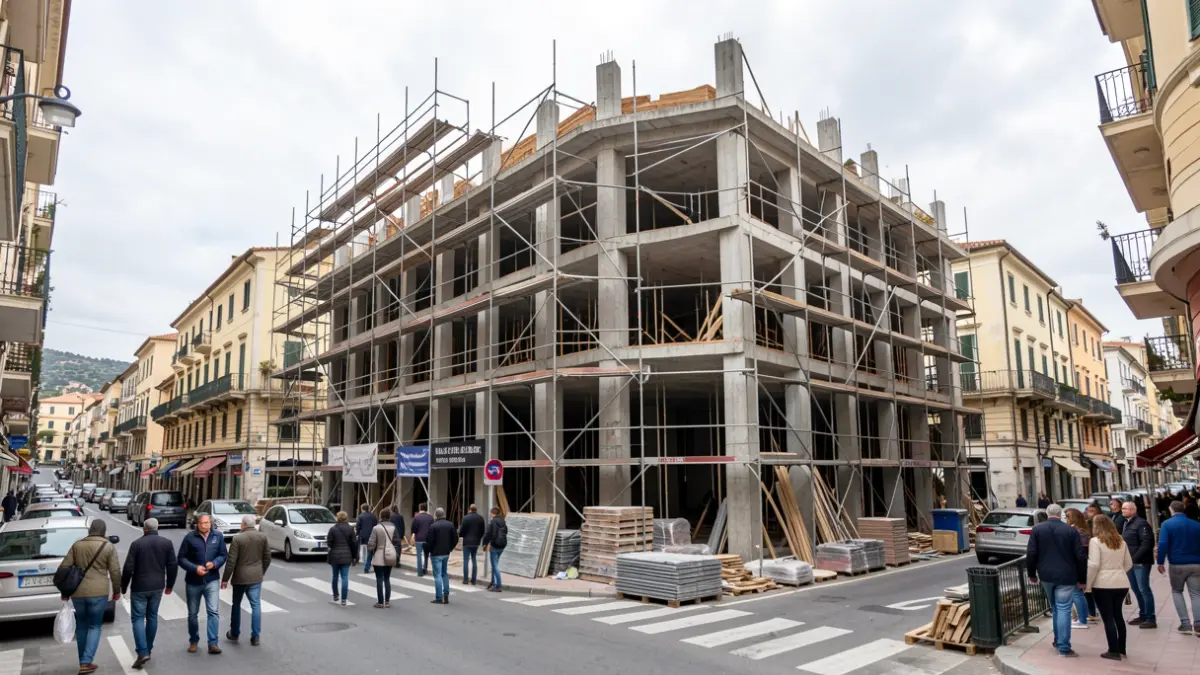
Urban development at the northern access of Alicante, partly fueled by the growth of the Vistahermosa Norte neighborhood, has significantly increased interest in the future of the commercial building that has remained unfinished for over a decade next to the Avenida de Dénia. Its owner, Fajovi, a company specializing in home construction and decoration materials, has received several offers in the past two months with proposals for an alternative destination.
These proposals suggest completing and adapting the current structure to become a hotel, a gym, or a leisure center, among other possibilities, according to sources from Fajovi. Various companies see the property's location as a strategic opportunity to develop their respective business lines, benefiting from easy access and excellent visibility.
Fajovi is currently reviewing these proposals to assess their urban planning viability and potential profitability, comparing them with its own intended use, which it has pursued since taking ownership in 2020. The company, founded in Daya Nueva, acquired the property from Sareb and Banco Popular with the aim of completing it and establishing a new headquarters in Alicante, including a retail space with a large exhibition area for its products.
To proceed with its project, Fajovi applied for a building permit, the processing of which extended until late April, when the Urban Planning Department granted the permit after several requirements were met.
Despite the offers received, Fajovi maintains its original goal: a medium-sized retail and exhibition space for its own brand, having ruled out dedicating the building to Moraval, a competing company acquired a year ago. The future commercial space could be exclusively for Fajovi or shared with other brands. The current structure is divided into eleven units of approximately 150 square meters each, totaling 1,200 square meters across three floors.
However, the company remains open to studying alternative use proposals, with initial contacts already made, although no definitive agreements have been reached. The final decision will depend on whether an economic offer is attractive enough to abandon original plans and if the alternative option is supported by urban planning regulations, even if modifications and license adjustments are necessary.