The initiative, seeking European fund subsidies, has a budget of 2,440,700 euros, with 80% financed and the remaining 488,000 € co-financed. If approved, the project will start on January 1, 2027, with an implementation phase from March 2027 to February 2029, concluding in May 2029.
The main objective is to pool resources, optimize public facilities, and advance towards a real circular economy, giving materials a second life as industrial resources for local SMEs, enhancing their competitiveness against rising energy costs and stricter European regulations.
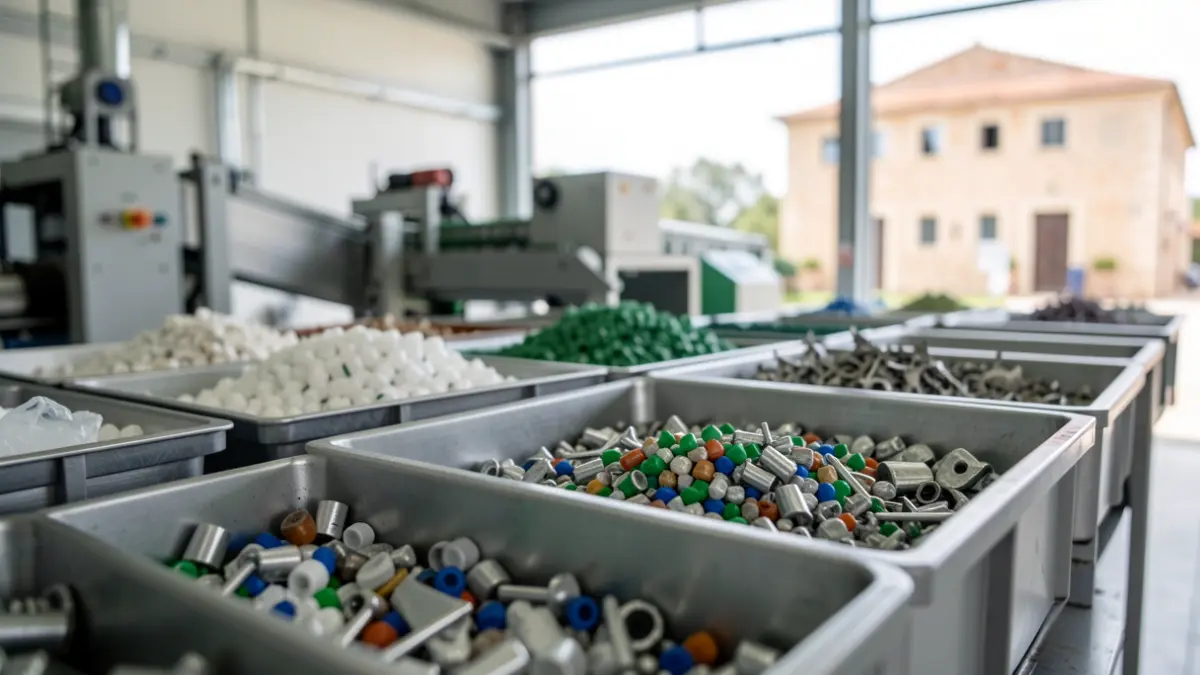
To overcome the barrier of not knowing where to source recycled materials, CITEXCHANGE proposes a public "material intelligence" service. This includes creating a "digital passport" for each material, separation and classification for industrial use, and a public space for product design and experimentation.
Technological institutes AITEX, AIJU, and INESCOP are involved in promoting innovation and material validation. Investment will focus on transforming existing or developing public facilities.
Rodalet Circular in San Vicente del Raspeig will be the main material preparation hub, with an approximate investment of €700,000 in identification, separation, weighing, and storage equipment. Fundició Rodes in Alcoy will serve as a circular design and prototyping space, with an estimated investment of €534,500 in equipment and adaptations.
Approximately 60 SMEs are expected to use the services, with 25 receiving intensive advisory support and 12 completing advanced projects. Additionally, 120 professionals will be trained, and a material bank with 35 digital passports will be established.
CITEXCHANGE aims to be a transferable model to other municipalities in the Comunitat Valenciana, demonstrating public leadership in the green transformation of the local economy. Consorcio Terra comprises 37 local entities, the Generalitat Valenciana, and the Provincial Council of Alicante.