
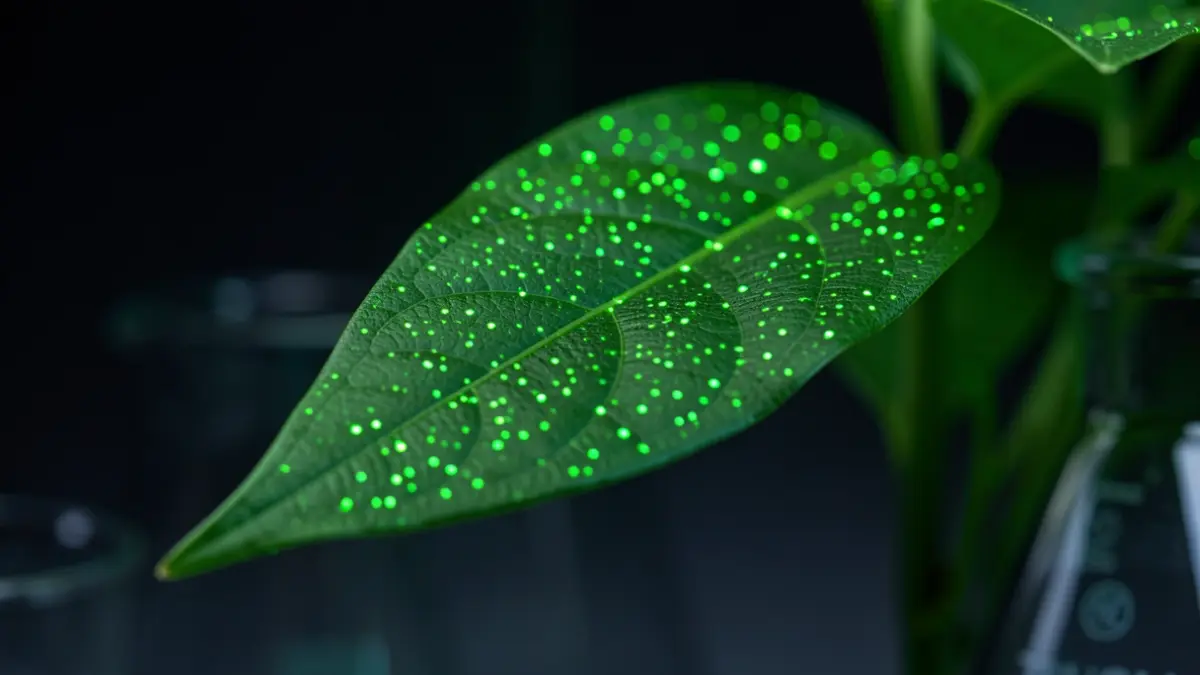
The system uses a bioluminescence mechanism inspired by fungi. Plants emit a constant yellow light when healthy, acting as a pilot light. When a virus infects the crop, the plant changes the light color to green, a phenomenon that can be detected by conventional cameras before the disease shows external symptoms.
The study, published in the journal Nature Communications, demonstrates the system's effectiveness in Nicotiana benthamiana plants. Researchers genetically programmed the plants to use four enzymes that transform a natural compound, caffeic acid, into a light-emitting molecule.
Unlike traditional diagnostic methods such as PCR or ELISA, which require specialized personnel and laboratory time, this system allows for continuous and autonomous monitoring. According to the research team, this technology minimizes false negatives, as if the plant stops emitting light, an alert signal is also triggered.
The most immediate application of this discovery focuses on early surveillance in greenhouses and controlled environments. In the long term, the method could be adapted to detect other pathogens such as bacteria or fungi, a tool that is gaining relevance due to the arrival of new invasive species caused by climate change.