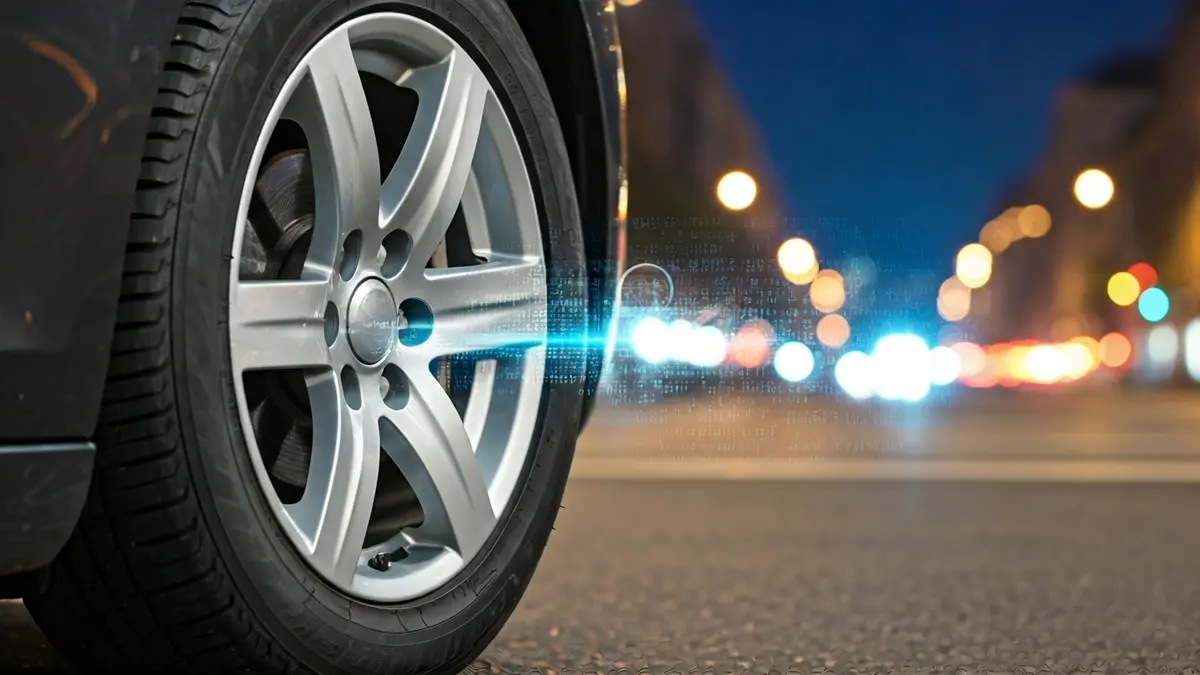
The study, carried out by the Madrid Institute for Advanced Studies IMDEA Networks, an entity of the Community of Madrid, has revealed that tire pressure sensors emit unencrypted wireless signals. These signals can be easily intercepted using conventional radio receivers, posing a risk to driver privacy.
Over a period of ten weeks, researchers analyzed emissions from more than 20,000 vehicles. They discovered that these devices openly transmit a unique identifier, which would allow the same car to be identified at different times and locations without needing its license plate.
Unlike other systems such as cameras, these signals can penetrate walls and other vehicles, facilitating discreet tracking even without visual contact.
To demonstrate the extent of this vulnerability, the team deployed a network of low-cost receivers, priced at approximately 100 dollars, in various roads and parking areas. With this infrastructure, they managed to collect over six million messages emitted by these sensors.
The experts also managed to pair the signals from the four tires of the same vehicle, thereby improving the ability to identify specific cars, even when in motion and at distances greater than 50 meters. This tracking capability could reveal daily routines and habitual movements of drivers, raising serious concerns about potential misuse of this information.
In light of these findings, researchers have issued an urgent call to manufacturers and regulatory bodies to strengthen the protection of these systems and enhance cybersecurity in the automotive sector.