The IMDEA Materiales institute is participating in the MADBAT (Madrid Competitive, Safe, and Sustainable Battery) project, an initiative funded by the Community of Madrid aimed at promoting a new generation of more efficient, safe, and sustainable lithium-ion batteries. The project, coordinated by Tolsa and framed within the Battery Innovation Hub, brings together companies, research centers, and universities to strengthen the regional value chain in electrochemical storage technologies.
Within this consortium, IMDEA Materiales contributes its expertise in advanced simulation, multiphysics modeling, and material development to address one of the main challenges for future batteries: mechanical damage caused by volume changes in active materials during charging and discharging processes. "Most active battery materials undergo volume changes due to ion intercalation, which is the inherent physical mechanism of their operation," explains Dr. Eduardo Roque, a postdoctoral researcher at the Multiscale Materials Simulation Group.
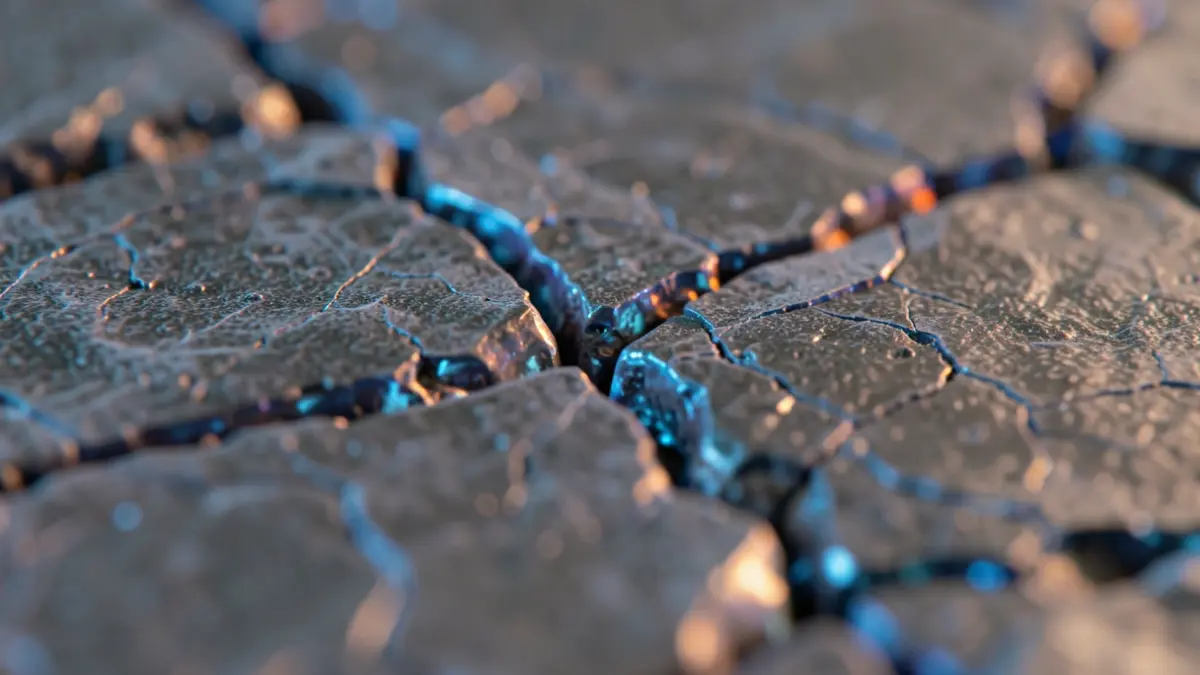
These changes generate internal stresses that can lead to cracks and other degradation processes, reducing the performance and lifespan of the devices. Silicon, a promising material for next-generation anodes due to its high energy storage capacity (up to ten times that of graphite) and abundance, experiences volume changes of up to 300%, limiting its commercial use. Floatech, an IMDEA Materiales spin-off and project partner, is a world leader in the development of these silicon anodes.
"Overcoming this limitation would be a fundamental step for the use of silicon in batteries for real-world applications," states Dr. Roque. To achieve this, IMDEA Materiales will develop advanced computational models that simulate material swelling, analyze fracture mechanisms, and establish design criteria to minimize mechanical degradation, enabling design decisions before electrode manufacturing and accelerating the development of new technologies.
The work will be primarily carried out by the Multiscale Materials Simulation group, led by Prof. Javier Segurado. The institute will also conduct experimental activities in collaboration with the Multifunctional Nanocomposites Group, led by Dr. Juan José Vilatela, and IMDEA Energy. The MADBAT consortium includes Tolsa, Moeve, IMDEA Energy, IMDEA Materiales, Rey Juan Carlos University, Floatech, B5Tec, and Empirical Advances, with the support of an industrial advisory board comprising Stellantis, Ricardo, and Técnicas Reunidas.