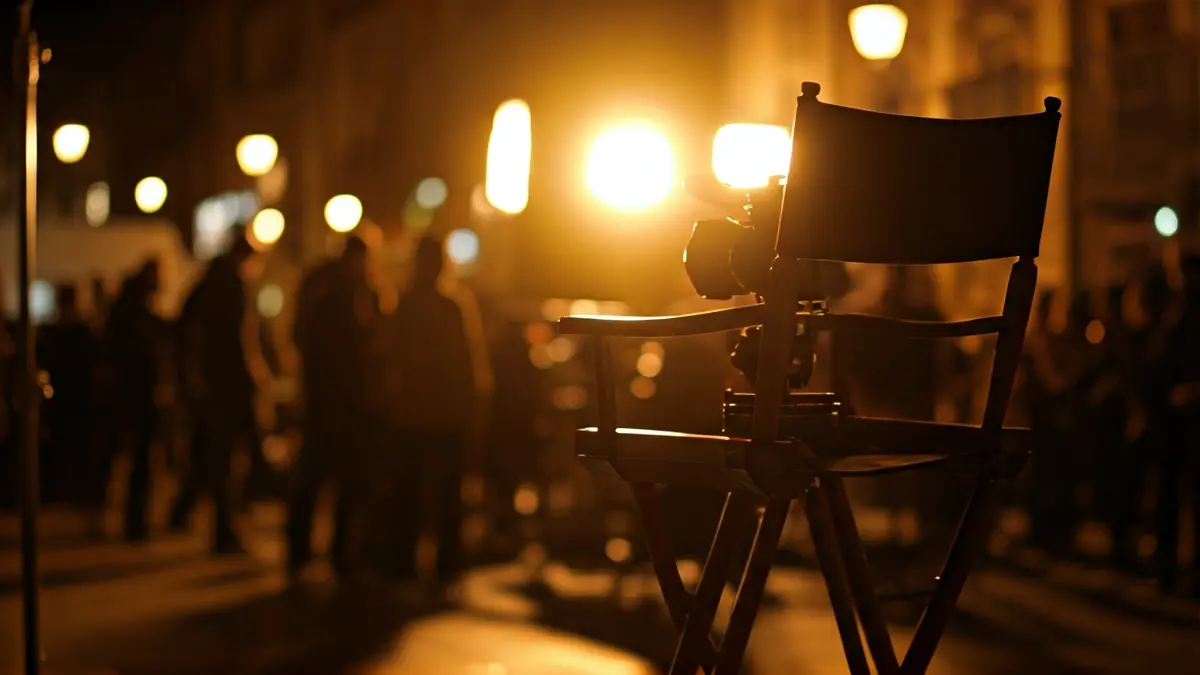
The study, titled Dimension and Impact of Feature Film and Series Filming in Madrid, was prepared by Madrid Film Office and the Autonomous University of Madrid. Presented this Wednesday at the Casa de la Panadería, the report analyzed 415 productions filmed in the city, highlighting the role of series as the main driver of the sector.
Audiovisual activity achieved direct revenue of 988.7 million euros, contributing nearly 596 million to gross added value and generating tax revenue of 247.3 million. In terms of employment, the sector created 6,039 full-time equivalent positions, with thousands more linked to indirect and induced effects.
“"The impact of audiovisual production extends to restaurants, hospitality, and tourism, and strengthens Madrid's international projection."
Series dominated the business, contributing 621 million euros in revenue between 2021 and 2024, representing 65 percent of the total, and nearly 4,000 jobs. Feature films, for their part, added 367.7 million and just over 2,000 positions. In total economic impact, series almost doubled cinema, reaching nearly 999.1 million.
The audiovisual sector also boosted other economic areas, mobilizing nearly 393 million in intermediate consumption that benefited transport, hospitality, accommodation, and technical services. Indirect and induced effects added over 553 million and another 4,000 jobs.
The report describes a highly fragmented industry, dominated by micro-enterprises and small production companies, where temporary employment accounted for 92.9 percent of the jobs generated by filming. The economic dimension of projects varies significantly; while the average for a fiction feature film was 3.6 million, international series reached 26.2 million per season. This volume largely explains the sustained growth post-pandemic and the increasing presence of international projects in the period studied.
During the presentation, Milagros Donés, director of the L.R. Klein Institute, highlighted the audiovisual sector's capacity to generate employment and activity beyond its own boundaries. This boost has been favored by productions filmed in the city such as La Casa de Papel, Élite, and Velvet. Madrid has historically been an audiovisual setting, with the first public exhibition of the Lumière brothers' cinematograph in Spain taking place on May 14, 1896, at the old Hotel Rusia on Carrera de San Jerónimo. The next major project is Woody Allen's new film, which will be shot entirely in Madrid this spring.