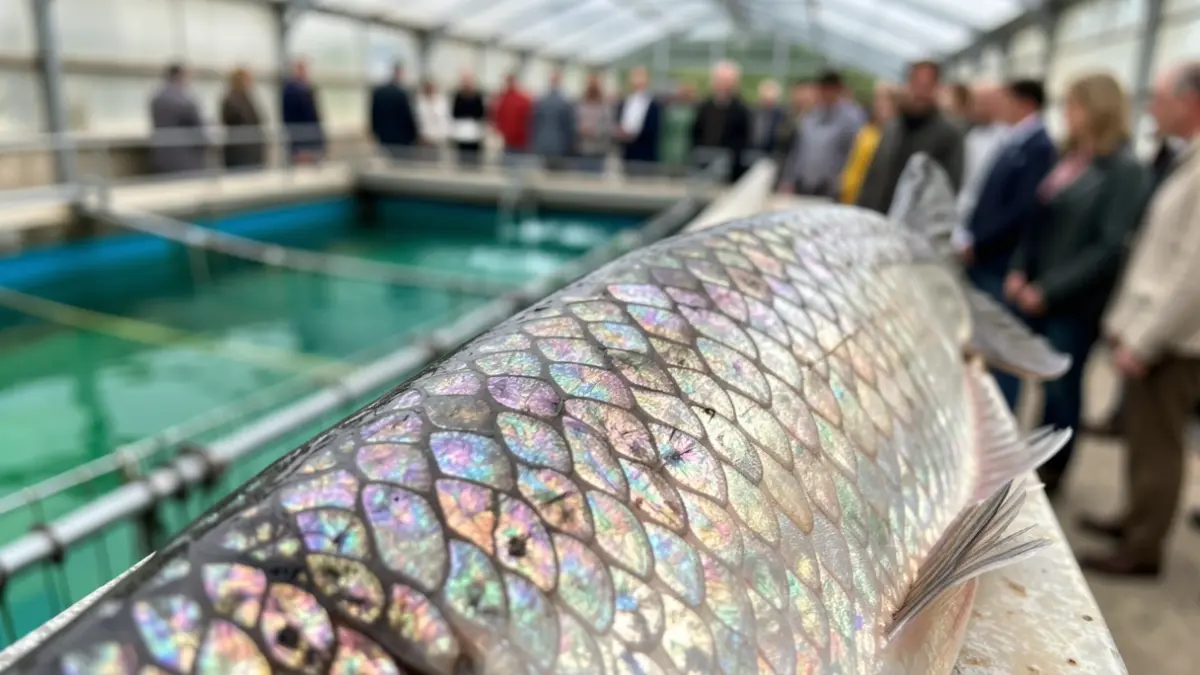
The research project Toxi-Feed, led by researcher Ayelén Blanco from the PhysToFish group, analyzes how contaminants present in aquaculture feeds affect the feeding and metabolism of rainbow trout. The study, which will run until 2028, is funded by the Xunta de Galicia through the competitive research unit consolidation call.
Feed accounts for up to 70% of aquaculture production costs. Although regulated, feeds can contain contaminants that, over time, affect essential processes in fish. "Studying these contaminants allows us to anticipate problems, protect animal welfare, and ensure safe and efficient aquaculture production," states Ayelén Blanco.
Toxi-Feed focuses on two model contaminants: PCB-126, traditionally associated with fishmeal, and aflatoxin B1, linked to plant-based ingredients. "This change in feed composition... also introduces new risks that need to be understood and anticipated," explains the researcher, adding that the work aims to understand at a molecular level how these compounds alter appetite and metabolism.
The project combines fish experiments with cellular studies to analyze the molecular impact of contaminants. It also evaluates whether the inclusion of specific amino acids can counteract the negative effects of these substances, paving the way for safer and more functional feeds.
Upon completion, the project is expected to provide a detailed understanding of how feed contaminants influence fish feeding mechanisms and demonstrate the feasibility of mitigating their effects through simple nutritional strategies. The results will serve as a basis for optimizing feed formulation, improving animal welfare, and contributing to more sustainable and competitive aquaculture.