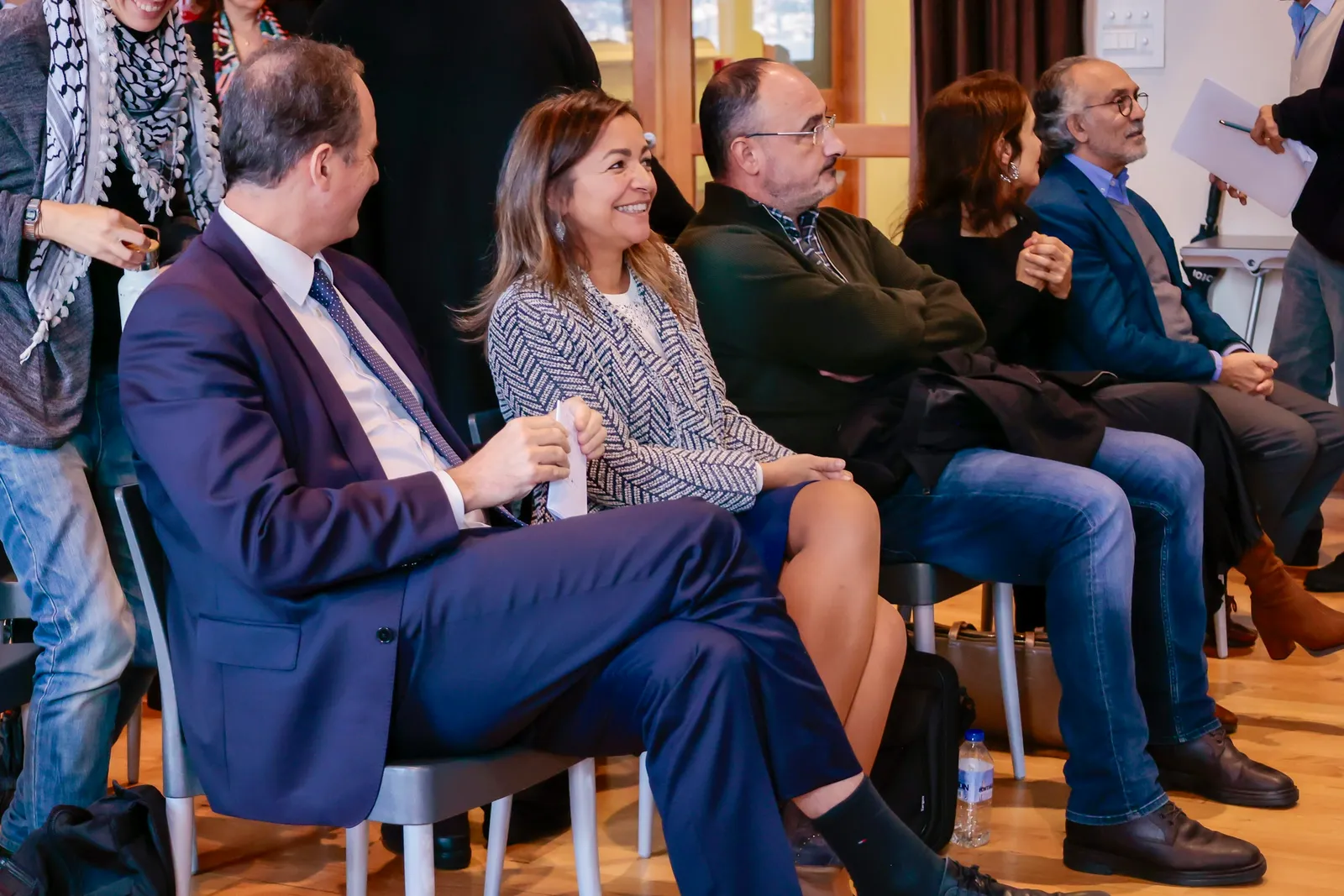
During her intervention, the head of the Mar department stressed the need to bring the job opportunities offered by the maritime-fishing sector to new generations. Villaverde defined this field as a "modern, technological and viable" professional option and urged high school, vocational training and university students to learn first-hand about career paths linked to the mar-industry chain.
The Conselleira referred to specialised training as a key way to facilitate the entry of new professionals. Currently, a total of 486 students are studying at the four centres dependent on the Mar Conselleria: the Atlantic Maritime-Fishing Polytechnic Institute in Vigo, the official nautical-fishing schools in Ferrol and Ribeira, and the Galician Institute of Aquaculture Training (Igafa) on the Isle of Arousa.
“"Galician youth must know and check, on the ground, that the sea is not the past"
Villaverde also highlighted the importance of Dual Vocational Training, which allows students from the schools in Vigo, Ferrol and Ribeira to complete their learning with a practical period of around 500 hours on board fishing vessels. She also mentioned funding instruments aimed at facilitating training embarking and the first acquisition of a vessel by young fishermen.
The regional official referred to the need to advance in streamlining administrative procedures, facilitate access to EU funding and address fleet renewal to improve living and working conditions on board. Issues she linked to the review of the Common Fisheries Policy (CFP) and the need for a specific financial instrument for fishing and aquaculture in the next EU Multiannual Financial Framework.
“"We cannot ask young people to look to the sea if administrations do not provide them with the navigation charts"
The forum brings together maritime-port professionals and nearly 50 students from various educational centres over two days. During this first session, issues such as entrepreneurship and funding models, new opportunities in the labour market, and the streamlining of training and homologations were addressed.