
The BIO_MARTERRA Operational Group held its final event on Thursday, October 22, at the Misión Biológica de Galicia (MBG-CSIC) in Salcedo (Pontevedra). The hybrid event brought together over 70 participants, including farmers, technical advisors, researchers, and institutional representatives. Martín Alemparte, Director of the Galician Agency for Food Quality (AGACAL), also participated. The project, with funding of approximately €180,000, aims to promote the circular economy and crop adaptation to climate change, aligning with Common Agricultural Policy (CAP) objectives.
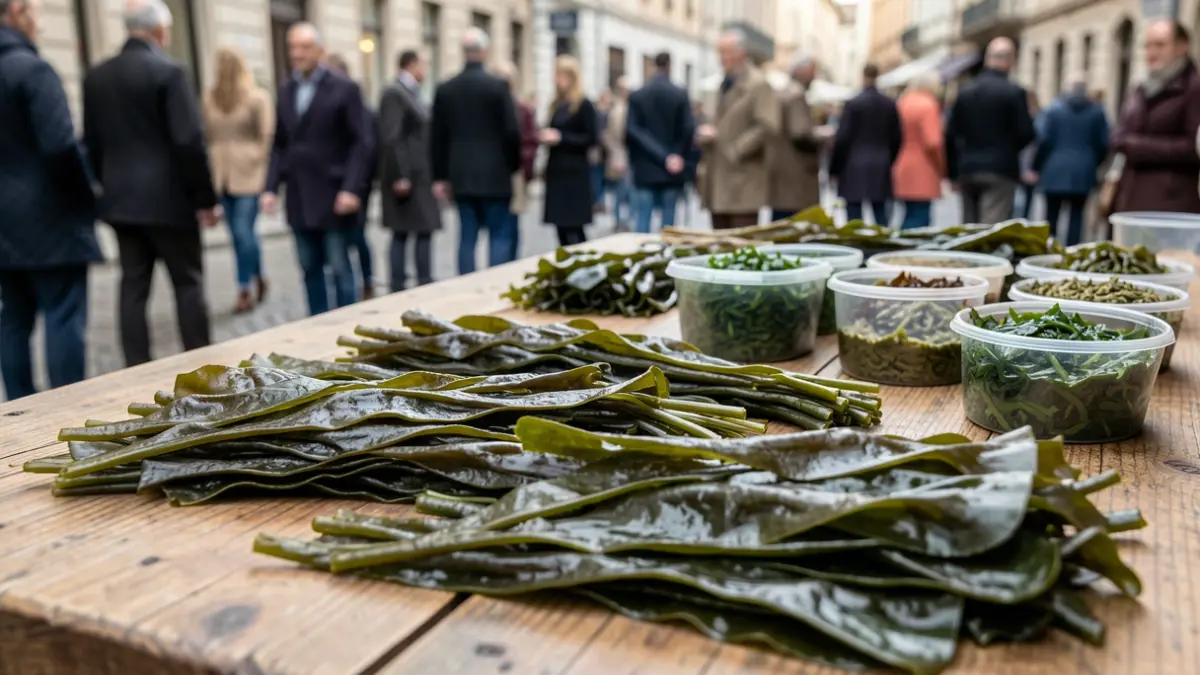
The initiative, driven by Porto-Muiños S.L. from Cerceda, which specializes in seaweed-based preparations, explored the valorization of its waste and non-commercially viable species. The main challenge was adapting processing methods to obtain an extract that complies with current legislation for fertilizer products, requiring additional effort in developing internal laboratory procedures.
The consortium, coordinated by FEUGA, comprises companies, foundations, universities, and technology centers collaborating on the development and validation of environmentally friendly biostimulants. Presentations included scientific validation of biostimulants in vegetable crops under abiotic stress, and results from greenhouse vegetable cultivation.
Researchers from the VIOR group (Viticulture, Olive, and Rose) at the Misión Biológica de Galicia presented findings on using Atlantic seaweed extracts as antifungal agents against grapevine downy mildew, aiming to reduce conventional plant protection product use. Laboratory and field results are promising, though further long-term studies are needed.
Manuela Buján, from Porto-Muiños, summarized the key findings: “We have successfully produced an extract that complies with regulations and have demonstrated that it effectively mitigates various plant stressors.” Farmers like Avelino Santana (Patatas A Corga) and Néstor Liñares (Horta da Lousa) shared field results. The project culminates in the development of a seaweed-based agricultural input that enhances plant resilience to adverse conditions like drought, heat, and salinity.
The project, with a budget of €179,634.83, was co-financed by the European Agricultural Fund for Rural Development (EAFRD) and the Ministry of Agriculture, Fisheries and Food. Porto-Muiños is launching a new business line to provide farmers with natural tools to address climate change.